
10 Best Voice Bots for Call Centers in 2026 (Tested)
See the 10 best voice bots for call centers in 2026—pricing, latency, CCaaS integrations, and warm transfers—tested and compared. Find your fit now.
IN this article

Evolve with Sigma Mind AI
Build, launch & scale AI agents
TL;DR
Voice bots use speech recognition, natural language processing, and large language models to handle real phone conversations without human agents. The market is growing fast, with Gartner predicting conversational AI will eliminate $80 billion in contact center labor costs by 2026. This guide compares the 10 best voice bot platforms across pricing, latency, CCaaS integration, and warm transfer quality. SigmaMind AI stands out for call centers needing transparent layered pricing, deep dialer integration, and multi-client workflows, while alternatives like Retell AI, Vapi, and PolyAI serve different buyer profiles.
What Are Voice Bots (And Why Call Centers Need Them Now)
A voice bot is AI-powered software that uses speech recognition, NLP, and machine learning to hold natural, real-time conversations over the phone. Unlike the old press-1-for-billing IVR menus that callers universally hate, modern voice bots understand intent, respond conversationally, and actually complete tasks like processing refunds, booking appointments, or qualifying leads.
The business case is hard to ignore. The voice AI market is projected to reach $47.5 billion by 2034, up from $2.4 billion in 2024. Call center AI spending alone is expected to hit $10.07 billion by 2032 at a 22.7% CAGR. The math driving adoption is straightforward: a live agent call costs between $5 and $12 on average, while a voice bot call runs pennies per minute. Combine that with agent turnover rates that routinely exceed 40% annually, and you understand why operations leaders are moving fast.
But this isn’t about replacing humans entirely. The most effective call centers in 2026 blend AI for high-volume, repetitive interactions with human agents handling complex or emotionally charged conversations. Voice bots augment your team. They don’t eliminate it.
If you’re exploring how AI is reshaping contact center operations more broadly, the technology stack has matured enough that deployment timelines have collapsed from months to weeks.
How We Evaluated These Voice Bots
Every platform on this list was assessed across seven dimensions that actually matter when a voice bot picks up a call from a real customer:
- Latency. Research shows humans perceive pauses as uncomfortable around 1.5 seconds, and drop-off rates climb sharply beyond 3 seconds. Response time is non-negotiable.
- Total cost per call. Not just the advertised per-minute rate, but the full stack: platform fee + speech-to-text + text-to-speech + LLM inference + telephony. More on this in the pricing section below.
- CCaaS and dialer integration. Can it plug into VICIdial, Five9, NICE, or Genesys without ripping out your existing infrastructure?
- Warm transfer quality. When the bot hands off to a human, does the agent get a summary and structured context, or does the caller have to repeat everything?
- No-code builder. Can non-technical operations staff build and modify agents?
- Voice quality. Does it sound like a bot, or could a caller mistake it for a person?
- User sentiment. G2 ratings, Reddit threads, and practitioner reports carry more weight than marketing pages.
A practitioner on Buildberg put it well: “Do not pick based on the per-minute number alone. Build a test agent on your use case and measure for a week.”
At-a-Glance Comparison Table
PlatformStarting PriceBest ForLatencyNo-Code BuilderCCaaS IntegrationG2/User RatingSigmaMind AI$0.03/min + provider actualsCall centers needing CCaaS integration + model flexibilitySub-800ms target (~970ms avg)YesVICIdial, Five9, NICE, Genesys4.9 (Product Hunt)Retell AI$0.07/minTeams wanting fast, low-latency deployment600–750msYesLimitedPositive (user reviews)Vapi~$0.05/min + provider costsDeveloper teams wanting full stack control550–800msNoLimitedMixedCognigy (NiCE)~$115K+/yearFortune 500 enterprise contact centersModerateVisual builderDeep enterprise4.6/5 (G2)PolyAI~$150K+/yearPremium voice quality in regulated industriesLowNoCustomHigh (G2/Capterra)Synthflow$375/mo (Pro)Outbound sales agenciesModerateTemplate-basedLimitedMixedBland AI$359/mo (Build)High-volume outbound campaigns700–900msNoLimitedMixedLindy$0.19/min (US)Workflow automation with voiceModerateYesNoPositiveGoogle Dialogflow CXPay-as-you-go (GCP)Engineering teams in Google CloudVariableVisual flow builderCustom buildEnterprise standardFive9 IVACustom enterpriseExisting Five9 CCaaS customersLowYesNative Five9Established
The 10 Best Voice Bots for Call Centers
1. SigmaMind AI
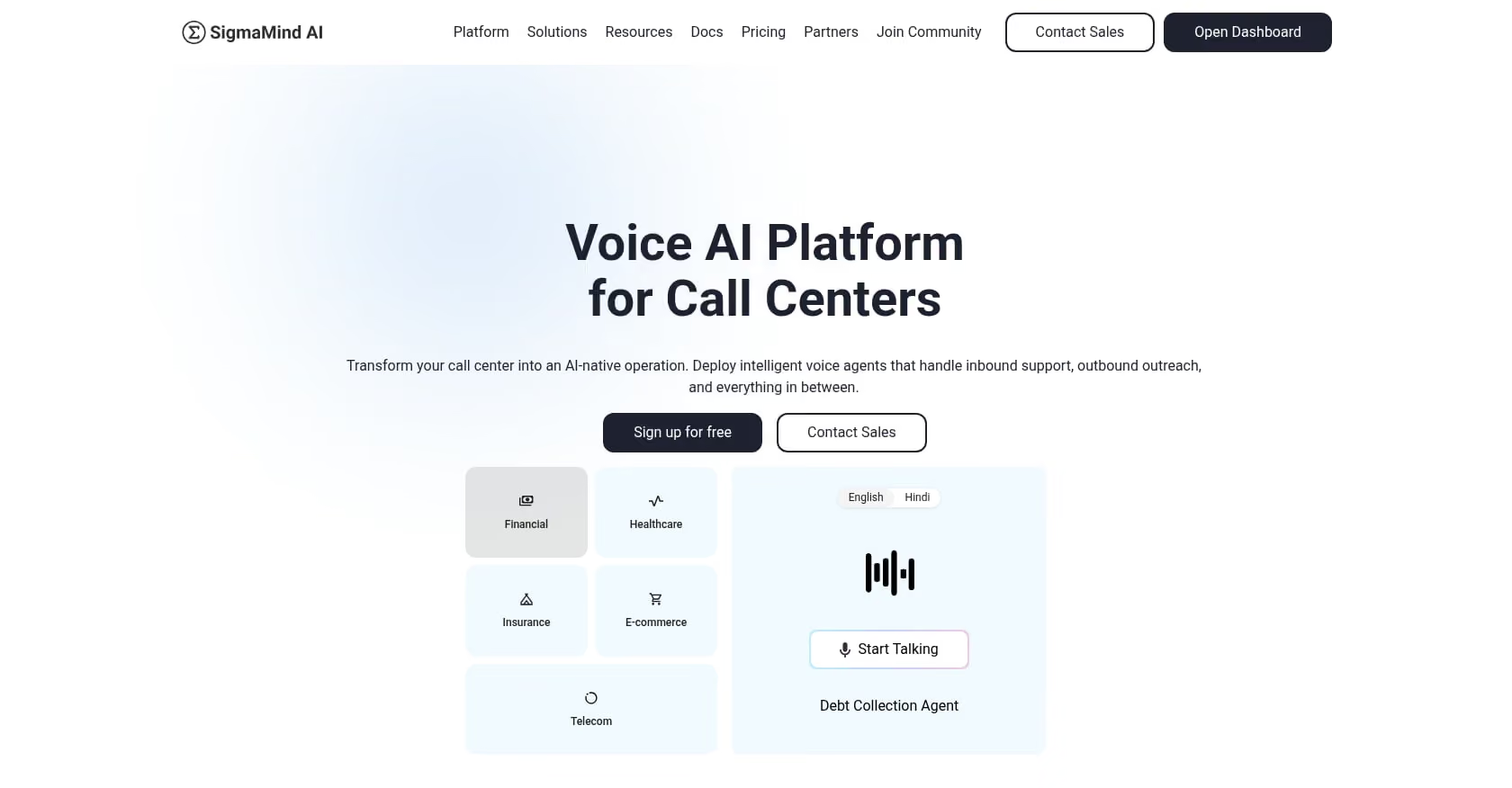
Best for: Call centers and agencies that need deep CCaaS integration, model flexibility, and transparent per-layer pricing.
SigmaMind AI is a YC-backed voice AI platform built specifically for call center operations. Where most voice bot platforms force you to choose between developer flexibility and operational simplicity, SigmaMind bridges both with a no-code Agent Builder and a model-agnostic architecture that lets you mix and match STT, TTS, and LLM providers.
Pricing:
- Pay-as-you-go: $0.03/min platform fee + provider actuals for STT, TTS, LLM, and telephony
- Chat: $0.005/AI message + LLM costs
- Enterprise: custom volume-based pricing
- Free to start, pay only for usage
- Transparent pricing calculator at sigmamind.ai/pricing breaks down every layer
Key features:
- Native CCaaS and dialer integration with VICIdial, Five9, NICE, Genesys, and Asterisk-based platforms
- Sub-800ms latency target (~970ms average in production)
- Warm transfer with custom headers, passing AI summaries and structured context to human agents so callers never repeat themselves
- Omnichannel deployment: build one agent brain, deploy across voice, chat, and email
- In-builder Playground with node-level logs for real-time debugging before go-live
- Outbound bulk campaigns with CSV upload, scheduling, and concurrency caps
- App Library with CRM, helpdesk, e-commerce, and calendar integrations via function/tool calling
- Agency and BPO workflows with multi-client workspaces and full agent import/clone
- Analytics dashboard with cost breakdowns by layer, call outcomes, and transfer metrics
Proof:
- 1M+ calls handled, 1,500+ live agents in production
- Case study: automated 4,000+ refunds per month with 43% cost savings, turnaround dropped from 2-3 days to under 60 seconds
- Gardencup: 80% reduction in refund processing time, 20% CSAT lift
- CleanBoss: 50% first response time reduction, +15% CSAT in 3 months
Tradeoffs:
- US-only direct number purchase; international deployments require BYO carrier via SIP (Twilio or Telnyx)
- Modular pricing means you need to select and tune providers, which adds a small learning curve
- Not yet HIPAA-certified (HIPAA-friendly workflows available, SOC 2 claimed)
Why it matters for agencies and BPOs: No other platform on this list offers multi-client workspaces with full agent cloning. If you’re managing voice bots across 10 or 20 client accounts, the ability to clone an entire agent configuration (voice settings, branching logic, tool integrations) to a new workspace eliminates hours of repeated setup. This is a gap every other listicle on the SERP ignores completely.
A practitioner on a blog noted: “An AI agent that cannot book appointments is a sophisticated FAQ bot. The value of voice AI is in completing the task.” SigmaMind’s function calling and app integrations are designed around that principle: the bot doesn’t just answer questions, it processes refunds, updates CRM records, and books appointments.
2. Retell AI
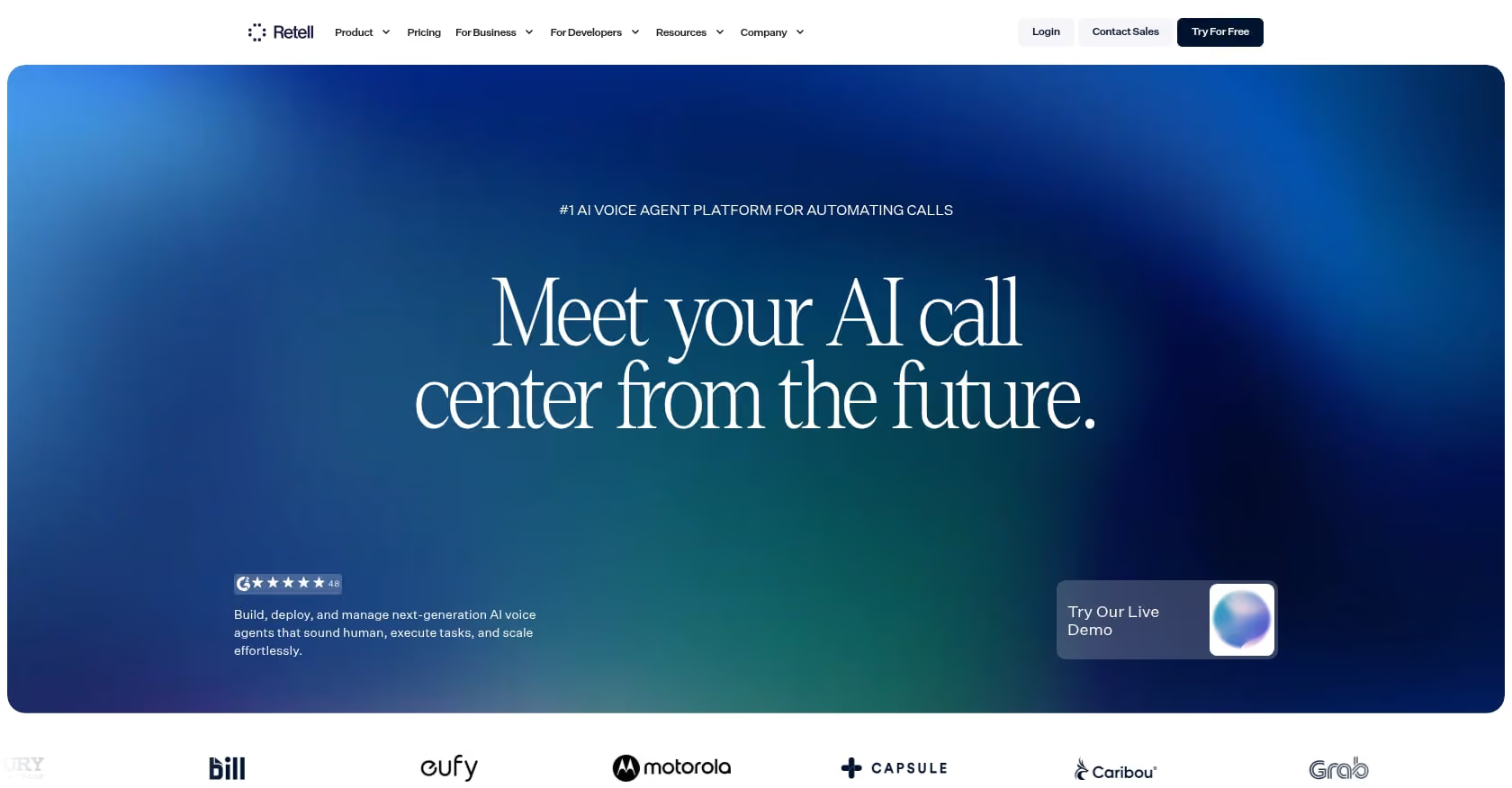
Best for: Teams wanting the fastest path to production-ready phone agents with minimal setup.
Retell AI has one obsession: latency. With response times typically landing between 600 and 750ms in production testing, conversations feel genuinely natural. The platform bundles telephony, STT, TTS, and LLM into a single pricing layer, which simplifies budgeting at the cost of per-layer control.
Pricing:
- Pay-as-you-go starting at $0.07/min (bundled)
- Volume discounts down to $0.05/min for enterprise plans
- $2/month per phone number
- New users get $10 free credit and 60 minutes of call time
Key features:
- Among the lowest latency in production (600-750ms consistently)
- Branded caller ID for outbound campaigns
- Accessible to both technical and non-technical users
- Managed telephony included
Tradeoffs:
- No native CCaaS integration with legacy dialers like VICIdial
- Bundled pricing means less granular cost control per layer
- Lacks the customization depth required by large enterprise contact centers
- Limited multi-client workspace features for agencies
User sentiment: Users generally find Retell to be an excellent tool for creating voice agents with human-like speech. They appreciate the ease of use and customer support. Outbound performance is particularly strong, especially with branded caller ID.
3. Vapi
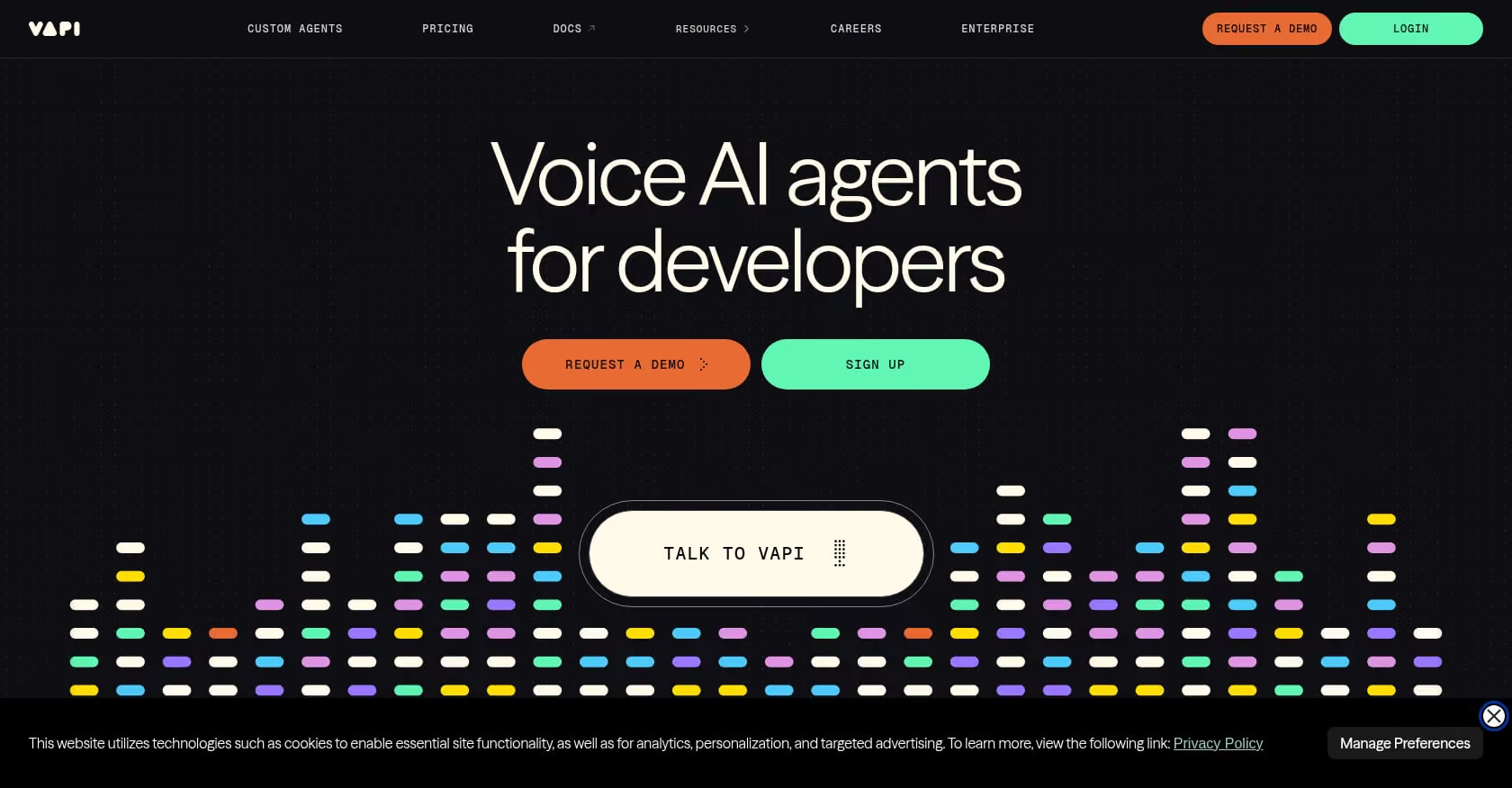
Best for: Developer teams wanting full control over every layer of the voice AI stack.
Where Retell hides the pipeline, Vapi exposes it. You pick your STT provider, your LLM, your TTS voice, your interruption model, and your function definitions. It’s an API-first platform designed for engineers who want to fine-tune every parameter.
Pricing:
- Starts at ~$0.05/min for hosting
- STT, TTS, LLM, and telecom costs are additional
- Total cost can jump 3 to 6x the base rate depending on provider choices and volume
Key features:
- Full stack customization (choose every provider independently)
- Flexible function calling and model choice
- API-first architecture
- Latency of 550-800ms when well-tuned
Tradeoffs:
- Steep learning curve for non-technical teams
- Hidden cost complexity, the base rate is misleading without factoring in all provider layers
- Handoff to non-technical teammates is difficult
- One practitioner noted: “I like its API-first model… But every time I tried to scale a use case or hand over the setup to a non-technical teammate, the experience slowed down. The voice would start to sound a bit robotic, calls had small delays.”
4. Cognigy (NiCE Cognigy)
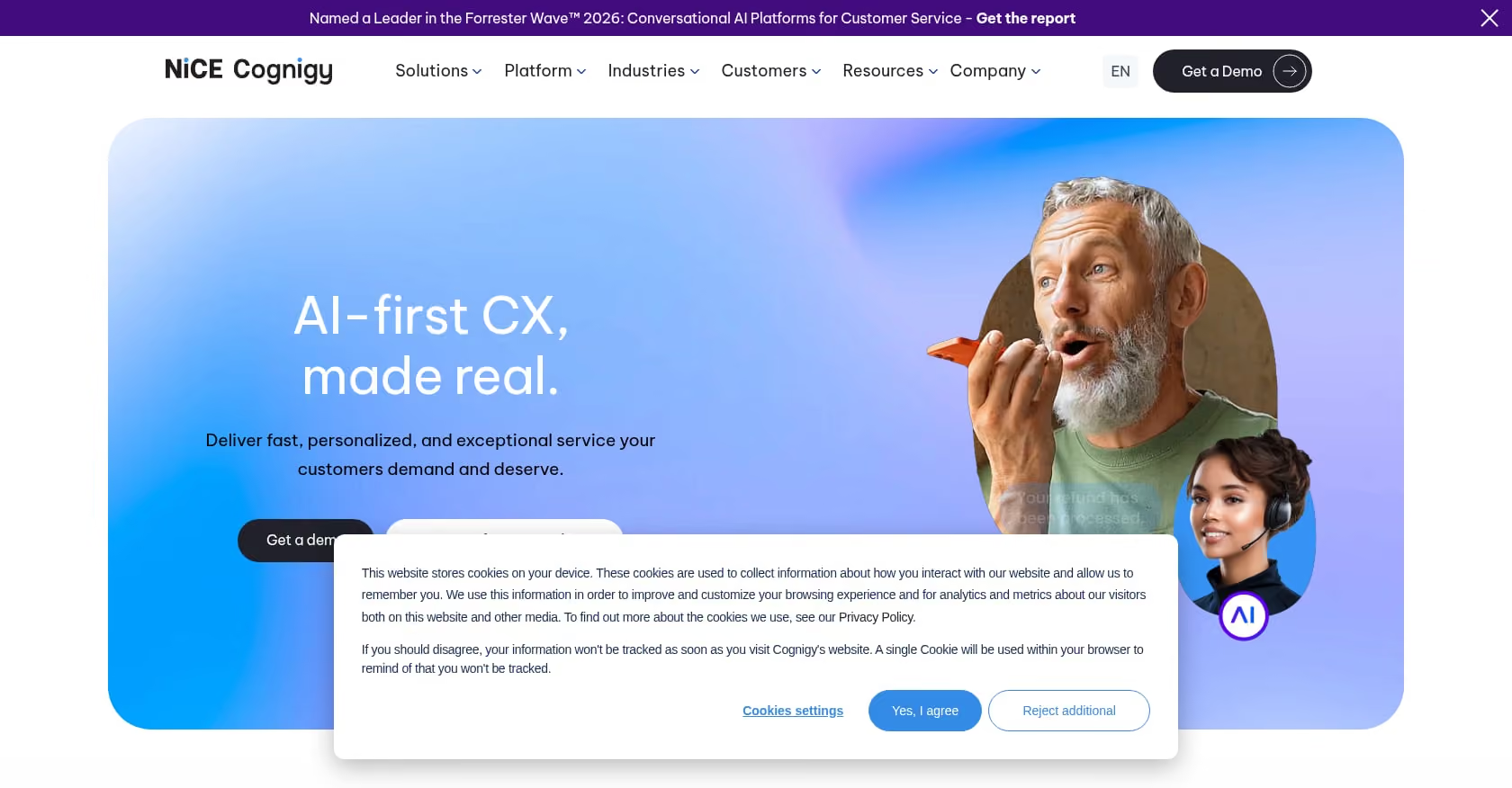
Best for: Fortune 500 enterprise contact centers with mature infrastructure and dedicated IT teams.
Cognigy is an enterprise-grade conversational AI platform built for large call centers running structured, high-volume operations. In July 2025, NICE acquired Cognigy for approximately $955 million, and the platform now operates as NiCE Cognigy. The acquisition deepens Cognigy’s integration with NICE’s CXone ecosystem.
Pricing:
- No public pricing; custom enterprise contracts
- Most contracts start above $300K/year, with averages around $115K depending on usage
- Separate charges for voice, chat, LLM workloads, and add-ons like Agent Copilot or Knowledge AI
Key features:
- Enterprise stability and scalability
- Deep contact center integrations
- Visual flow builder for conversation design
- Strong in banking, healthcare, and telecom verticals
Tradeoffs:
- No self-serve tier; implementation takes months with dedicated IT teams
- Responding fast enough with natural timing is where Cognigy can lag compared to voice-first platforms
- One G2 reviewer noted: “Sometimes (our) customers are too small to benefit from Cognigy”
- Pricing is opaque without engaging sales
G2 Rating: 4.6/5. Users highlight stability and enterprise readiness but acknowledge the platform’s complexity.
5. PolyAI
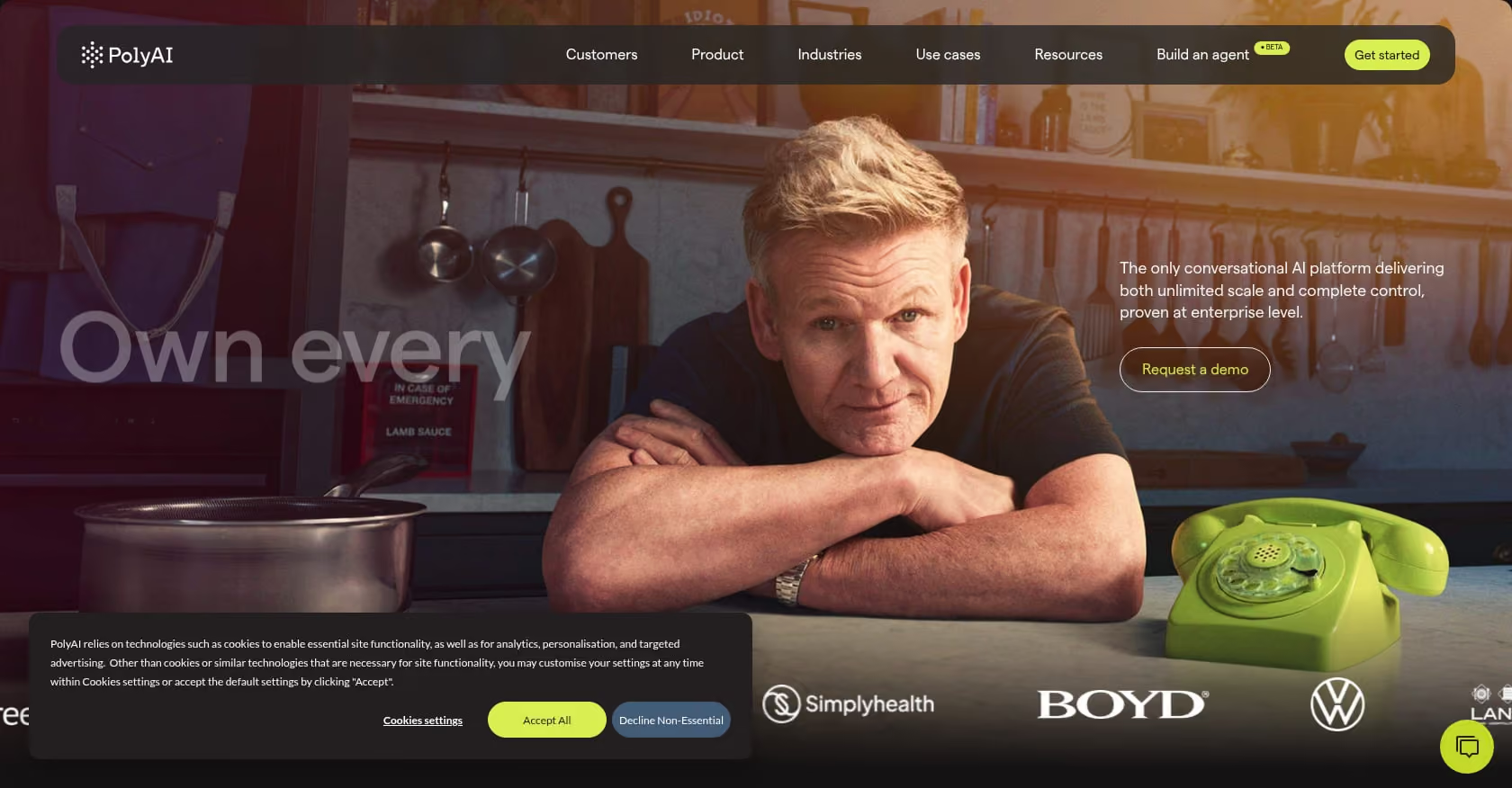
Best for: Fortune 1000 companies needing premium voice quality and high containment rates in regulated industries.
PolyAI is voice-first and voice-best. Their agents consistently achieve 80%+ containment rates, and the voice quality is the most natural-sounding in this list. A Forrester study found companies deploying PolyAI achieved 331-391% three-year ROI, saving $10.3 million in agent labor costs.
Pricing:
- All deployments are custom-quoted
- Most contracts start around $150K/year for full-scale deployment
- Per-minute pricing includes proactive performance improvements, maintenance, and 24/7 support
Key features:
- Best-in-class voice quality (warm, authentic, and believable)
- Handles interruptions, topic changes, and emotional cues better than most systems
- 80%+ containment rates in production
- Strong in banking, hospitality, and insurance
Tradeoffs:
- No no-code interface, visual flow builder, or real-time LLM sandbox
- Every change goes through account management
- Basic analytics dashboards
- No SMB option; this is exclusively enterprise
User sentiment: Reviewers on G2 and Capterra say the voices sound authentic and believable. Some note limited self-service flexibility, with teams often reaching out to support for changes rather than handling them independently.
6. Synthflow
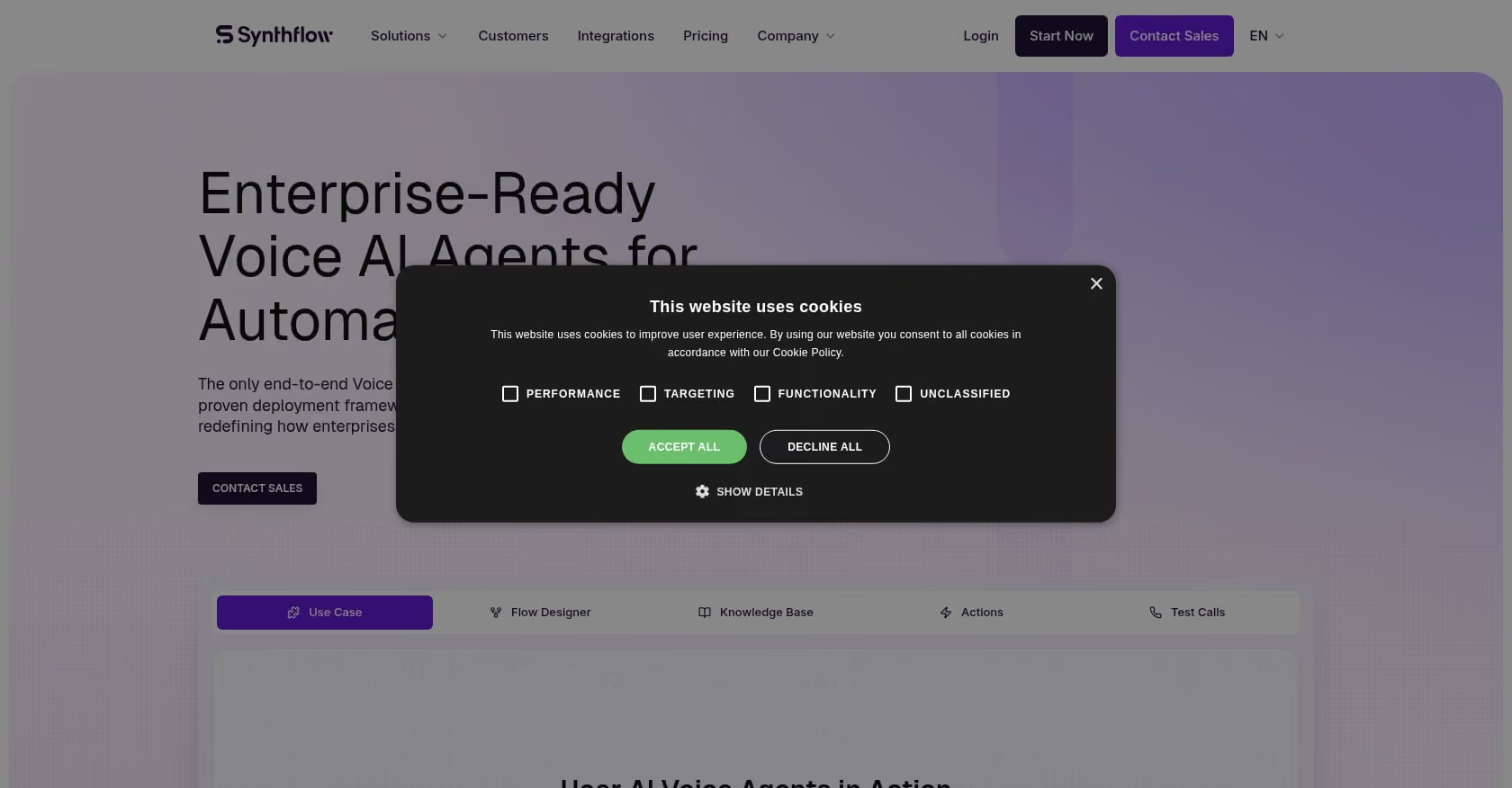
Best for: Sales teams and agencies running regular outbound campaigns with templated workflows.
Synthflow provides production-ready voice bot agents built for specific industries. Whether you need scheduling, claims processing, or always-on support, the platform offers pre-configured templates across BPO, call centers, retail, and finance.
Pricing:
- Pro plan: $375/month for 2,000 minutes and 25 concurrent calls
- Other sources cite ~$0.08/min starting rate
Key features:
- Industry-specific templates for quick deployment
- Pre-configured workflows for common use cases
- Built for outbound sales and appointment setting
Tradeoffs:
- Steeper learning curve than expected; you need to understand logic blocks and fallback responses
- Weaker on complex inbound scenarios
- No deep CCaaS integration
- Logic can break mid-call without careful flow design
User sentiment: Practitioners report that while the platform doesn’t require coding, understanding conversation flow architecture is essential. Flows that aren’t carefully designed tend to break during calls.
7. Bland AI
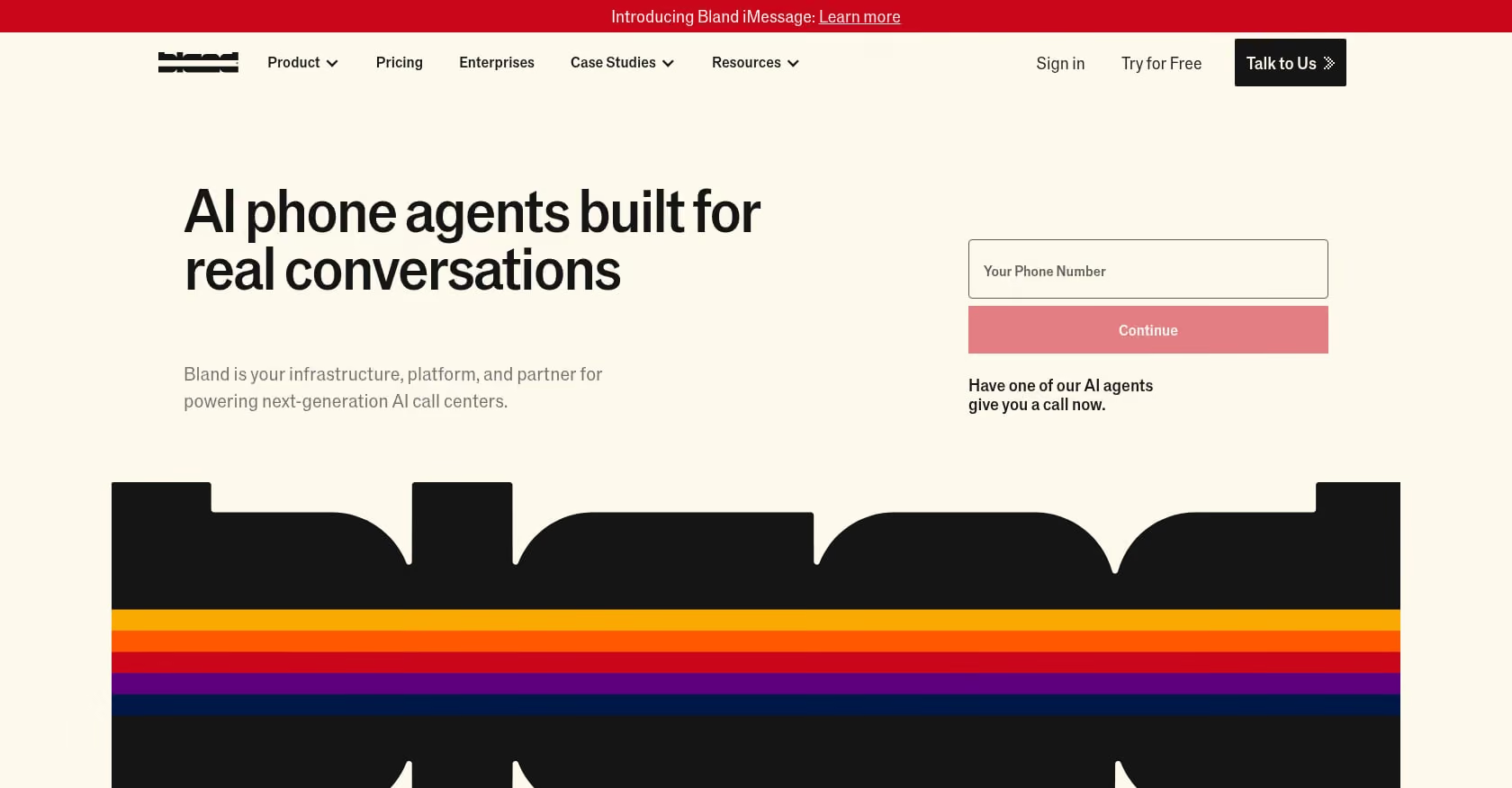
Best for: High-volume outbound campaigns (10,000+ calls/day) where throughput matters more than voice quality.
Bland AI focuses on outbound calling at massive scale. The pitch is “millions of concurrent calls” with a predictable cost structure. If your use case is cold outreach, appointment setting, surveys, or lead qualification sweeps, Bland is built for volume.
Pricing:
- Switched to plan-based pricing in December 2025
- Build plan: $359/month plus per-minute billing
- Expensive at lower volumes (a 500-minute month on the Build plan costs $359 before per-minute charges)
Key features:
- Massive concurrent call capacity
- Built for outbound at scale
- Flexible for developers who want control
Tradeoffs:
- Highest latency among tested platforms (700-900ms average, with spikes to 2.5 seconds)
- Voice quality sounds too “bot-like” with long pauses
- Developer-heavy; not accessible for non-technical teams
- One tester found that Bland AI has the highest latency among Vapi, Synthflow, and Retell, creating awkward pauses that hurt caller experience
The latency issue is significant. Research shows callers begin perceiving discomfort around 1.5-second pauses, and drop-off rates climb sharply beyond 3 seconds. For outbound where you’re interrupting someone’s day, those awkward silences kill conversion rates.
8. Lindy
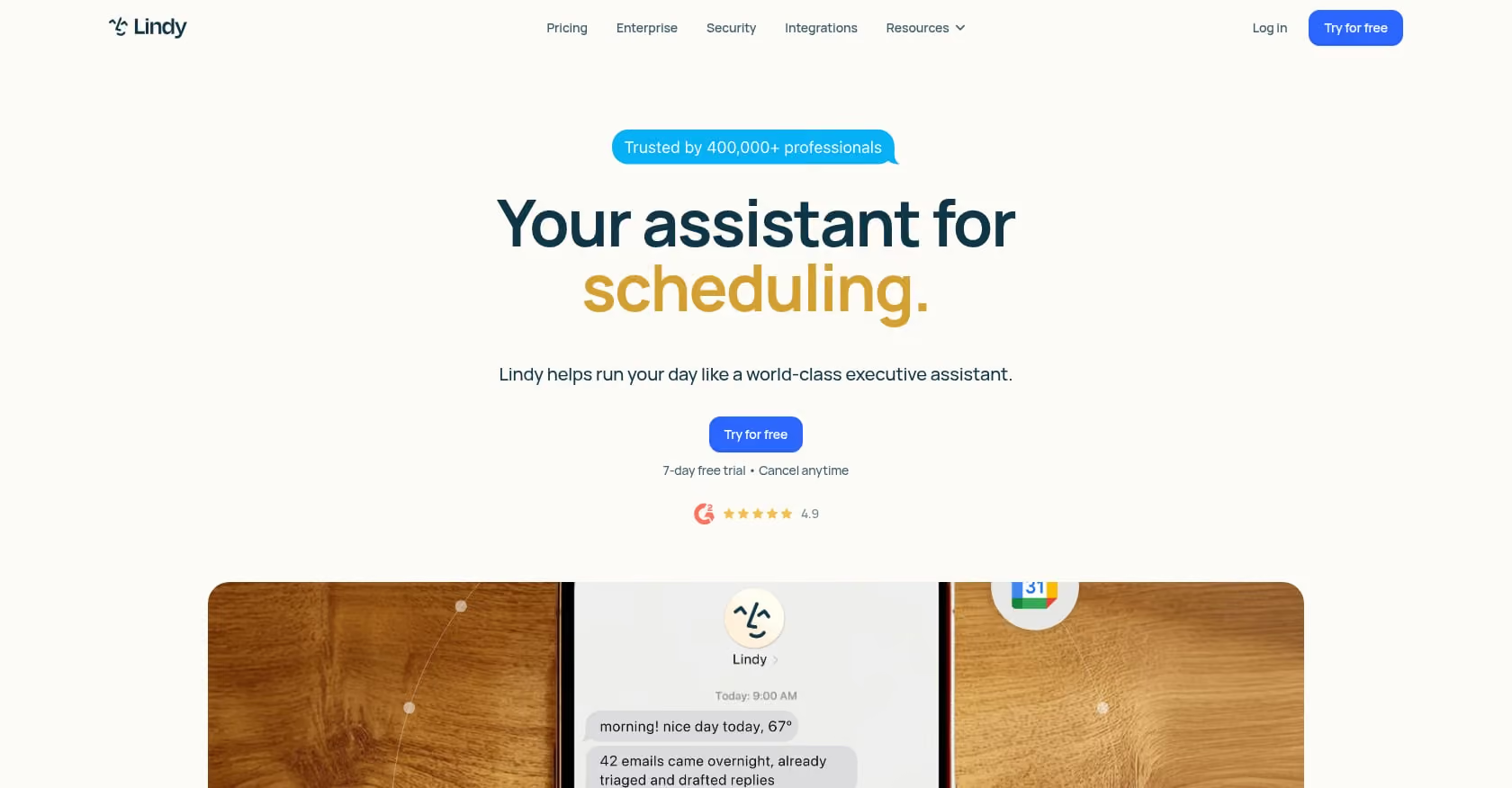
Best for: Operations, support, and GTM teams wanting voice plus workflow automation without code.
Lindy approaches voice bots differently. It’s a full workflow automation platform with voice capabilities bolted on. Your voice agent can simultaneously handle phone calls, trigger follow-up emails, update CRM records, and coordinate with other AI agents in a multi-agent workflow.
Pricing:
- AI phone numbers: $10/month per number
- Calling rates start at ~$0.19/min for US-based calls using GPT-4o
- Varies by country and model choice
Key features:
- Multi-agent workflow orchestration
- Voice + email + CRM automation from one platform
- No-code builder
- Good for cross-functional automation use cases
Tradeoffs:
- Not built for high-volume contact center environments
- No CCaaS integration with enterprise dialers
- Higher per-minute cost than dedicated voice platforms
- Less focused on call center-specific features like warm transfer or concurrent call management
9. Google Dialogflow CX
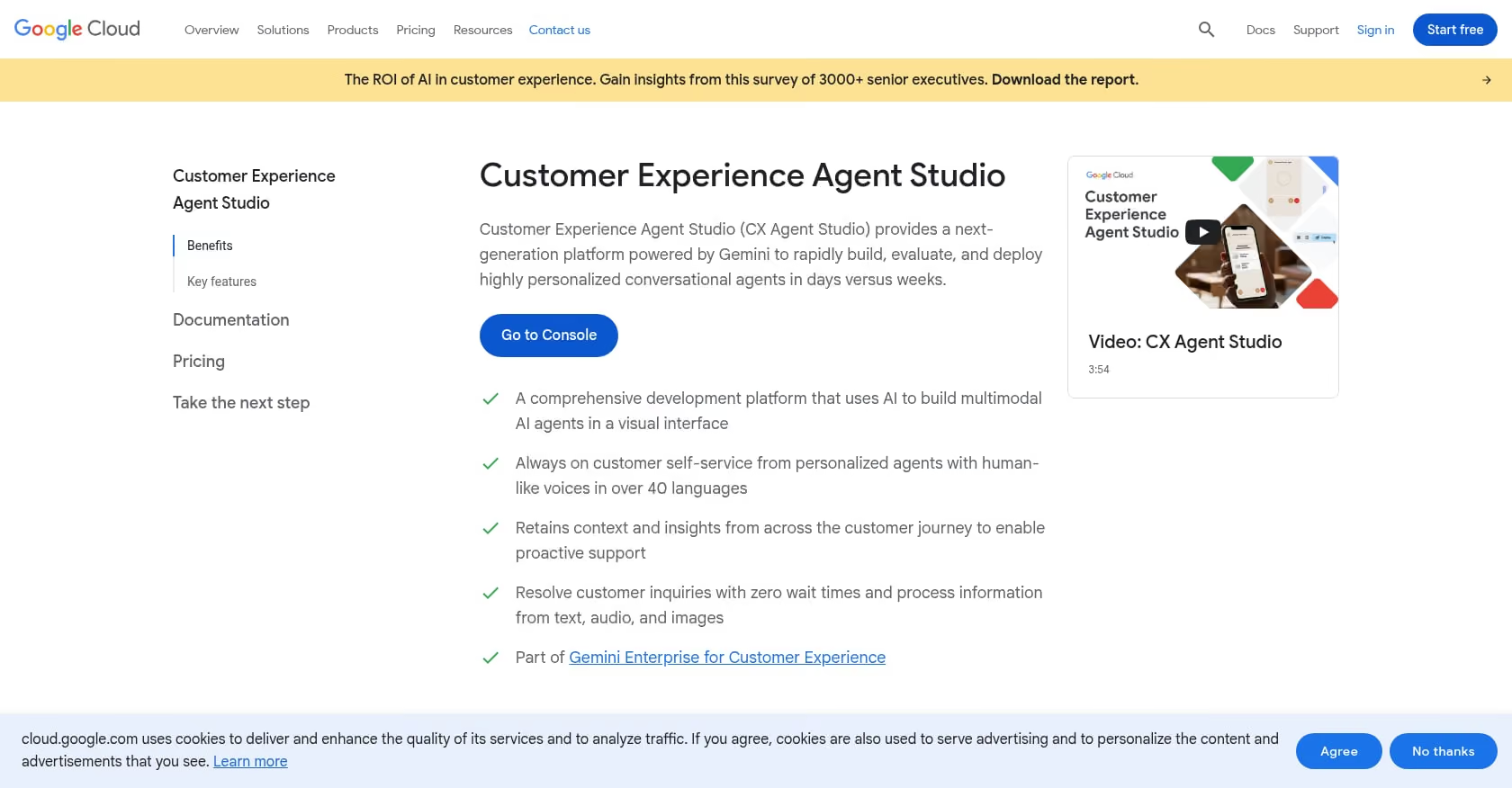
Best for: Engineering-led teams building structured voice and chat bots within the Google Cloud ecosystem.
Dialogflow CX is an infrastructure-level tool, not a turnkey voice bot platform. It provides a visual drag-and-drop flow builder for conversational bots across voice, chat, and messaging, but you’re assembling the pieces yourself within Google Cloud.
Pricing:
- Pay-as-you-go via Google Cloud
- STT at $0.006 per 15 seconds
- TTS from $4/million characters (standard) to $16/million (neural voices)
- Free tier available for testing
Key features:
- Visual flow builder with state-based conversation design
- Google Cloud ecosystem integration
- Multi-language and multi-channel support
- Enterprise-grade infrastructure
Tradeoffs:
- Requires significant engineering resources to build, deploy, and maintain
- Not optimized for voice-first call center automation
- No built-in telephony, warm transfer, or CCaaS connectors
- You’re building a bot framework, not deploying a voice agent
Understanding the speech-to-text engine layer is critical when evaluating Dialogflow, since STT cost and accuracy directly impact both budget and caller experience.
10. Five9 IVA

Best for: Mid-market to enterprise businesses already using Five9’s CCaaS platform.
Five9 AI Agents (Intelligent Virtual Agents) deliver AI-powered self-service by blending generative AI with conversational AI models. The platform includes Agent Assist for real-time guidance, call summarization, and next-best-action recommendations for human agents.
Pricing:
- Custom enterprise pricing
- Tied to Five9’s broader CCaaS platform licensing
Key features:
- Native integration with Five9’s contact center ecosystem
- Agent Assist with real-time coaching
- Generative AI + NLP hybrid approach
- Call summarization and post-call analytics
Tradeoffs:
- Locked into Five9’s ecosystem
- Less flexibility for voice-first experimentation outside the platform
- Custom pricing makes comparison difficult
- Not suitable for teams that aren’t already Five9 customers
How to Choose the Right Voice Bot for Your Call Center
The right platform depends on who you are and what you’re solving for. Here’s a decision framework:
If you run a call center with existing CCaaS infrastructure (VICIdial, Five9, NICE, Genesys): You need a platform that plugs into your current stack without requiring a rip-and-replace. SigmaMind AI is the clear fit here, with native dialer integration that most voice-first startups don’t offer. If you’re already on Five9 specifically, their native IVA is worth evaluating alongside a third-party option.
If you’re an agency or BPO managing multiple clients: Multi-client workspaces and agent cloning aren’t nice-to-haves, they’re operational necessities. SigmaMind’s full agent import capability lets you clone an entire agent configuration across client accounts. No other platform on this list serves this workflow.
If you’re a developer team that wants to control every layer: Vapi gives you the most granular control over STT, TTS, LLM, and function definitions. Just plan for the engineering overhead and the compounding costs.
If you’re a Fortune 500 enterprise with a $300K+ budget: Cognigy (NiCE Cognigy) or PolyAI are built for your scale, compliance requirements, and implementation timelines. PolyAI if voice quality is paramount, Cognigy if you need deep NICE CXone integration.
If you’re running high-volume outbound campaigns: Bland AI handles massive concurrent call volumes, but test voice quality and latency carefully before committing. Synthflow offers a middle ground with templated outbound workflows.
Key questions to ask before choosing:
- What’s your monthly call volume? Platforms with high base fees (Bland, Synthflow) become cost-effective only at scale.
- Do you need CCaaS integration? If yes, your options narrow significantly.
- How technical is your team? No-code builders matter if your ops team will manage the bots day-to-day.
- What does a successful handoff look like? If warm transfer with context is critical, evaluate whether the platform passes structured summaries to your human agents.
For a deeper dive into building AI-powered customer support workflows, the use case matters as much as the platform.
Voice Bot Pricing: The Real Story
This is where most comparison articles mislead you. They quote a single per-minute rate and move on. In reality, voice bot pricing is a five-layer stack:
- Platform fee: The base charge from the voice bot provider ($0.03-$0.08/min typical)
- Speech-to-text (STT): Converting caller speech to text (e.g., Deepgram at fractions of a cent per second)
- Text-to-speech (TTS): Generating the bot’s spoken response (e.g., ElevenLabs Turbo, varies by voice quality)
- LLM inference: The language model processing the conversation (GPT-4o, Claude, Gemini, each priced differently)
- Telephony: Phone number rental, per-minute carrier charges, SIP trunking fees
A practitioner on Buildberg calculated that a typical 4-minute voice agent call using GPT-4o mini and ElevenLabs Turbo lands at $0.40 to $0.80 on any platform. That’s the number that matters, not the $0.05/min headline.
Bundled vs. unbundled pricing: Retell bundles everything into $0.07/min, which simplifies budgeting but removes your ability to optimize individual layers. SigmaMind charges $0.03/min as a platform fee and passes through provider costs at actuals, giving you granular control. You can use the pricing calculator to model your specific use case before committing. Vapi charges ~$0.05/min for hosting but adds all provider costs on top, which can jump 3-6x.
The ROI math: Even at $0.80 per 4-minute call, you’re spending $0.20/minute. A human agent handling that same call costs $5-$12. The savings compound fast at volume. A Forrester study of PolyAI deployments found 331-391% three-year ROI with $10.3 million in agent labor cost savings. Even smaller operations see dramatic returns once they cross a few hundred calls per day.
Hidden costs to watch for:
- Per-number monthly fees ($2-$10/month per phone number adds up if you’re running campaigns across many numbers)
- Overage charges on plan-based pricing
- Professional services or implementation fees at the enterprise tier
- Model costs that spike when conversations go long or require complex reasoning
FAQ
What is a voice bot and how does it differ from an IVR?
A voice bot uses AI (speech recognition, NLP, and language models) to understand natural speech and respond conversationally. Traditional IVR systems use rigid menu trees (“press 1 for billing”). Voice bots understand intent from free-form speech, handle follow-up questions, and can complete tasks like booking appointments or processing refunds. The experience for callers is dramatically different.
What’s a good latency target for voice bots?
Aim for sub-1-second voice-to-voice response time. Production benchmarks from practitioner testing show Retell at 600-750ms, Vapi at 550-800ms when well-tuned, and Bland at 700-900ms. Research indicates that humans begin perceiving pauses as uncomfortable around 1.5 seconds, and caller drop-off rates climb sharply beyond 3 seconds. Anything consistently under 800ms feels natural in conversation.
Which voice bot integrates with VICIdial, Five9, and Genesys?
SigmaMind AI offers native CCaaS and dialer integration with VICIdial, Five9, NICE, Genesys, and other Asterisk-based platforms. Most developer-focused voice bot platforms (Retell, Vapi, Bland) don’t offer these integrations natively, requiring custom SIP trunking workarounds. Five9 IVA integrates natively with Five9’s own platform, and Cognigy has deep enterprise contact center integrations following its acquisition by NICE.
Can voice bots handle warm transfers with context?
Some can, but most don’t do it well. The standard approach is a cold transfer where the caller gets dumped to a human agent with no context. SigmaMind AI’s warm transfer passes custom headers containing an AI-generated summary and structured data (intent, customer variables, ticket information) to the human agent before connection. This eliminates the “can you repeat your issue” problem that drives CSAT scores down.
How much does a voice bot call actually cost?
The real cost per call depends on five layers: platform fee + STT + TTS + LLM + telephony. A typical 4-minute call using GPT-4o mini and a quality TTS engine lands between $0.40 and $0.80 across most platforms. Compare that to $5-$12 for a human agent handling the same call. Don’t trust any platform quoting a single per-minute rate without breaking down the full stack.
Are voice bots good for outbound campaigns?
Yes, particularly for appointment reminders, lead qualification, survey calls, and follow-ups. Platforms like Bland AI and Synthflow specialize in high-volume outbound. SigmaMind AI supports outbound bulk campaigns with CSV upload, scheduling, and concurrency caps. The key is matching the platform to your volume: plan-based pricing (Bland at $359/month) only makes sense at high call volumes.
Can one voice bot work across phone, chat, and email?
Most platforms are voice-only. SigmaMind AI supports omnichannel deployment where you build one agent brain and deploy it across voice, chat, and email. Lindy offers some cross-channel capability through its workflow automation approach. Cognigy supports multi-channel enterprise deployments. For operations that want consistent customer experiences across every channel without maintaining separate bots, omnichannel capability is worth prioritizing.
How long does it take to deploy a voice bot?
It varies dramatically. A Reddit thread in r/Chatbots shows a call center operator looking for voice bot recommendations with a 3-4 week implementation timeline, which is realistic for platforms with no-code builders and pre-built integrations. SigmaMind and Retell can get basic agents live in days. Enterprise platforms like Cognigy and PolyAI typically require months of implementation with dedicated IT teams and professional services.
Ready to see how a voice bot performs on your actual call flows? Start building for free on SigmaMind AI and pay only for what you use, with every cost layer visible before you commit.
Evolve with Sigma Mind AI
Build, launch & scale AI agents
Related Blogs
Ready to transform your call center?

More Conversations.
Less Manual Work.

Building from San Francisco, CA