
How to Fully Automate Your Contact Center QA with AI
A practical guide to automating contact center QA with AI, covering 100% call scoring, flagged-call escalation, and rollout without breaking existing scorecards.
IN this article

Evolve with Sigma Mind AI
Build, launch & scale AI agents
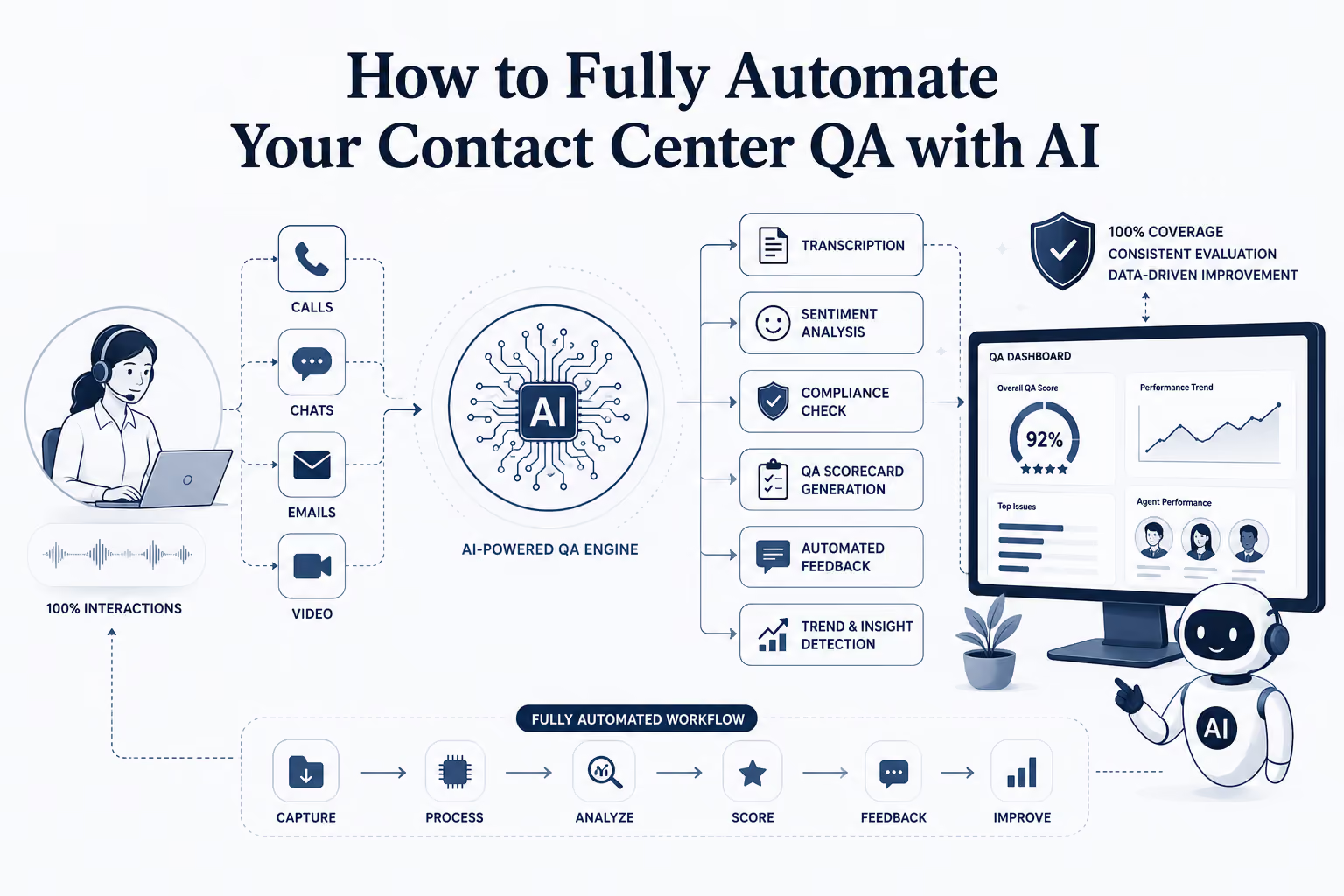
Most QA teams are grading on a curve they never chose. A supervisor with 40 agents and a few hours a week can realistically review two or three calls per agent, which means the overwhelming majority of what happens on the phones every day is never scored, never coached on, and never used to catch a compliance problem before it becomes a pattern. Automating contact center QA with AI doesn't just make that process faster. It changes what the process can see in the first place.
See 100% Call Coverage in Action
SigmaMind AI scores every call automatically against your existing rubric, flags risk in real time, and routes only the calls that need a human straight to your reviewers.
What does it actually mean to "fully automate" contact center QA?
Full automation doesn't mean removing humans from quality management. It means the AI layer does the listening, transcribing, and scoring on every single interaction, and human reviewers spend their time on the calls the AI flags as needing judgment, not on randomly sampling calls that mostly turn out fine. The scorecard stays yours. The rubric stays yours. What changes is coverage: instead of reviewing a handful of calls a week, every call gets scored the moment it ends.
Where does manual QA actually break down?
The math has always been the real problem, not the effort. A contact center handling 10,000 calls a month with a QA team sampling 2-3% is scoring roughly 250 calls and leaving the other 9,750 completely unreviewed. McKinsey's research on AI-driven quality assurance found that manual QA programs typically evaluate less than 5% of customer interactions, while a largely automated process can reach over 90% scoring accuracy against 70-80% for manual reviewers, with cost savings above 50% once the automation is running. That gap between what gets sampled and what actually happens on the phones is where compliance risk and coaching blind spots both live.
What does an AI QA system actually score on every call?
A useful automated QA layer evaluates the same categories a strong human reviewer would, just on every call instead of a sample:
- Script and disclosure adherence: required openings, mandatory disclosures, and closing statements, checked word for word where compliance demands it
- Tone and sentiment: whether the agent (or AI voice agent) stayed calm and empathetic through an escalation, not just whether the words were technically correct
- Verification steps: identity checks and account verification completed in the right order before sensitive information changes hands
- Resolution and next steps: whether the call actually solved the caller's problem or just ended it
- Compliance triggers: specific phrases or omissions that create regulatory exposure, flagged the moment they happen instead of weeks later
Coverage across all five, on every call, is what actually closes the sampling gap. Automated after-call scoring pairs naturally with automated disposition and summary logging, which is worth setting up at the same time since it's the same automation layer doing the work.
How does AI route flagged calls to reviewers without slowing coaching down?
Scoring 100% of calls only helps if the right 1-2% actually reach a human reviewer quickly. The practical model is a tiered one: low-risk calls that score well get filed automatically with no review needed, borderline calls get queued for a reviewer with the flagged moment already timestamped, and calls that trip a compliance or escalation trigger route straight to a supervisor with full context attached, not a raw recording someone has to relisten to from the start. That handoff pattern is the same one used for live call escalations to human agents: context travels with the call instead of forcing a reviewer to reconstruct it.
How do you roll out automated QA without breaking your existing scorecards?
Teams that get this wrong usually try to redesign the scorecard and the automation at the same time. A cleaner rollout keeps them separate:
- Digitize your current rubric exactly as it is: Don't redesign criteria before you've seen how AI scores against your existing standard.
- Run AI scoring in parallel with manual review for 2-4 weeks: Compare AI scores against human scores on the same calls to calibrate before trusting it solo.
- Start with post-call scoring before real-time flagging: Coverage is the first win. Real-time compliance alerts come once scoring accuracy is proven.
- Route only genuinely flagged calls to reviewers: If everything above a low bar still gets manually reviewed, you haven't actually closed the coverage gap.
Is 100% QA coverage actually achievable for every call center?
Yes, for the scoring layer itself. What's realistic is closer to 100% of calls scored automatically, with a small, consistent percentage routed to human reviewers, not zero human involvement. The goal isn't replacing your QA team. It's giving them a complete picture instead of a 2-3% guess and letting them spend their time coaching instead of sampling.
Getting started with automated contact center QA
The teams that get the most out of this don't try to automate everything on day one. They digitize the scorecard they already trust, run it in parallel with manual review long enough to calibrate, and only then turn on real-time flagging. Coverage is the win worth chasing first. Once every call is actually being scored, the compliance alerts, coaching workflows, and trend data all get easier to build on top of.
Ready to see 100% call coverage on your own scorecard? Talk to the team or start building for free to run your first automated QA pass.
Evolve with Sigma Mind AI
Build, launch & scale AI agents
Related Blogs
Ready to transform your call center?

More Conversations.
Less Manual Work.

Building from San Francisco, CA