
12 Best Conversational AI Platform Providers in 2026
Compare 12 Conversational AI Platform Providers in 2026 by pricing, voice readiness, workflows, and integrations. See pros, cons, and pick your fit.
IN this article

Evolve with Sigma Mind AI
Build, launch & scale AI agents
TL;DR
Conversational AI platform providers now span voice AI orchestration tools, enterprise contact center suites, visual builders, developer APIs, and cloud-native stacks. The right choice depends on whether you need production voice agents, enterprise governance, developer control, or ecosystem integration. This guide compares 12 providers by pricing model, voice readiness, workflow depth, integration flexibility, and real-world tradeoffs so you can shortlist the right vendor faster.
Why Choosing the Right Conversational AI Platform Matters More Than Ever
Conversational AI platforms used to mean chatbots. In 2026, the category is much broader. The strongest conversational AI platform providers help teams build AI agents that answer calls, qualify leads, book appointments, process refunds, update CRMs, escalate to humans, and measure every interaction.
Gartner predicts agentic AI will autonomously resolve 80% of common customer service issues by 2029, reducing operational costs by 30% source. McKinsey estimates applying generative AI to customer care could increase productivity by a value equal to 30% to 45% of current function costs source. Forrester’s 2026 Wave for conversational AI evaluated the 14 providers that matter most, confirming this is now a mature, analyst-tracked category source.
The opportunity is real, but so is the buying risk. Pricing models vary wildly. Voice demos often hide production problems. And the “best” platform depends on whether you need developer control, enterprise governance, cloud-native infrastructure, or a no-code builder.
This guide compares the top conversational AI platform providers by use case, pricing model, feature depth, user sentiment, and tradeoffs.
The 6 Types of Conversational AI Platform Providers
Before comparing individual vendors, it helps to understand the categories. Most buyers do not realize they are comparing fundamentally different platform architectures.
Voice AI orchestration platforms let you build voice agents with choices across STT, TTS, LLM, and telephony providers. You control the stack.
Enterprise conversational AI suites offer large-scale contact center automation with governance, compliance, and managed implementation.
Visual conversation design platforms emphasize drag-and-drop building, prototyping, and collaboration between business and technical teams.
Developer API platforms give engineers a bare API layer to build custom voice agents with maximum flexibility and minimum abstraction.
Cloud-native hyperscaler tools from Google, AWS, and Microsoft work best when you are already committed to that ecosystem.
Open-source and self-managed frameworks give you full control over deployment, data, and customization at the cost of higher engineering effort.
The mistake most buyers make is comparing all of these as if they solve the same problem. They do not.
Quick Comparison Table
ProviderBest ForChannelsPricing ModelKey StrengthMain TradeoffSigmaMind AIDeveloper-first production voice + omnichannel workflowsVoice, chat, email$0.03/min platform + provider costs (voice); $0.005/AI msg + costs (chat); enterprise customModel-agnostic orchestration, telephony flexibility, node-based workflowsModular pricing requires modeling full stackRetell AIFast self-serve voice agentsVoice, chat$0.07–$0.31/min voice; $0.002+/msg chat; enterprise customEasy start, public pricing, 20 free concurrent callsAdd-ons and provider choices affect true costVapiDeveloper API for custom voice agentsVoice$0.05/min platform + provider costs at costBYO keys, maximum developer controlFull cost hard to predict; less turnkeyBland AIFlat-rate AI phone callsVoice, SMS/web chat on higher plans$0.14/min Start; $0.12/min + $299/mo Build; $0.11/min + $499/mo ScaleBundled LLM/STT/TTS/telephony pricingMixed community feedback on reliabilityCognigyLarge enterprise contact center automationVoice, chat, messagingCustom enterpriseMature orchestration and governanceExpensive and implementation-heavyVoiceflowVisual agent design and CX collaborationVoice, chatFree trial; usage-based / request pricingVisual builder, collaboration, observabilityPricing less transparent; complex flows get unwieldyPolyAIEnterprise voice automation in high-volume serviceVoice-firstCustom enterpriseNatural multilingual voice for large contact centersEnterprise sales cycle; no public pricingParloaEuropean/DACH enterprise contact centersVoice, chatCustom enterpriseAI Agent Management Platform for CXVery limited public review volumeRasaSelf-managed, data-sovereign conversational AIVoice, chatFree Developer Edition; enterprise customOpen/pro-code control, on-prem/private cloudSteep learning curveGoogle Conversational AgentsGoogle Cloud-native teamsVoice, chat$0.007/req chat (Flows); $0.001/sec voice (Flows)Strong NLU and GCP integrationGCP complexity and possible cost escalationAmazon Lex + ConnectAWS-native bots and contact centersVoice, chat~$0.004/speech req; ~$0.00075/text reqNative AWS stackNatural voice experiences may need extra architectureMicrosoft Copilot StudioMicrosoft 365 and Power Platform agentsChat, Teams, web, IVR$30/user/mo M365 Copilot; $200/mo for 25k creditsMicrosoft 365/Power Platform integrationCredits, licensing, and flow complexity confuse buyers
Want to model the cost of your voice agent deployment across different providers? Explore SigmaMind’s transparent pricing calculator to see each layer broken out.
How We Evaluated These Conversational AI Platform Providers
Rather than awarding generic “best overall” badges, this guide evaluates each provider against criteria that matter in production.
- Voice readiness: latency, barge-in handling, telephony support, call transfer quality.
- Workflow execution: API calls, tool use, CRM/helpdesk/e-commerce actions, not just Q&A.
- Channel coverage: voice, chat, email, SMS, Teams, WhatsApp, web.
- Pricing transparency: public pricing, cost layers, add-ons, hidden variables.
- Deployment model: SaaS, private cloud, on-prem, BYOC, hyperscaler-native.
- Integration depth: native connectors, custom webhooks, APIs.
- Observability: transcripts, recordings, QA tools, cost analytics, evaluations.
- Governance: SSO, RBAC, data retention, audit logs, compliance posture.
- User sentiment: G2, Gartner Peer Insights, Reddit, forums.
- Best-fit use case: where the platform genuinely excels versus where it falls short.
This framework aligns with what industry evaluators recommend. Vellum’s voice AI platform guide, for example, uses similar criteria: latency, voice quality, pricing transparency, deployment flexibility, integrations, compliance, and observability source.
The 12 Best Conversational AI Platform Providers
1. SigmaMind AI
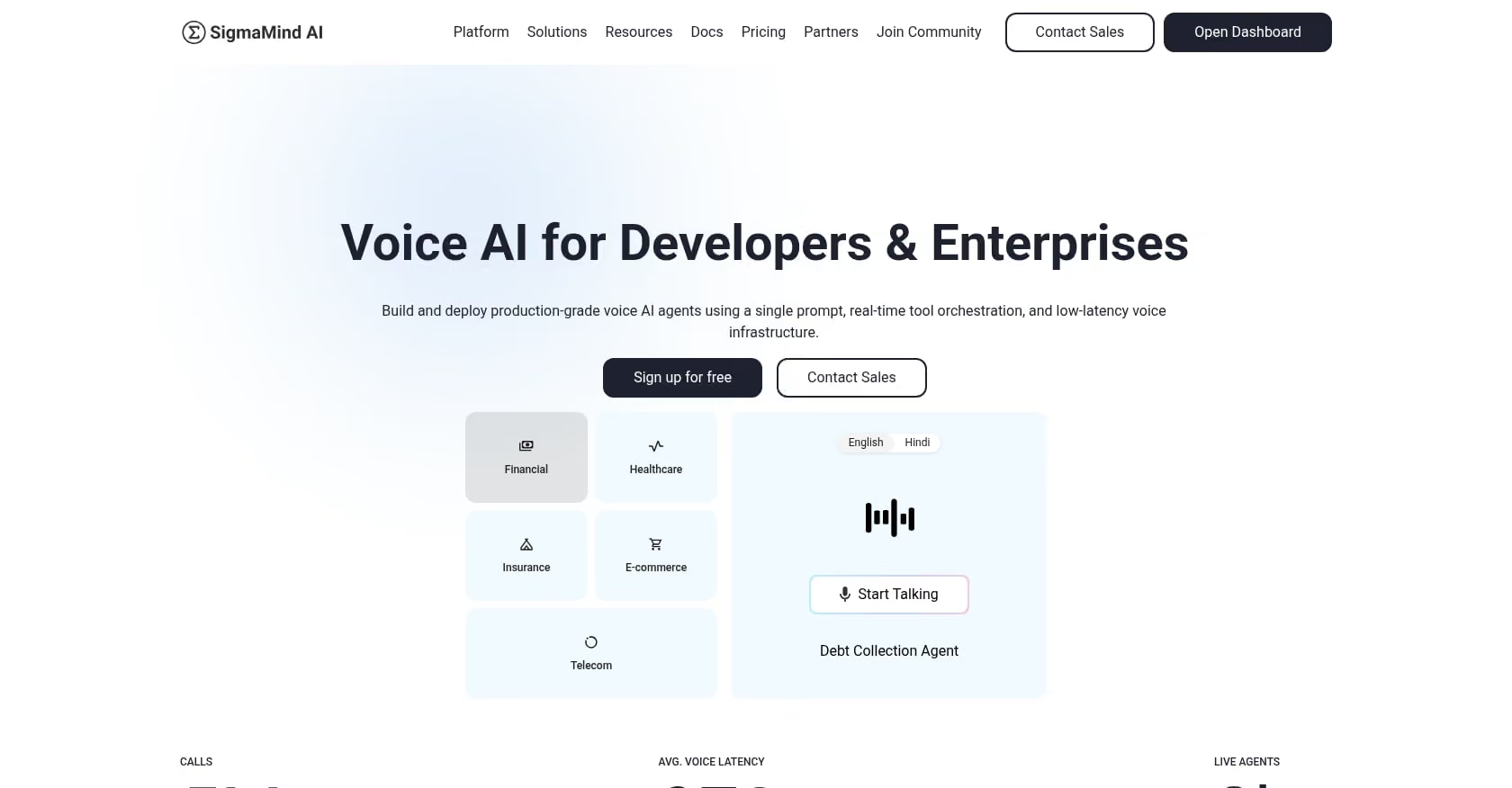
Best for: Developer-first production voice agents and omnichannel workflows
SigmaMind AI is a YC-backed voice AI orchestration platform for teams that need voice agents to complete real work in production, not just answer FAQs. It combines a no-code Agent Builder with developer-first APIs and an MCP server, so engineers can design multi-node conversational workflows, attach telephony, and run high-concurrency deployments from within their existing coding tools.
Pricing:
- Voice agents: $0.03/min platform fee plus provider costs for STT, TTS, LLM, and telephony
- Chat agents: $0.005 per AI message platform fee plus LLM and optional SMS add-on costs
- Enterprise: custom, volume-based pricing
- Free to start: pay only for what you use
Key features:
- No-code Agent Builder with multi-step flows, branching, variables, waits, API/tool actions, and escalation logic
- Model-agnostic STT/TTS/LLM support (Deepgram, ElevenLabs, Rime AI, Cartesia, OpenAI, Claude, Gemini, Hume AI)
- Telephony with native Twilio/Telnyx support, SIP, and BYOC
- Warm Transfer plus Custom Headers so human agents receive live AI summaries and structured context
- Function/tool calling and App Library for CRM, helpdesk, e-commerce, calendars, and back-office systems
- Voice, chat, and email from one agent brain
- Analytics with cost breakdowns by layer (spend, cost/call, transfers, duration, tool calls)
- Outbound campaigns with CSV upload, scheduling, concurrency caps, and personalization
- Agency/BPO multi-workspace management and full-agent import
- Playground with node-level logs for debugging before go-live
- Security posture: SOC 2 claims, encryption, SSO, audit trails, private cloud options
Proof points:
- 1M+ calls handled, 1.5k+ live agents, approximately 970 ms average voice latency
- Case study: 4,000+ refunds/month automated with 43% lower cost and turnaround under 60 seconds
- Gardencup case study: 80% refund processing time reduction, 20% CSAT lift, resolution time reduced from 15 hours to 1 hour
- Product Hunt launch: 4.9 rating from 14 reviews
Tradeoffs:
- Direct phone-number purchase is currently US-only; international deployments require BYO carrier via SIP/Twilio/Telnyx
- Modular pricing is transparent but requires modeling each cost layer
- Third-party model/provider changes may affect quality and cost
- Not HIPAA compliant yet, though HIPAA-friendly workflows are supported
User perspective: Reddit launch posts and LinkedIn founder updates emphasize production-ready features like warm transfer with custom headers, node-level debugging, and concurrency management, areas where practitioners say demo-friendly platforms often fall short.
Choose SigmaMind if your priority is building voice agents that execute workflows, integrate with real systems, preserve state across multi-step calls, and give developers control over the voice stack. If you only need a basic FAQ chatbot, it may be more platform than you need.
2. Retell AI
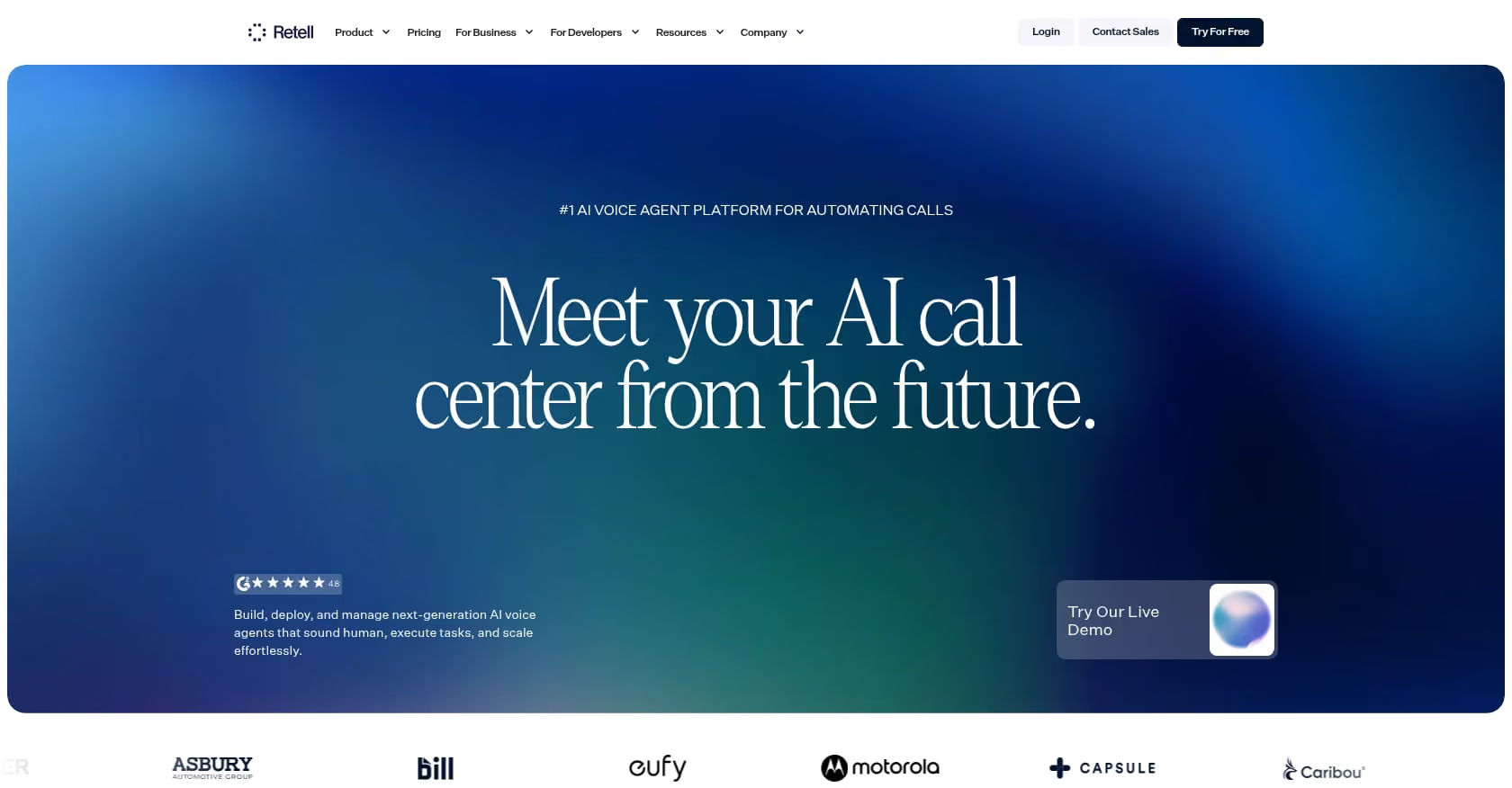
Best for: Fast self-serve AI phone agents
Retell is a strong option when speed to launch and transparent starting prices matter. It is especially attractive for smaller teams testing AI phone agents before committing to larger deployments.
Pricing:
- Pay-as-you-go with $10 in free credits
- $0.07 to $0.31 per minute for AI voice agents
- $0.002+ per message for AI chat agents
- 20 free concurrent calls
- Enterprise tier with custom pricing, SSO, and higher concurrency source
Retell’s detailed component pricing shows that total cost depends on selected voice infrastructure, voice provider, model, telephony, and add-ons. Examples include Retell Voice Infra at $0.055/min, platform voices at $0.015/min, ElevenLabs voices at $0.040/min, and separate charges for knowledge base, denoising, guardrails, PII removal, QA, branded calls, and batch calling source.
Key features:
- Voice agents and chat agents
- Call analytics and transcripts
- Simulation testing
- Webhooks and API access
- Knowledge base and call transfer
- Batch calling and branded/verified phone numbers
- Enterprise compliance options including HIPAA/BAA, SSO, custom MSA/DPA/BAA
Tradeoffs:
- Headline pricing range is clear, but true per-minute cost varies significantly with model, TTS, telephony, and add-on choices
- More advanced compliance and infrastructure features are enterprise-tier only
- Teams needing complex, multi-node stateful workflows should compare Retell’s builder carefully against orchestration-heavy platforms
User perspective: A Reddit user comparing LiveKit Cloud, Vapi, and Retell for about 3,000 minutes/month said Retell was hard to beat for a small team because of predictable per-minute pricing and speed to ship source.
3. Vapi
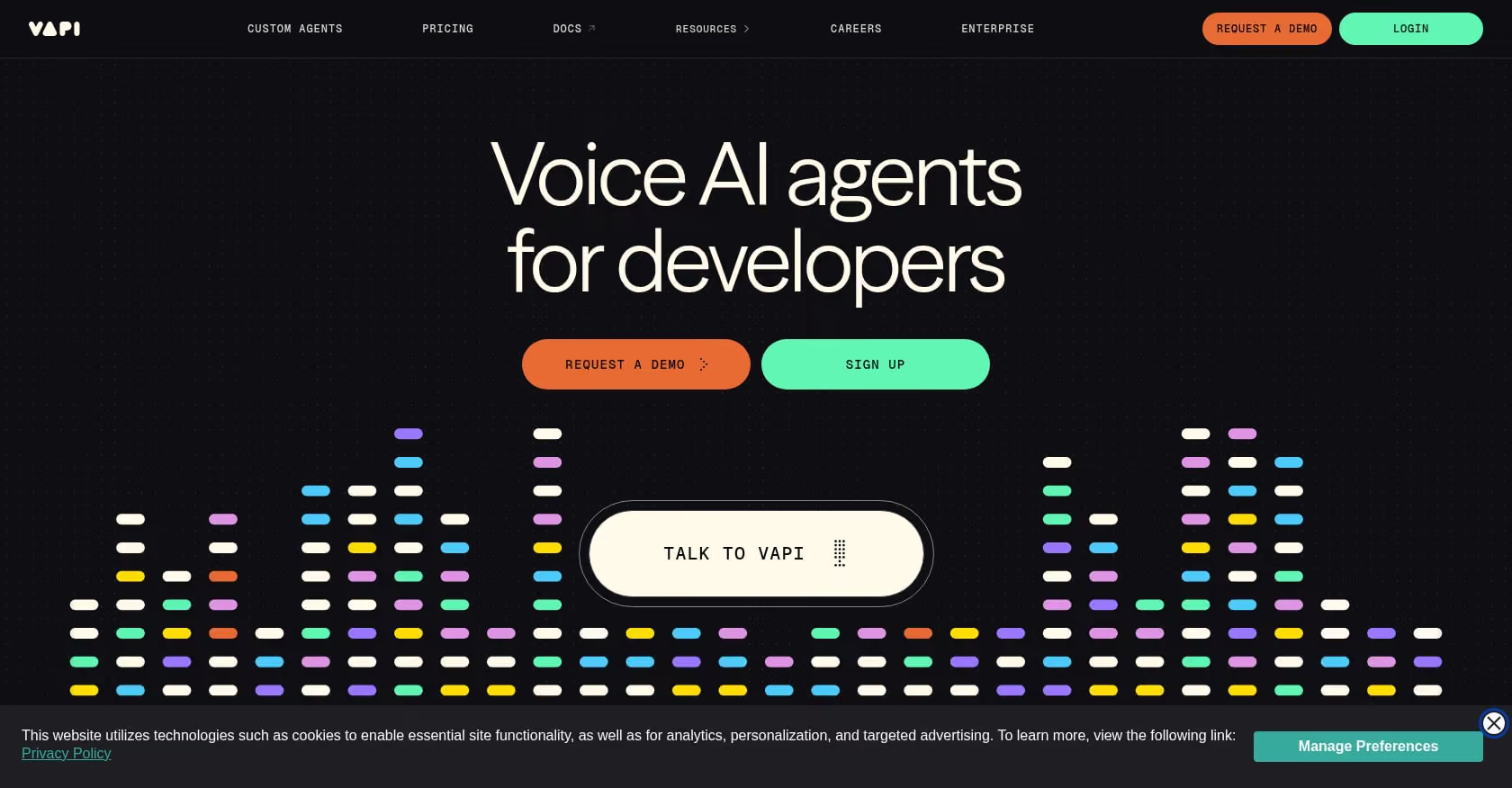
Best for: Developer API control over voice agents
Vapi is a strong API-first choice when your engineering team wants granular control over every component of the voice stack. It is less ideal if business users need a packaged no-code operating layer or predictable bundled pricing.
Pricing:
- $0.05 per minute platform fee, prorated by the second
- Transcriber, model, voice, and telephony costs charged at cost
- Bring-your-own API keys supported
- $2/month for phone numbers purchased through Vapi
- $10 in starter credits for new accounts source
Key features:
- Developer-first voice API
- Bring-your-own provider keys
- Provider cost routing
- Enterprise plans with higher concurrency, volume pricing, 24/7 support, shared Slack, and engineering calls
Tradeoffs:
- Excellent for developers but less turnkey for nontechnical teams
- Platform fee is only one layer of cost; total spend requires tracking provider costs separately
- Agencies need to manage client billing carefully because underlying per-minute costs are visible and variable
User perspective: A Reddit discussion estimates Vapi costs at roughly $370 to $500+ per month for a 3,000-minute use case, describing the cost as feeling unpredictable once add-ons are included source. A Vapi support thread clarifies that the $0.05/min rate is the Vapi platform fee alone, with transcriber, model, voice, and telephony costs billed separately source.
4. Bland AI
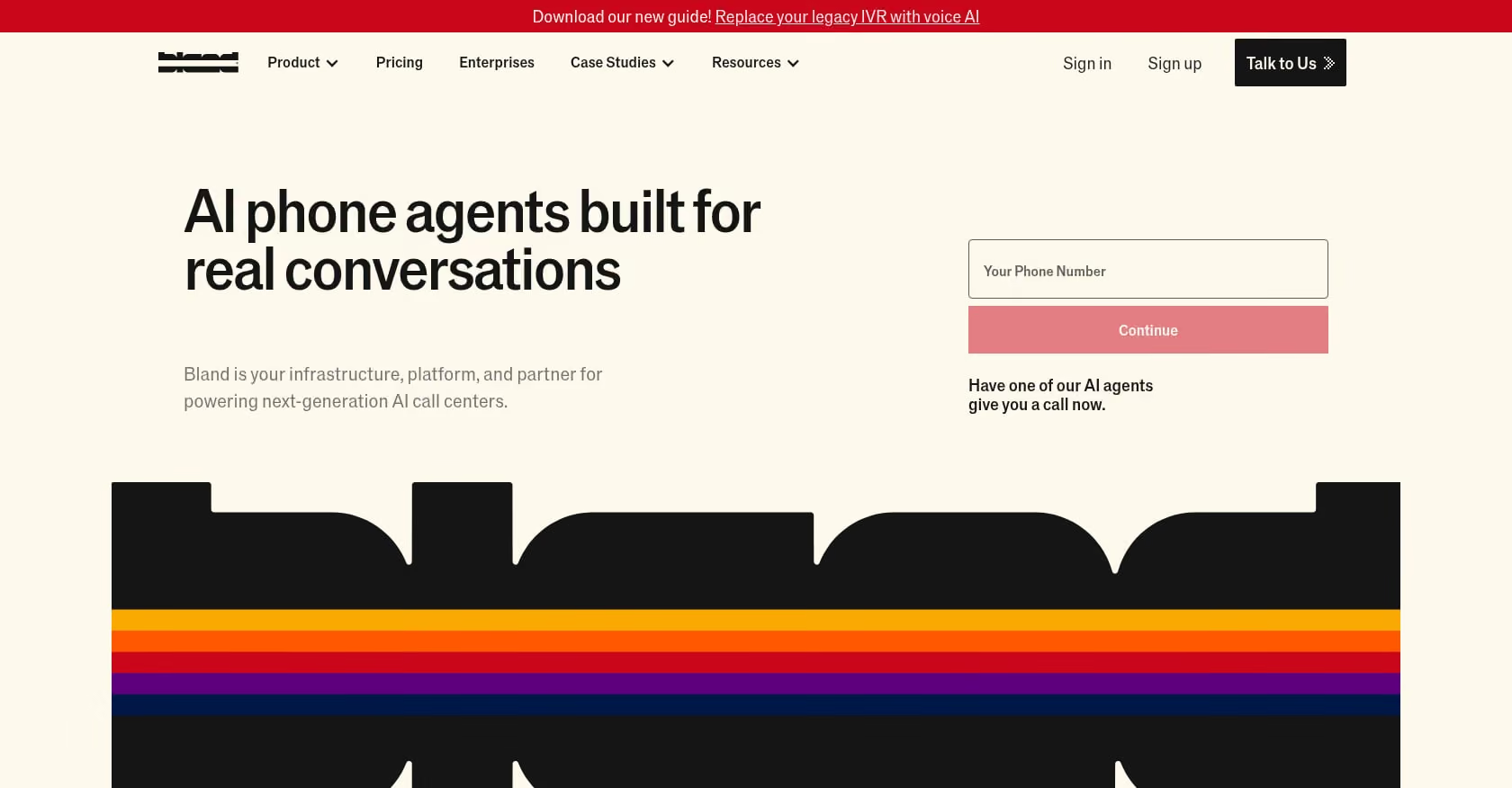
Best for: Flat-rate AI phone calls with bundled pricing
Bland is attractive if you want bundled per-minute pricing that includes LLM, speech-to-text, text-to-speech, and telephony in a single rate. Test it carefully under real call conditions before scaling.
Pricing:
- Start: $0.14/min with no platform fee (10 concurrent calls, 100 calls/day)
- Build: $0.12/min plus $299/month platform fee (50 concurrent calls, 2,000 calls/day)
- Scale: $0.11/min plus $499/month platform fee (100 concurrent calls, 5,000 calls/day)
- Enterprise: custom pricing with unlimited concurrency source
Key features:
- Conversational pathways
- Automations and custom code execution
- Appointment scheduling node
- Warm transfers and guardrails
- Live Translate and knowledge base gap detection
- SMS and web chat on supported plans
- Enterprise options including on-prem/VPC, data residency, BAA, SSO
Tradeoffs:
- Monthly platform fees appear on higher plans despite the “bundled” positioning
- Community feedback is mixed around reliability, latency, and support quality
- Concurrency and daily call limits on lower plans could bottleneck growing deployments
User perspective: Community sentiment varies. One Reddit bake-off post said the user could not consistently log in or use Bland over three days and gave up source. Other comparison threads mention concerns about delays and production complexity, though some of those discussions may be competitor-influenced and should be treated as directional rather than definitive source.
5. Cognigy
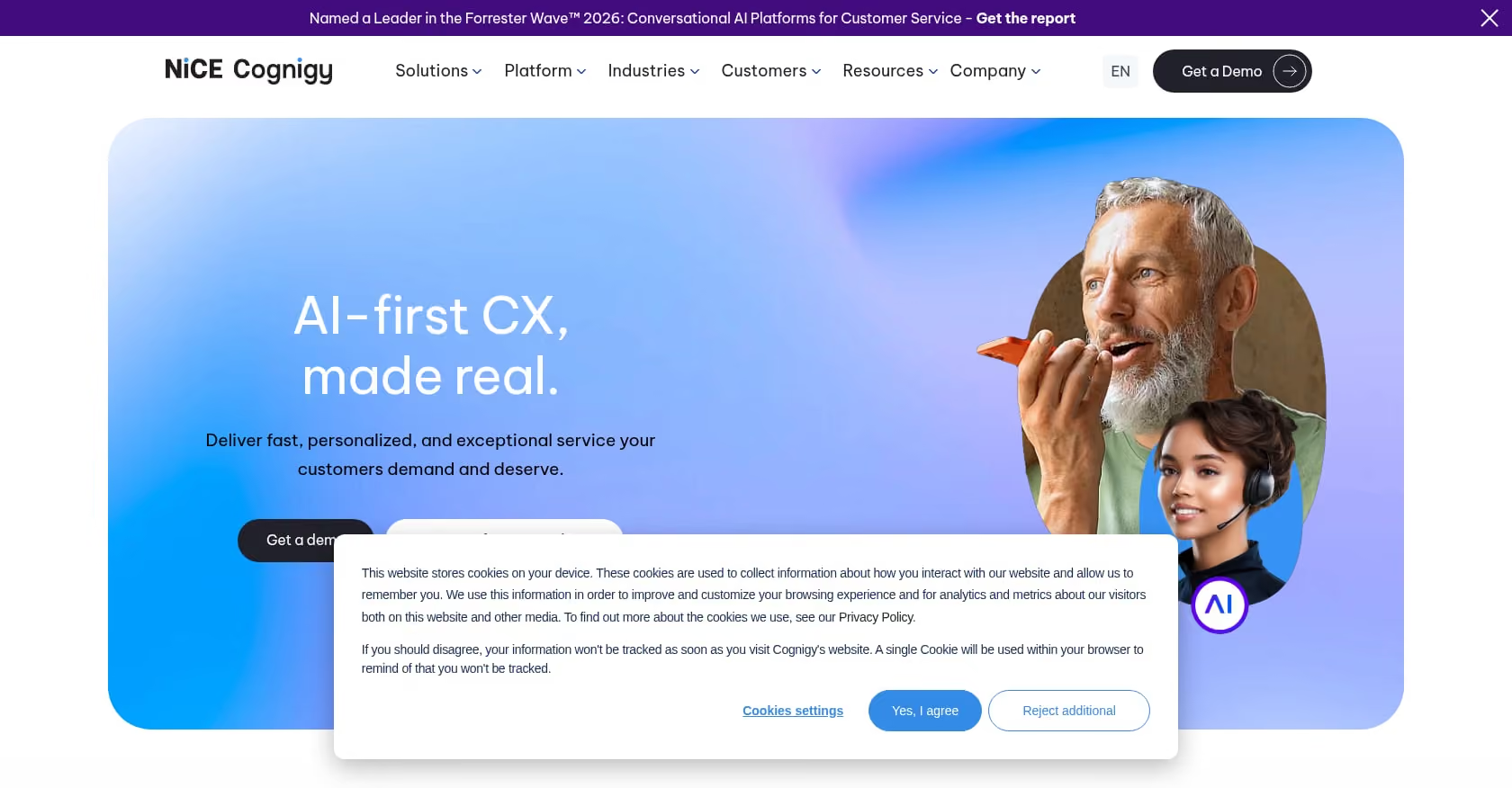
Best for: Large enterprise contact center automation
Cognigy is a serious enterprise conversational AI platform provider for large contact centers. Shortlist it when governance, scale, and enterprise workflows matter more than self-serve simplicity.
Pricing:
- Custom enterprise pricing
- One public procurement reference (RingCentral/OMNIA contract) lists “Cognigy 5K Conversations/Month” at $3,720.20/month, but this is a single data point, not universal pricing source
Key features:
- Enterprise-grade conversational AI orchestration
- Business-user-friendly GUI alongside technical depth
- Voice and chat automation for contact centers
- Governance, monitoring, and enterprise integrations
Tradeoffs:
- Enterprise depth comes with enterprise cost and implementation effort
- Too heavy for startups, SMBs, or teams that want fast self-serve voice agents
- Limited public pricing makes early budget modeling harder
User perspective: Gartner Peer Insights reviewers praise easy onboarding for business colleagues and describe the platform as “a developed product rather than slideware,” but also flag an initial learning curve for teams new to enterprise conversational AI source.
6. Voiceflow
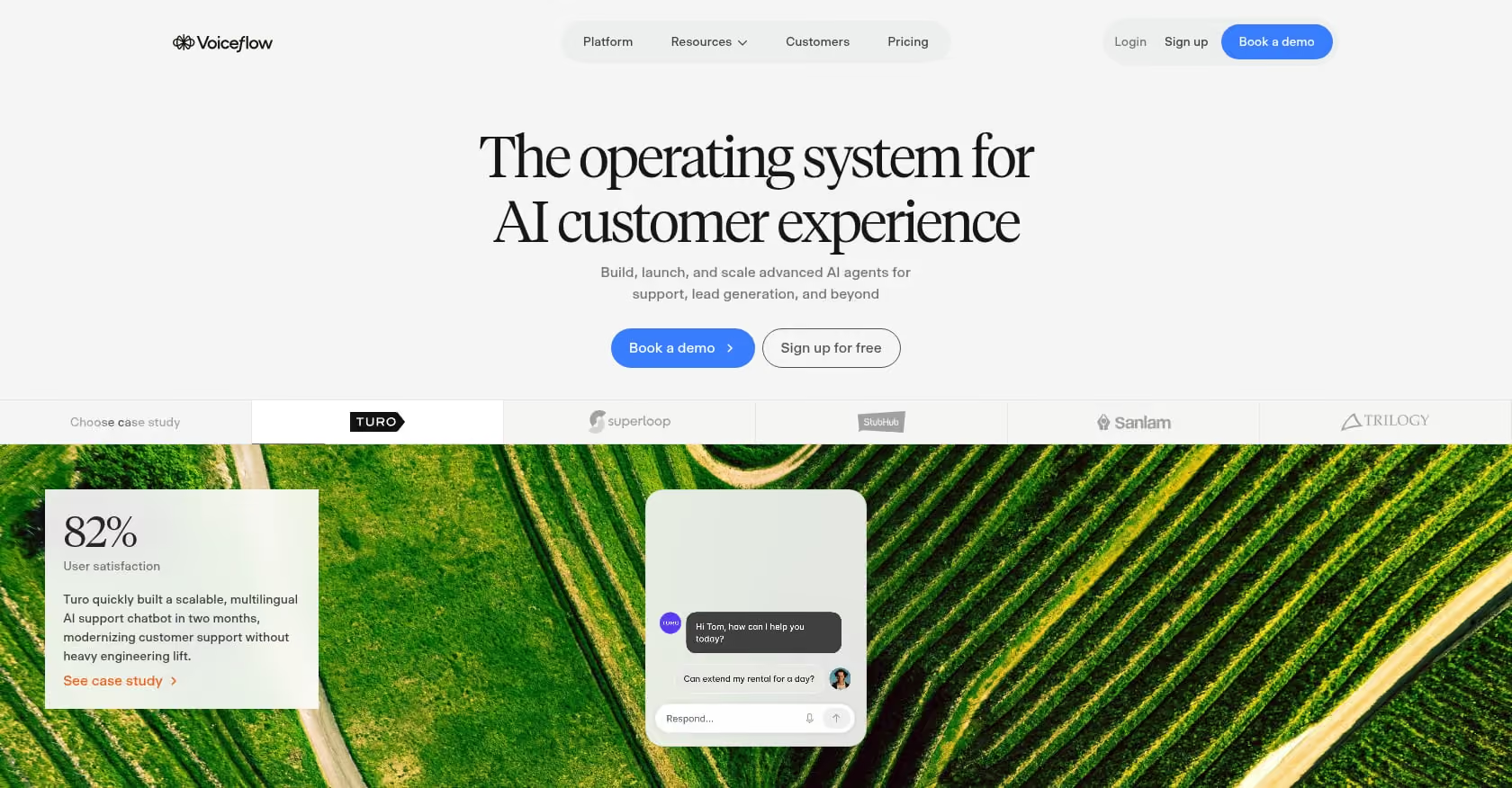
Best for: Visual conversation design and team collaboration
Voiceflow is one of the strongest visual builders for teams that need to design, test, and collaborate on conversational experiences. For production voice-heavy contact center automation, evaluate its telephony, latency, and cost controls against voice-first platforms.
Pricing:
- Free trial with no credit card
- Starter plan is free
- Business plan: usage-based billing (agents consume credits for AI responses and phone calls)
- Enterprise: contract-based through a dedicated account manager source
Key features:
- Visual agent builder with drag-and-drop flow design
- Voice and chat deployment
- Usage-based billing
- Real-time observability and performance analytics
- Team roles and permissions
- Major model provider access
- Agency/client workspace workflows source
Tradeoffs:
- Complex flows can become hard to manage in the visual environment
- Pricing is not as straightforward as fixed public tiers
- Dedicated voice AI platforms may offer deeper telephony, concurrency, and latency controls
User perspective: Voiceflow holds a 4.6/5 rating from 110 G2 reviews. A G2 reviewer praised how easy the visual builder made it to map and test client chatbot flows, while noting a learning curve around conditions, variables, and large-flow changes source. Practitioners on Reddit have also raised questions about Voiceflow pricing and onboarding costs for replacing IVR workflows, suggesting pricing clarity is a practical evaluation issue source.
7. PolyAI
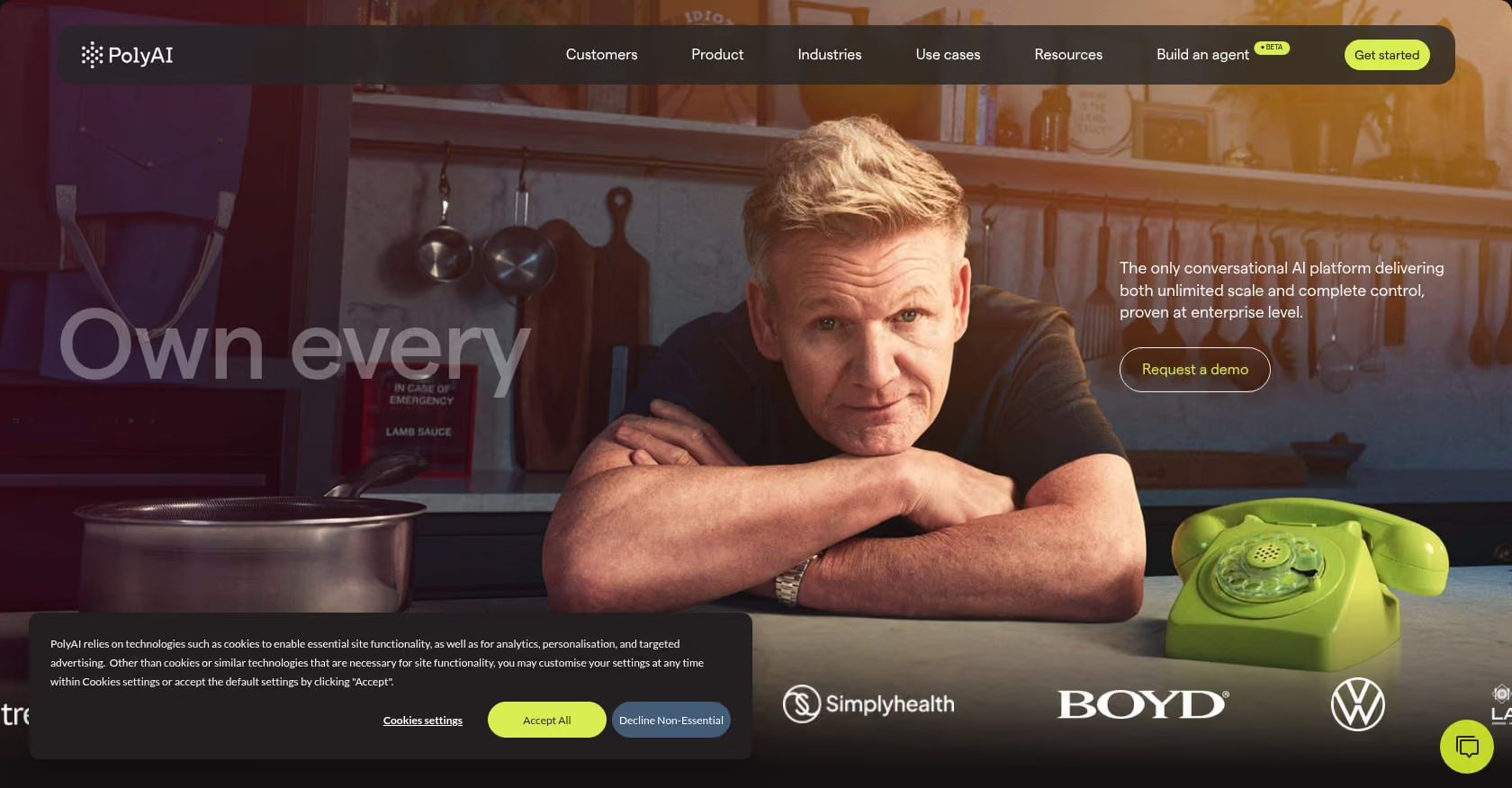
Best for: Enterprise voice automation in high-volume service environments
PolyAI belongs on enterprise voice shortlists, especially for high-volume service teams replacing IVR. It is less attractive for teams that need transparent self-serve pricing or rapid developer experimentation.
Pricing:
- Custom enterprise pricing; no public numeric pricing table
Key features:
- Voice-first conversational AI focused on lifelike multilingual agents
- Enterprise contact center deployment
- Reasoning visibility and knowledge updates
- Speech/language understanding tuning
- API/transaction integrations
- Real-time metrics and enterprise guardrails
A Forrester TEI report says PolyAI resolved more than 4.2 million calls by Year 3 in the modeled study source.
Tradeoffs:
- Strong enterprise fit, but pricing and implementation details require sales engagement
- Less suited for quick self-serve deployment or developer API sandboxing
- Public B2B review volume is more limited than broad SaaS categories
User perspective: A Reddit practitioner thread comparing voice platforms said PolyAI felt strong in structured use cases, but emphasized that platforms behave very differently once real users interrupt, ramble, and change intent mid-sentence source.
8. Parloa
Best for: European and DACH enterprise contact centers
Parloa is worth evaluating for enterprise CX teams, especially in European markets. The main caution is limited public review depth and no self-serve pricing transparency.
Pricing:
- Custom enterprise pricing; third-party coverage notes “contact vendor” style pricing
Key features:
- AI Agent Management Platform for voice and chat CX automation
- NLP, conversational flow design, analytics, and reporting
- Telephony and CRM integrations
- Subscription tiers that vary by usage and feature access source
Tradeoffs:
- Very limited public review volume (one G2 review with a 4.0/5 rating) makes peer benchmarking harder source
- Enterprise sales cycle and custom pricing may be overkill for smaller teams
- Best fit is likely larger customer service operations, not self-serve builders
User perspective: Gartner reviewer snippets mention positive comments around separation of tone and technical setup. However, the small number of public reviews means most buying decisions will depend on direct references and proof-of-concept results.
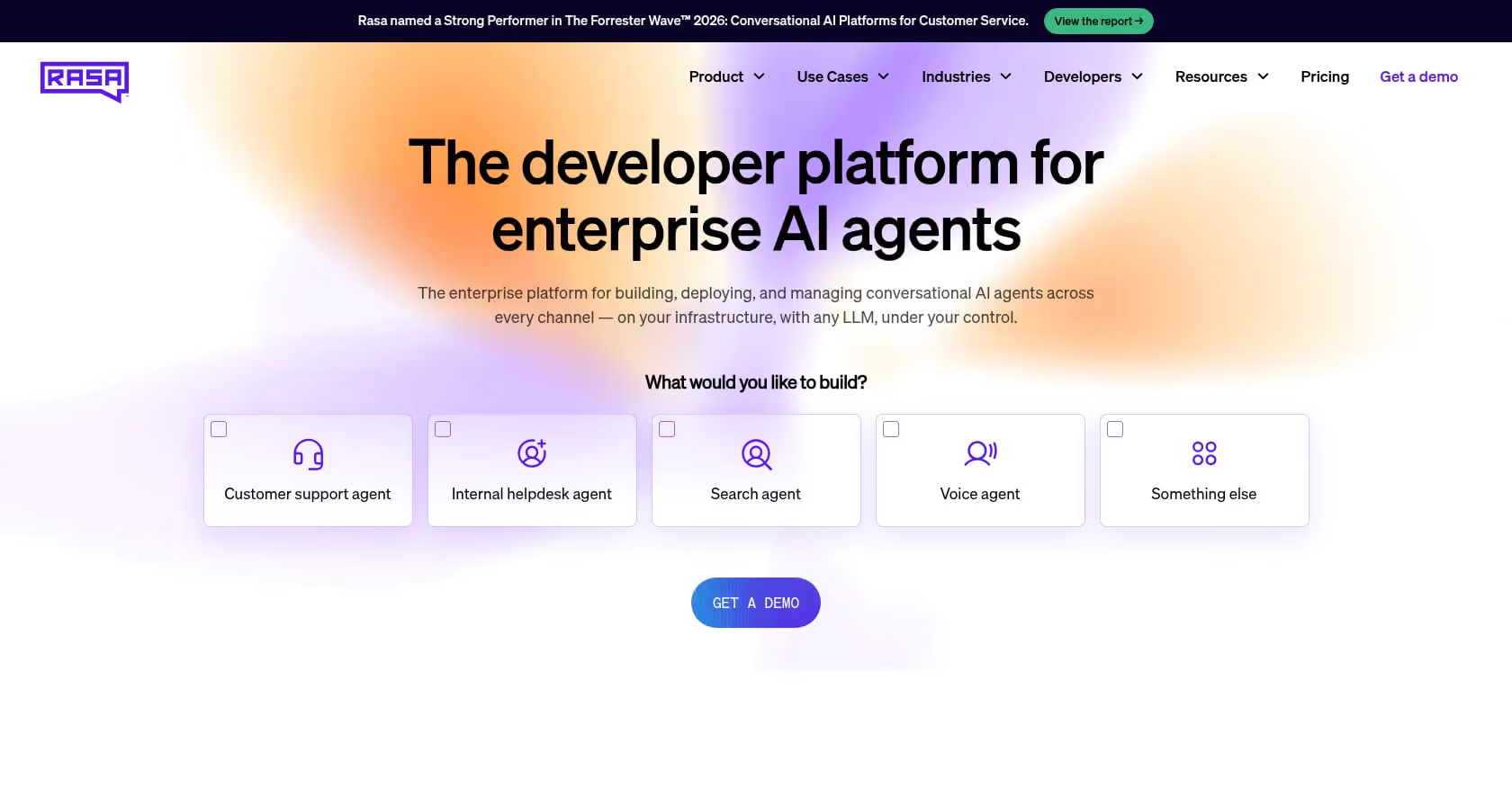
9. Rasa
Best for: Self-managed, data-sovereign conversational AI
Rasa is the right shortlist choice when ownership, extensibility, and deployment control matter more than fastest time to first bot. It is not the lowest-friction option for nontechnical teams.
Pricing:
- Free Developer Edition: one bot per company, up to 1,000 external conversations/month or 100 internal conversations/month
- Enterprise: custom pricing with premium support, advanced security, custom onboarding source
Key features:
- CALM dialogue understanding and management
- Language-agnostic NLU
- Enterprise search and custom action server
- REST/WebSocket channel connectors
- Kubernetes deployment with Helm
- End-to-end testing and PII data management
- LLM fine-tuning recipes and multi-LLM management
- OpenTelemetry observability, Redis concurrency, Kafka data pipeline
- Rasa Studio: no-code assistant flow builder, testing panel, SSO, RBAC source
Tradeoffs:
- High control comes with higher technical lift; requires engineering resources
- Steep learning curve acknowledged by both Gartner and G2 reviewers
- Complex licensing/cost model for enterprise deployments
- Fewer out-of-the-box integrations compared with managed platforms
User perspective: Gartner Peer Insights shows Rasa Platform at 4.4/5 from four ratings. Reviewers praise open-source control, data ownership, customization, and NLU quality, but consistently flag the need for expert help and limited community resources versus other products source.
10. Google Conversational Agents (Dialogflow CX)
Best for: Google Cloud-native conversational AI teams
Choose Google Conversational Agents if your team is already on Google Cloud and needs powerful multilingual conversation design. Avoid it if you need a simpler business-user builder or do not want GCP complexity.
Pricing:
- Flows (Dialogflow CX): $0.007 per chat request, $0.001 per voice second
- Playbooks: $0.012 per chat request, $0.002 per voice second
- Free trial credits: $600 for Flows, $1,000 for Playbooks (expire after 12 months) source
Key features:
- Flows: deterministic agents using intents, flows, and NLU
- Playbooks: generative agents with natural-language instructions, data stores, and generative fallbacks
- Multilingual support
- Integration with Google Cloud and channels like WhatsApp, Slack, and websites
- Visual flow builder and prebuilt agents
Tradeoffs:
- Not simple for non-GCP teams
- Pricing can rise substantially with traffic and architecture choices
- ES vs. CX vs. newer Conversational Agents/Playbooks naming confuses buyers
- Debugging difficulty and documentation depth are frequent reviewer complaints
User perspective: Google Cloud Dialogflow has a 4.4/5 G2 rating from 133 reviews. Users praise NLU and multilingual support but flag complexity in dynamic contexts and pricing escalation for high-traffic bots source. A Reddit practitioner said Dialogflow CX felt clunky once flows became large, though it had rare power for complex work source.
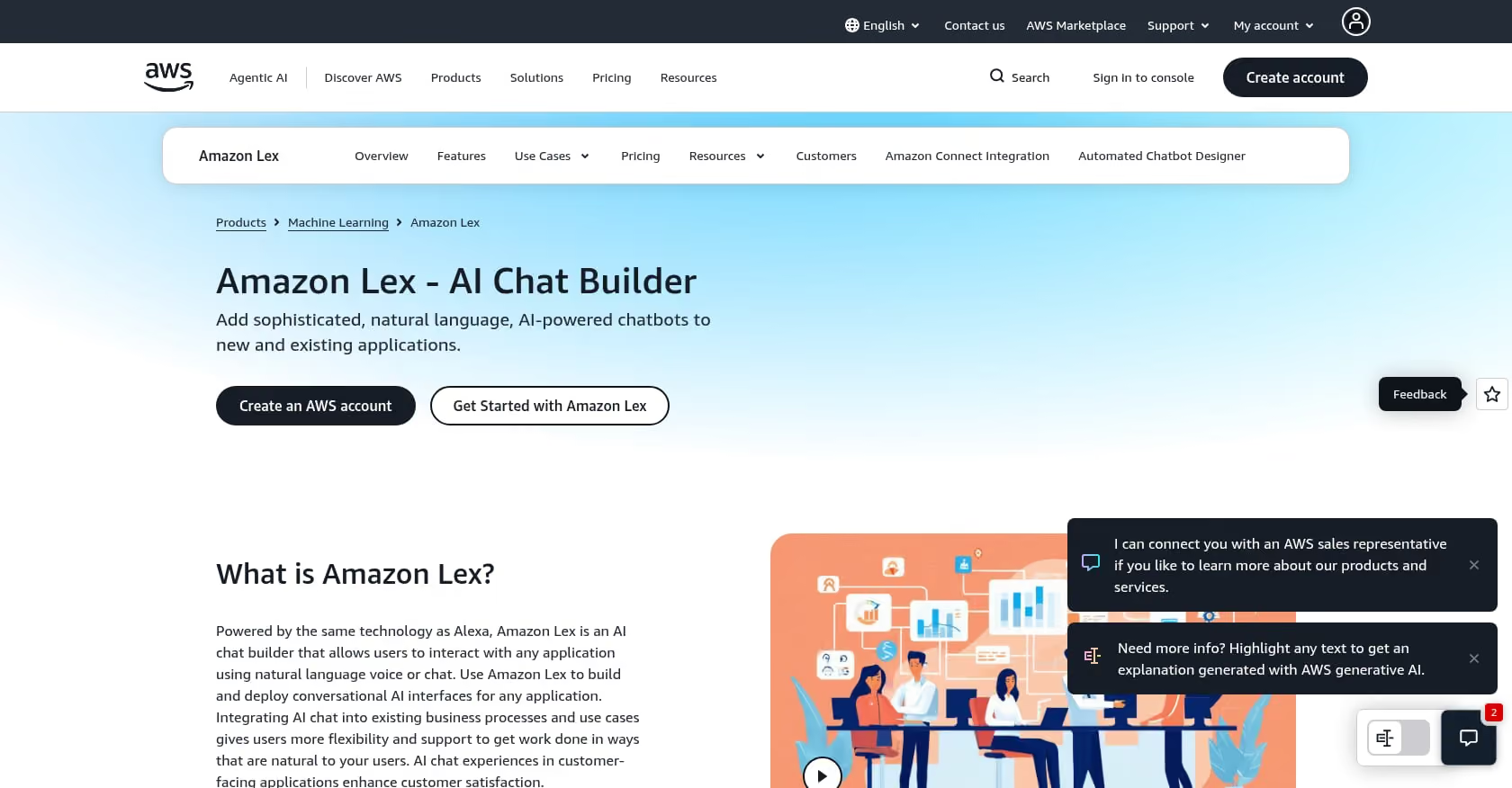
11. Amazon Lex + Amazon Connect
Best for: AWS-native bots and contact centers
Amazon Lex is a logical choice for AWS-native teams, especially when paired with Amazon Connect. It is less compelling if you want a specialized, turnkey voice AI orchestration layer.
Pricing:
- Usage-based with no upfront commitment
- Example: 8,000 speech requests at $0.004 each = $32; 2,000 text requests at $0.00075 each = $1.50
- Automated chatbot designer training at $0.50/min
- New AWS customers may receive up to $200 in Free Tier credits source
Key features:
- Conversational interfaces for voice and text
- Request/response or continuous streaming conversation models
- In streaming mode, bot can continuously listen and respond proactively
- Native integration with Amazon Connect, Polly, Bedrock, and Lambda
Tradeoffs:
- Production voice experiences may require Amazon Connect, Polly, Bedrock, Lambda, and custom orchestration
- Less plug-and-play than specialized voice AI platforms
- Best when the buyer already has AWS skills and infrastructure
User perspective: Gartner Peer Insights snippets mention low entry cost as a positive signal source. However, practitioners on Reddit report struggling to build a clean voice-enabled conversational flow entirely within AWS, noting that achieving a natural experience can require additional services and significant architectural decisions source.
12. Microsoft Copilot Studio

Best for: Microsoft 365 and Power Platform agents
Copilot Studio is the natural shortlist option for Microsoft-heavy organizations building internal agents. It is less ideal as a standalone voice AI platform if your main requirement is low-latency phone automation across external callers.
Pricing:
- Microsoft 365 Copilot: $30/user/month (paid yearly), includes Copilot Studio access for internal agents
- Standalone Copilot Studio capacity packs: $200/month for 25,000 Copilot Credits
- Pay-as-you-go billing also available
- Azure subscription required for standalone agents source
Key features:
- Internal and external agent publishing
- Prebuilt agents, templates, and preconfigured workflows
- IVR agent design and multi-agent systems
- Power Platform connectors and Dataverse storage
- Microsoft Purview/Power Platform/Viva Insights analytics
- Version rollback, collaboration, and cost oversight tools
Tradeoffs:
- Licensing, credits, Azure requirements, and agent scopes can confuse buyers
- For external voice-heavy contact center automation, compare carefully against voice-first platforms
- Heavy logic may still need to be offloaded to Azure Functions and Azure services
User perspective: Gartner Peer Insights shows 4.3/5 from 87 ratings source. Practitioners on Reddit report mixed experiences: the workable pattern is offloading heavy work to Azure Functions, while others complain that Copilot-created flows can be buggy, variables can vanish, and nontrivial data retrieval can become slow or time out source. A Microsoft Q&A thread describes intermittent non-response after deploying a Copilot Studio agent in Teams to about 400 users source.
How to Choose the Right Conversational AI Platform Provider
The best conversational AI platform is the one that fits your operating model. Here is a framework based on buyer archetype.
If you need low-latency phone agents that complete workflows
Prioritize voice-native orchestration platforms. SigmaMind AI, Retell, Vapi, and Bland are the strongest starting points. SigmaMind stands out when you need model/provider flexibility, node-based stateful workflows, warm transfers with context, and omnichannel logic from one canvas. Teams automating customer support, appointment scheduling, or e-commerce workflows should evaluate these platforms first.
If you run a large enterprise contact center
Evaluate Cognigy, PolyAI, Parloa, and Rasa. SigmaMind’s enterprise tier also fits teams that want developer control alongside enterprise governance.
If your team is developer-heavy
SigmaMind, Vapi, Rasa, Google Conversational Agents, and Amazon Lex give the most engineering control. SigmaMind’s MCP server and full API suite are built for teams that want to orchestrate from within their existing development workflows.
If your team is business/CX-heavy
SigmaMind’s no-code Agent Builder, Voiceflow, Cognigy, Parloa, and Microsoft Copilot Studio all offer visual building environments.
If you are committed to a cloud ecosystem
Google for GCP. Amazon Lex for AWS. Copilot Studio for Microsoft. Choose cloud-native tools when your engineering team already lives in that cloud. Choose specialized voice AI platforms when you want faster production workflows and a purpose-built agent operations layer.
If data sovereignty matters
Rasa is the strongest option for on-prem and private cloud. SigmaMind offers private cloud options for teams that need deployment control without managing the full open-source stack.
Conversational AI Pricing: What Buyers Miss
Do not compare conversational AI platform providers by headline price alone. This is the biggest mistake in the buying process.
For voice AI, the true cost stack includes multiple layers. Practitioners on Reddit consistently frame this as “telephony + STT + LLM + TTS all on the same call” source. Another Reddit thread about scaling voice agents notes that per-minute costs compound when teams pay for Twilio, STT, TTS, and LLM together source.
Here is the real formula:
Total monthly voice AI cost = platform minutes + STT + TTS + LLM + telephony + SMS + transfer minutes + phone numbers + concurrency + knowledge base/RAG + QA/evals + implementation + support
Different providers handle this differently:
- Vapi separates its $0.05/min platform fee from provider costs billed at cost
- Retell publishes detailed component pricing with separate lines for voice infra, voice provider, model, telephony, and add-ons
- Bland bundles LLM/STT/TTS/telephony into flat per-minute plans, but adds monthly platform fees on higher tiers
- Google charges chat by request and voice by audio second
- Microsoft uses Copilot Credits and capacity packs
- SigmaMind uses a modular model: $0.03/min platform fee plus provider costs for voice, $0.005 per AI message plus LLM/SMS for chat. Each layer is visible, so teams can tune quality, latency, and cost independently
For serious deployments, model cost per completed outcome, not just cost per minute. If you want to see what this looks like in practice, SigmaMind’s pricing page breaks down each layer with a calculator.
Demo-to-Production Checklist for Voice AI
Voice demos often sound impressive. Production introduces interruptions, silence, accents, noisy audio, edge cases, CRM latency, webhook errors, compliance routing, and escalation logic. Practitioners on Reddit warn that real users interrupt, ramble, change intent mid-sentence, and go off-script, revealing differences between platforms that are not obvious in demos source.
Before signing a contract with any conversational AI platform provider, test these:
- Interruption handling: Does the agent recover gracefully when a caller talks over it?
- Tool call failures: What happens when a CRM or API call times out mid-conversation?
- Multi-node state preservation: Can the agent maintain context across branching logic and multiple steps?
- Escalation with context: Does the human agent receive a summary, intent, customer data, and next steps? Or does the caller repeat everything? (This is a revenue and CX issue, not a feature checkbox)
- Node-level debugging: Can you test individual conversation steps before launching?
- Concurrency under load: What happens when 50 or 100 calls arrive simultaneously?
- Cost per completed outcome: Track cost per resolution, not just cost per minute
- Telephony flexibility: Can you bring your own carrier?
- STT/TTS/LLM provider choice: Can you swap providers by use case for quality/cost tuning?
- Staging environment: Can business teams update flows without breaking production?
- Audit logging, SSO, RBAC: Are enterprise security controls available and functional?
FAQ
What is a conversational AI platform provider?
A conversational AI platform provider gives teams the tools to build, deploy, monitor, and improve AI agents that interact through voice, chat, messaging, email, or contact center channels. These platforms support natural-language understanding or LLM reasoning, multi-turn dialogue, workflow execution, tool calling, human handoff, and analytics. GetVoIP defines them as agents that talk through voice, chat, messaging, or email, understand natural language, remember context, and complete tasks like appointments or orders source.
What is the difference between conversational AI and a chatbot?
Chatbots often answer scripted questions within narrow rules. Conversational AI platforms support multi-turn context, voice and chat channels, tool calling (CRM updates, ticket creation, payment processing), human handoffs with context, analytics, and complex workflow execution. The category has moved far beyond simple Q&A. For a deeper breakdown, read about how AI agent chatbots differ from traditional chatbots.
How much do conversational AI platforms cost?
Pricing varies wildly. Some providers charge per minute (SigmaMind at $0.03/min platform fee, Vapi at $0.05/min, Bland at $0.11 to $0.14/min bundled). Others charge per request (Google at $0.007/chat request), per credit (Microsoft at $200/month for 25,000 credits), or custom enterprise contracts (Cognigy, PolyAI, Parloa). The critical point is that voice AI cost almost always includes multiple layers: platform fee, STT, TTS, LLM, telephony, and add-ons.
Which conversational AI platforms support voice?
All 12 platforms in this guide support voice to some degree. SigmaMind, Retell, Vapi, Bland, PolyAI, and Parloa are voice-first or voice-native. Cognigy, Rasa, Google Conversational Agents, Amazon Lex, Microsoft Copilot Studio, and Voiceflow support voice but vary in telephony depth, latency optimization, and production-grade call handling.
What should I test before buying a conversational AI platform?
Test latency under real network conditions, interruption handling, workflow execution (not just Q&A), escalation quality (does the human agent get context?), integration reliability, analytics depth, cost predictability, and compliance controls. Do not trust demos alone.
Do I need a developer to build conversational AI agents?
It depends on complexity. No-code builders (SigmaMind’s Agent Builder, Voiceflow, Cognigy, Copilot Studio) work for simpler flows. Complex workflows with API calls, conditional logic, multiple integrations, and custom escalation rules usually require developer involvement.
What is BYOC in voice AI?
BYOC means “bring your own carrier.” It allows you to connect your existing telephony provider (typically via SIP, Twilio, or Telnyx) instead of being locked into the platform’s telephony stack. This matters for international deployments, carrier preferences, and cost control.
What is the biggest mistake when choosing a conversational AI platform?
Choosing based on demo quality instead of production criteria. Demos show best-case scenarios. Production shows latency under load, tool-call failures, interruption recovery, handoff quality, cost surprises, and compliance gaps. The platform that sounds best in a five-minute demo is not always the one that performs best after 10,000 real calls.
If you are evaluating conversational AI platform providers for customer support, sales, appointment scheduling, debt collection, or contact center automation, talk to SigmaMind about your workflow or start building for free.
Evolve with Sigma Mind AI
Build, launch & scale AI agents
Related Blogs
Ready to transform your call center?

More Conversations.
Less Manual Work.

Building from San Francisco, CA