
Why Call Transfers Lose Customer Context: 5 Fixes (2026)
Discover Why Call Transfers Lose Customer Context and fix it in 2026 with warm handoffs, CRM integration, and clear ownership. Get practical steps—read the guide.
IN this article

Evolve with Sigma Mind AI
Build, launch & scale AI agents
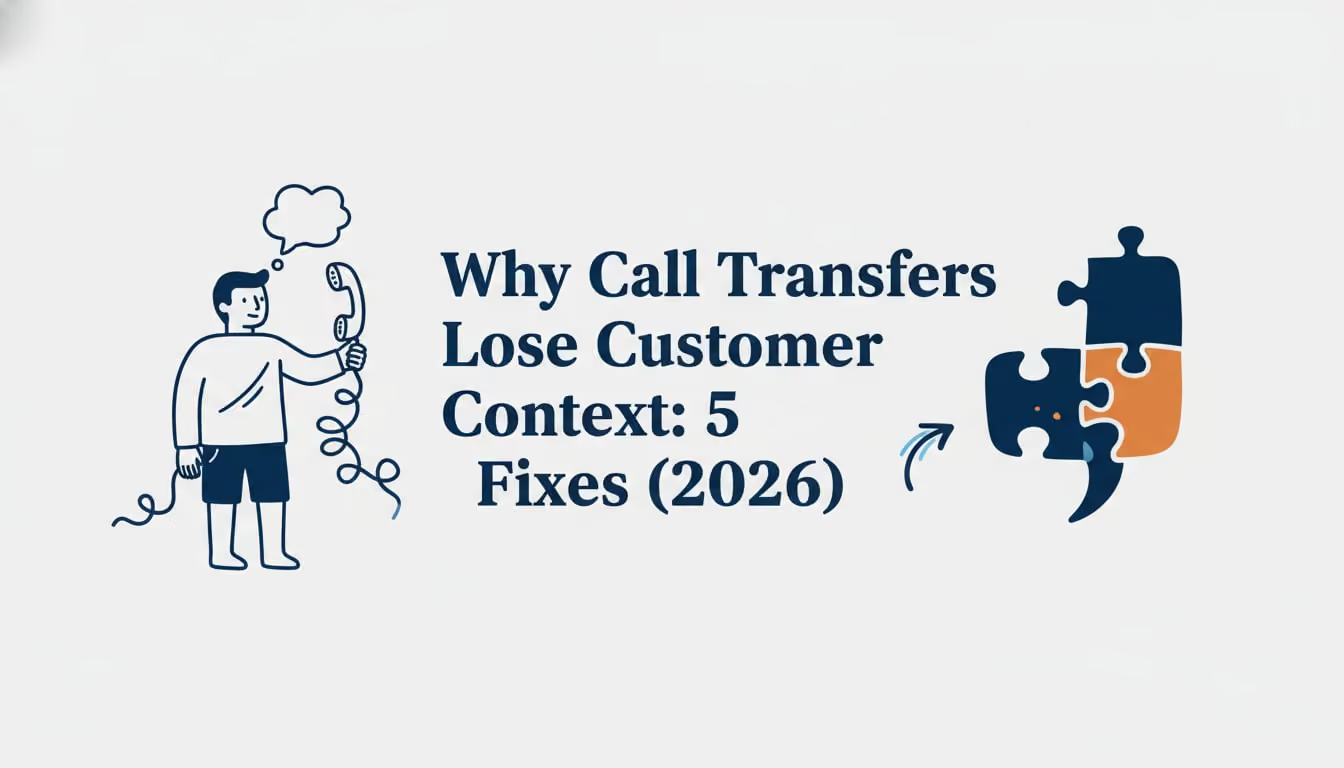
We have all been there. You call a company for customer support, explain your issue in detail, and wait patiently, only to hear the dreaded words, “I need to transfer you.” Suddenly, you are talking to a new person who asks, “So, how can I help you today?” The entire conversation resets. This frustrating experience happens primarily for two reasons: disconnected technology that fails to share data and process gaps where agents are not equipped to perform a seamless handoff.
When handoffs between agents or systems fail, customer satisfaction plummets. Research by SQM Group indicates CSAT (top-box) is 12% lower when a customer’s call is transferred to another agent. In fact, research from Salesforce shows that 80% of customers believe the experience a company provides is as important as its products. Understanding exactly why call transfers lose customer context is the first step toward fixing a broken process and keeping your customers happy.
This guide breaks down the common culprits, from technological gaps to process failures, and shows how modern solutions can create seamless handoffs that feel like one continuous conversation.
The Human Element: Process and Training Gaps
Technology is only part of the puzzle. Often, the reason why call transfers lose customer context stems from how people are trained and the procedures they are asked to follow.
Insufficient Training on Transfer Protocols
When agents are not properly trained on how to hand off calls, chaos ensues. A lack of clear transfer protocols means agents might transfer a call too early, send it to the wrong department, or fail to ensure a successful connection. This inconsistency leads directly to dropped calls and confused customers. Effective training on when and how to perform a warm transfer is a foundational fix.
Inadequate Communication During the Handoff
A transfer should never be a surprise. Inadequate communication happens when an agent fails to tell the customer they are being transferred, why it is necessary, or who they will speak to next. This silent treatment leaves customers feeling lost and unimportant. Best practices involve clearly explaining the transfer process, getting the caller’s confirmation, and staying on the line to introduce the next agent.
Transferring Without Confirming Availability
One of the most frustrating experiences for a customer is being transferred to an empty queue or a voicemail box. This happens when an agent transfers a call without first confirming that another agent is actually available to take it. It’s the equivalent of being led into an empty room. A proper warm transfer protocol, where the first agent consults with the next agent before connecting the customer, completely eliminates this problem.
No Clear Case Ownership
When no single agent or team is responsible for seeing an issue through to resolution, the customer gets bounced around like a hot potato. Each department might handle a small piece of the problem without taking ownership of the final outcome. This lack of accountability is a primary reason why call transfers lose customer context, as no one is tasked with maintaining the full story.
The Technology Breakdown: When Systems Don’t Talk
Outdated or disconnected technology is a massive contributor to failed handoffs. If your systems are not working together, your agents and customers will feel the pain.
Siloed Systems and Lack of CRM Integration
Siloed systems are a classic reason why call transfers lose customer context. When your phone system, Customer Relationship Management (CRM) platform, and helpdesk software do not share data in real time, crucial information gets trapped. An agent in one department might take detailed notes, but if the agent in the next department uses a different system, those notes are invisible.
The impact is significant. A global contact center report found that while call centers had a customer database, only about 53% had integrated it with their phone system. This disconnect forces customers to repeat information they have already provided, such as an account number entered into an Interactive Voice Response (IVR) system. Modern platforms like SigmaMind AI solve this by connecting voice agents directly with CRMs and other tools, ensuring data flows seamlessly with the call.
Agents Juggling Too Many Tools
When an agent has to switch between five or six different applications to handle a single call, their focus is divided. Instead of listening to the customer, they are busy clicking, copying, and pasting information between a CRM, a knowledge base, a ticketing system, and the phone software. This not only slows down resolution time but also increases the chance of human error and lost context.
Outdated Phone Systems
Legacy phone systems, like old PBX hardware, were not designed for the complexities of modern customer service. They often lack the ability to support warm transfers, struggle with high call volumes, and are prone to technical glitches that result in dropped calls during a handoff. Upgrading to a modern, cloud based contact center platform can dramatically improve the reliability and functionality of your call transfers.
The Customer Experience Catastrophe
Ultimately, process and technology failures combine to create a deeply frustrating experience for the customer. These are the all too common outcomes when call transfers lose customer context.
The Dreaded Cold Transfer
A cold transfer, or blind transfer, occurs when an agent passes a caller to someone new without any introduction or background information. The second agent answers with no idea who the customer is or what they need, forcing the customer to start from scratch. This is perhaps the most direct example of why call transfers lose customer context. The solution is the warm handoff.
A warm handoff preserves the flow of the conversation. The first agent briefs the second one or, even better, the system automatically provides a summary. For example, SigmaMind AI’s Warm Transfer feature sends a live summary and structured data to the human agent, so they are fully up to speed the moment they join the call.
The Endless Repetition Cycle
Having to repeat your name, account number, and issue multiple times is a top customer service complaint. This happens when call notes are missing or systems are not integrated. Each new agent has to conduct the same discovery process, wasting everyone’s time and making the customer feel unheard.
This often includes repeated identity verification. For security reasons, a customer might be asked to verify their identity with each new agent, even if they already did so with the IVR or the first person. Integrated systems can pass an “authentication token” along with the call, confirming the customer has been verified once.
Dropped Calls and No Visibility
The worst possible outcome of a transfer is a dropped call. The customer, after waiting and explaining their problem, is suddenly disconnected. This can happen due to technical errors with outdated systems or human mistakes during a clumsy handoff.
Equally frustrating is having no visibility into case progress. When a customer calls back to follow up, the new agent has no idea what happened before. A unified ticketing system where all agents can see the complete history of a customer’s interactions is essential for providing continuous service.
Getting it Wrong From the Start
Sometimes, the context is lost before the customer even speaks to a human. Learn more about capturing inbound call context.
- IVR Misrouting: Poorly designed or outdated IVR menus can send callers to the wrong department, guaranteeing an immediate need for another transfer.
- Language Mismatches: If a caller is connected to an agent who does not speak their language, the call must be rerouted, causing delays and frustration. Smart routing can direct callers to the right language queue from the start based on their selection or even their customer profile.
- Rigid Scripts: When agents are forced to follow an inflexible script or are confined to a very strict role, they cannot solve problems that fall outside their narrow scope. This leads to unnecessary escalations and transfers for issues that a more empowered agent could have resolved.
The Path to Seamless Handoffs
Fixing why call transfers lose customer context requires a holistic approach that combines technology, process, and people.
- Embrace Warm Handoffs: Make warm transfers the standard procedure. Train agents to always brief the next person before completing a handoff.
- Integrate Your Systems: Connect your telephony platform with your CRM and helpdesk. This creates a single source of truth for customer information and eliminates data silos.
- Establish Case Ownership: Assign clear responsibility for each customer issue to ensure someone is accountable for seeing it through to resolution.
- Modernize Your Technology: Adopt a modern, cloud native platform that supports advanced features like automated context sharing, reliable call routing, and detailed analytics.
- Create a Feedback Loop: Use customer surveys, agent feedback, and call analytics to constantly review and improve your transfer processes.
By focusing on preserving context at every step, you can transform transfers from a point of friction into a seamless and positive part of the customer journey. Platforms designed for intelligent call orchestration can make this a reality, turning frustrating repeats into resolved issues. See our case studies for real-world results. Explore how SigmaMind AI helps businesses build voice AI agents that handle complex tasks and perform flawless warm transfers.
Frequently Asked Questions
What is the main reason why call transfers lose customer context?
The most common reason is a combination of siloed technology and a lack of warm handoff procedures. When the phone system is not integrated with the CRM, information does not pass between agents automatically. A cold transfer, where the first agent provides no background to the next, guarantees the context is lost.
How does a warm transfer prevent lost context?
A warm transfer ensures the receiving agent is briefed on the caller’s identity, issue, and history before the call is connected. This can be done verbally from agent to agent or automatically through technology that passes along call notes, a conversation summary, and customer data.
Can technology alone solve the problem of lost context in call transfers?
While technology is crucial, it is not a complete solution on its own. You also need well defined processes and properly trained agents. A platform can enable warm transfers, but agents must be trained to use the feature correctly and communicate effectively with customers during the handoff.
Why do I have to repeat my account number after a transfer?
This typically happens when the IVR or phone system is not integrated with the agent’s software (a lack of CTI). The information you enter is captured by one system but is not passed to the next. The new agent has no way of seeing what you already provided, so they have to ask again.
What is a “cold transfer” and why is it bad for customer service?
A cold transfer is when a call is passed to another agent or department without any prior communication or context. It is bad because it forces the customer to repeat their entire story from the beginning, which is inefficient, frustrating, and makes the company seem disorganized.
How can AI help prevent lost context during call handoffs?
AI platforms like SigmaMind AI can automate the process of preserving context. When an AI voice agent transfers a call to a human, it can generate an instant summary of the conversation and pass structured data (like a verified account number or ticket ID) to the human agent’s screen. This ensures a perfectly informed and seamless warm handoff every time. Ready to see it in action? Try SigmaMind AI for free.
Evolve with Sigma Mind AI
Build, launch & scale AI agents
Related Blogs
Ready to transform your call center?

More Conversations.
Less Manual Work.

Building from San Francisco, CA