
How Voice AI Agents are Automating Sales Calls, Lead Qualification & Follow-ups
How voice AI agents are automating sales calls, lead qualification, and follow-ups, and where contact center automation still needs a human.
IN this article

Evolve with Sigma Mind AI
Build, launch & scale AI agents
A lead fills out a form at 9 PM on a Friday and doesn't hear back until Monday afternoon. By then they've already talked to two competitors. This isn't a staffing problem most sales teams can solve by hiring more reps. It's a timing problem, and it's exactly where voice AI agents have started taking over the parts of the sales process that depend on being fast and consistent rather than persuasive.
See Voice AI Agents Qualify a Lead Live
Watch Sigma Mind AI call a new lead within seconds of form submission, qualify it against your criteria, and hand off a warm, ready-to-close conversation.
What are voice AI agents doing on a sales call today?
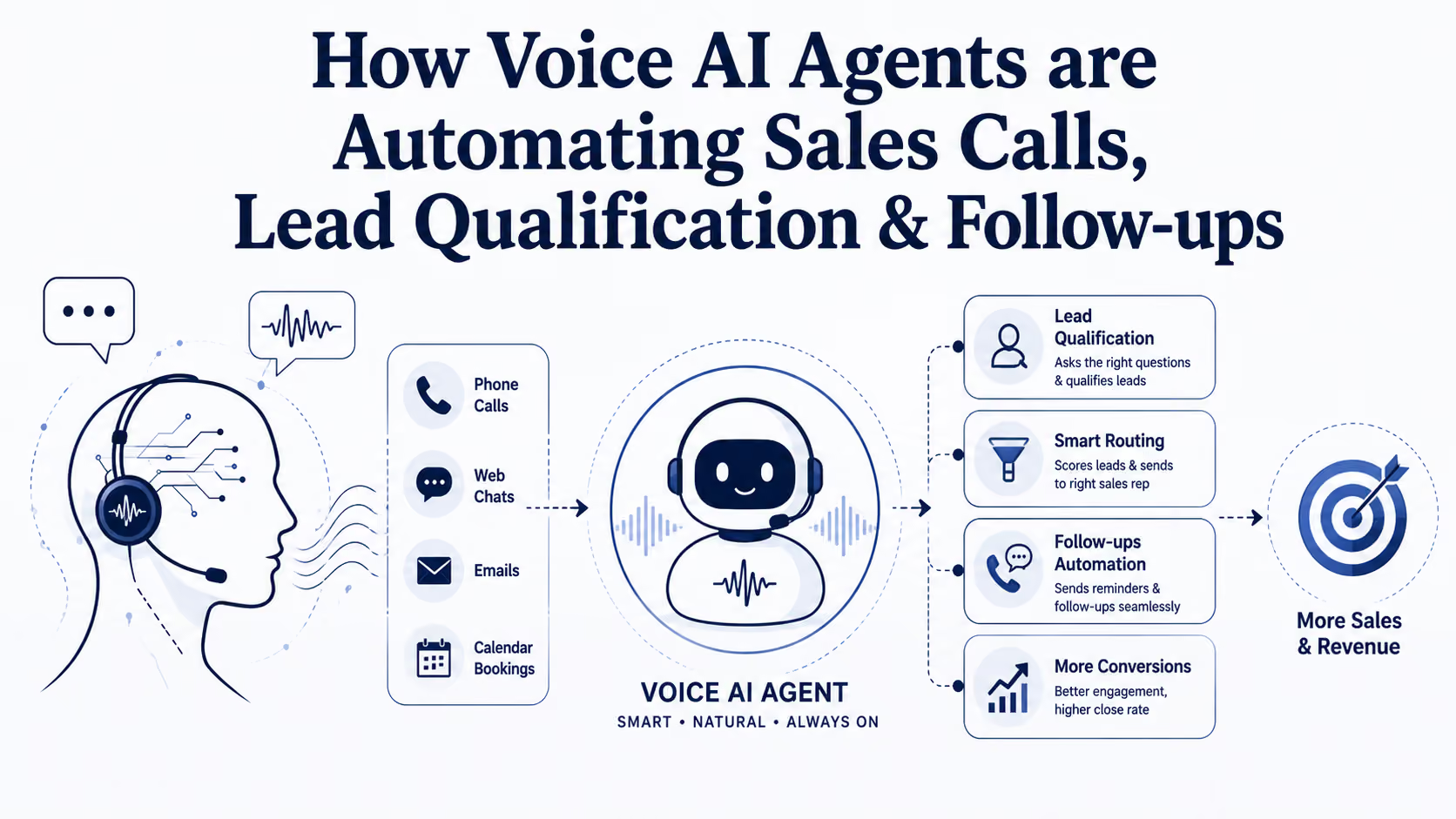
Modern AI voice technology handles the parts of a sales call that used to eat a rep's whole morning: dialing the list, asking the same qualifying questions every time, and logging what happened afterward. A voice AI agent picks up a new lead the moment it comes in, has a real back-and-forth conversation instead of reading a script word for word, and either books a meeting or flags the lead as not a fit, all without a rep touching the call.
Reps still close the deal. The agent just makes sure every lead gets a fast, consistent first conversation instead of whichever ones a rep gets to first.
Where does lead qualification break down without automation?
The break isn't usually skill. It's speed. Harvard Business Review's audit of 2,241 companies found that firms trying to contact a lead within an hour were nearly seven times more likely to qualify it than those that waited even 60 minutes longer, and more than sixty times more likely to qualify it than companies that waited a full day.
The same research found the average company took 42 hours to respond to a lead in the first place. That gap between when a lead shows interest and when a human actually calls is where most qualified pipeline quietly disappears, and it's the single biggest reason sales teams have started automating first contact rather than trying to hire their way out of it.
How do voice AI agents qualify a lead in real time?
A voice AI agent built for lead qualification is working through the same checklist a strong SDR would, just without the ramp-up time or the bad day:
- Confirming the lead actually matches the target profile before booking a meeting nobody asked for
- Asking budget, timeline, and decision-maker questions in a natural conversation instead of a rigid script
- Picking up on hesitation or objections and routing accordingly instead of pushing straight to a close
- Logging everything to the CRM the moment the call ends, not whenever a rep gets around to it
The playbook for using voice AI for lead generation covers this qualification flow step by step, including how scoring criteria get set up before the first call ever goes out.
Can voice AI agents run follow-ups without a human on every call?
Sales automation for follow-ups works best as a cadence, not a single call. A lead who doesn't answer the first attempt gets a second call at a different time of day, then a third, on a schedule that's actually documented rather than dependent on whether a rep remembers. Leads that go quiet after initial interest get a check-in call instead of falling out of the pipeline entirely. None of this requires a human dialing every attempt. It requires the cadence to be consistent, which is exactly the part that breaks down when it's left to memory and a busy week.
How does contact center automation change what reps do day to day?
Contact center automation doesn't take reps out of sales. It takes them out of dialing, qualifying cold leads, and repeating the same discovery questions on calls that were never going anywhere. When a voice AI agent decides a lead is genuinely warm, it hands the conversation to a rep with full context already attached, the same way a well-built warm transfer keeps a customer service call from starting over with a new person. Reps spend their day on qualified conversations and closing, not on the fifteen calls it used to take to find them.
Verticals with heavy lead volume and tight compliance windows, like the approach covered in voice AI for insurance lead generation, see this shift most clearly, since speed to contact and consistent qualification criteria both carry real regulatory weight there.
Do voice AI agents replace sales reps entirely?
No, and the sales teams getting the most out of this aren't trying to make that happen. Customer service AI and sales-facing voice agents are best at the repetitive, time-sensitive front end of the funnel- first contact, qualification, follow-up cadence- where consistency matters more than judgment. Negotiation, relationship-building, and closing still need a person who can read the room. The shift isn't fewer reps. It's reps spending their time on conversations that were already qualified before they picked up the phone.
Getting started with voice AI agents for sales automation
Teams that roll this out well start with one stage of the funnel, usually first-contact qualification, rather than automating the entire pipeline at once. Get that stage scoring leads consistently and handing off clean context to reps, then extend the same approach to follow-up cadences once the qualification criteria are proven. Speed to first contact is the highest-leverage place to start, since it's also the place where most pipeline is currently being lost to nothing more complicated than a slow response.
Ready to see voice AI agents qualify and follow up on your own leads? Talk to the team or start building for free to test it on your next batch of leads.
Evolve with Sigma Mind AI
Build, launch & scale AI agents
Related Blogs
Ready to transform your call center?

More Conversations.
Less Manual Work.

Building from San Francisco, CA