
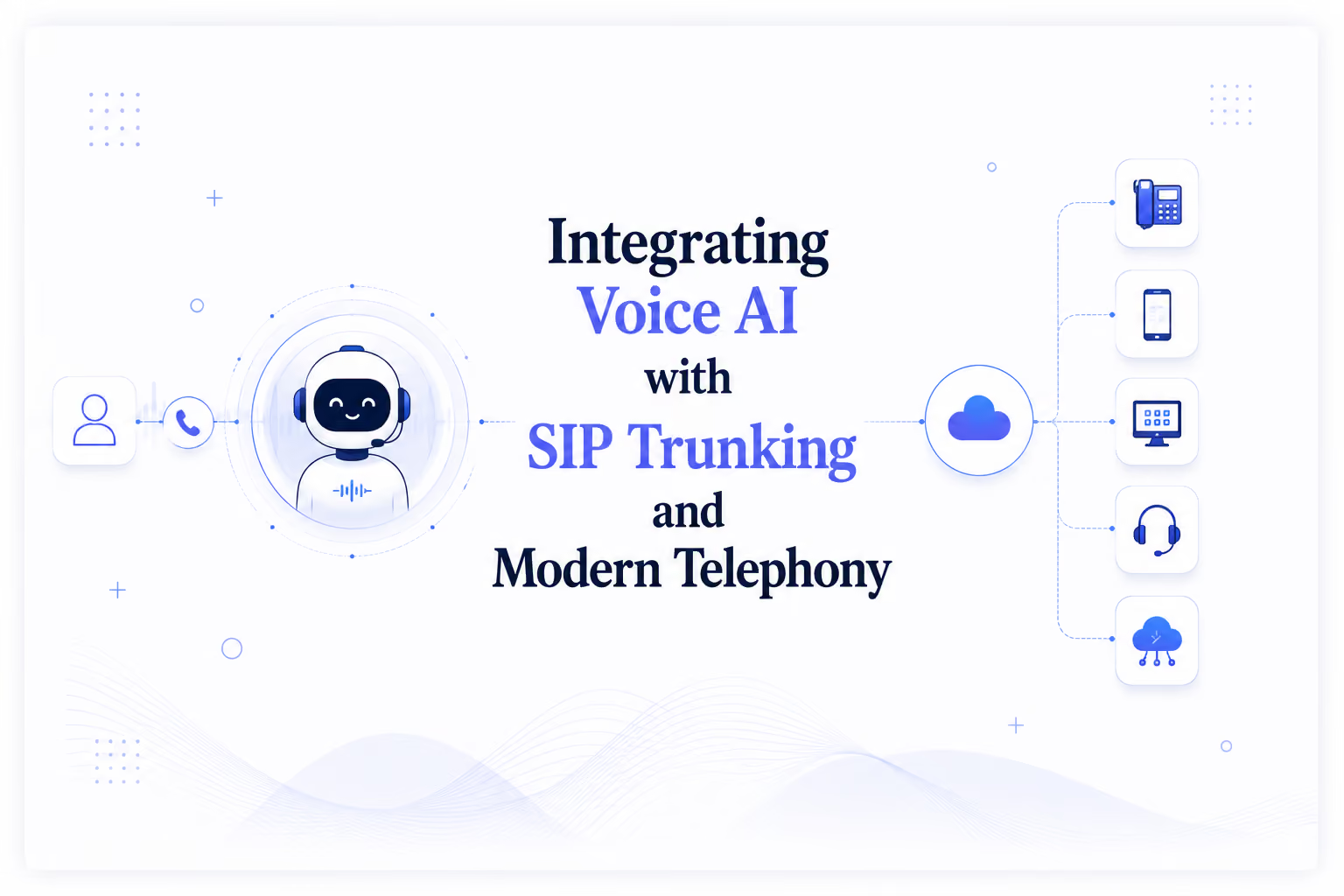
Integrating Voice AI with SIP Trunking and Modern Telephony (Twilio, Vonage, Telnyx)
Learn how to integrate Voice AI with SIP trunking using Twilio, Vonage, or Telnyx. Understand SIP setup, RTP, common issues, compliance, and deployment best practices.
IN this article

Evolve with Sigma Mind AI
Build, launch & scale AI agents
Quick summary
Voice AI integration with SIP trunking works by connecting a phone number from a provider such as Twilio, Vonage, or Telnyx into the voice AI platform using SIP credentials, domain, username, password, and proxy details, rather than routing calls through physical phone lines or SIM cards. SIP itself only handles call signaling, initiating, modifying, and ending the session, while a separate protocol called RTP carries the actual audio.
Once connected, the platform assigns the number to an inbound or outbound AI agent and starts handling real conversations. Most integration problems trace back to a handful of causes: wrong credentials, misconfigured ports, NAT or firewall issues, or a provider-side number that isn't fully set up.
You integrate voice AI with SIP trunking by connecting a phone number from a provider like Twilio, Vonage, or Telnyx to your voice AI platform using SIP credentials, letting the platform act as a virtual softphone that sends and receives calls without new telecom hardware. Your number stays with your existing provider; the AI platform only manages the call flow and conversation.
Voice AI integration in a call center almost always comes down to this one layer before anything else works: how the AI platform actually receives and places calls. Get SIP wrong and even the best conversational AI sounds broken to the caller.
See SIP Integration Working Live
Connect a Twilio, Vonage, or Telnyx number to SigmaMind AI and have an agent handling calls the same day.
What is SIP, and why does voice AI integration depend on it?
SIP, Session Initiation Protocol, is the signaling layer that sets up, manages, and ends a call. It doesn't carry the actual audio itself; a separate protocol called RTP (Real-Time Transport Protocol) handles the voice data once SIP has established the connection. Voice AI integration depends on SIP because it's what lets a platform bring in a phone number from any provider without owning the underlying telecom infrastructure.
A few terms come up constantly during setup, and it helps to know them going in:
- SIP trunking: a virtual connection replacing traditional phone lines, carrying multiple calls over the internet
- DID (Direct Inward Dialing): the virtual number assigned to a SIP trunk for inbound calls
- PSTN: the traditional landline network that SIP trunking connects to over the internet
- SIP URI: an address, like a phone number for SIP, used to identify an endpoint
How does voice AI integration in a call center actually work with SIP trunking?
It works in five steps, in this order: purchase a number from a SIP-supported provider, collect the SIP credentials from that provider, configure those credentials in the AI platform, assign the number to an inbound or outbound agent, then test the connection before going live.
- Purchase a number from a provider like Twilio, Vonage, or Telnyx that supports SIP trunking.
- Collect SIP credentials: domain or server, username, password, and proxy or registrar details.
- Configure the platform by entering those credentials and saving the connection.
- Assign the number to an inbound AI agent, an outbound AI agent, or both.
- Test the connection with real calls before routing production volume through it.
Your number never actually moves. It stays registered with your provider the entire time; the AI platform connects to it as a virtual softphone and handles the call flow from there.
What do you need from Twilio, Vonage, or Telnyx before connecting a voice AI agent?
You need four specific pieces of information from whichever provider you're using: the SIP domain or server address, a username, a password, and the proxy or registrar address if your provider requires one. Twilio, Vonage, and Telnyx each expose these slightly differently in their dashboards, but the underlying fields are the same across all three.
Transport and port settings matter more than they seem to. A typical setup runs on TLS over port 5061 rather than an unencrypted connection, and getting that wrong is a common source of calls that connect but never carry audio properly. Twilio's own documentation on SIP trunking capacity is worth reviewing here too, since concurrency and calls-per-second limits are configured on the provider side, not inside the AI platform, and a trunk provisioned too conservatively will throttle calls before the AI ever sees them. source
What SIP-specific problems come up with an AI voice agent that don't happen with human agents?
A handful of issues show up specifically because an AI agent, not a person, is on the other end of the SIP connection:
- One-way audio, usually an RTP or firewall issue rather than a SIP problem, since SIP only handles the signaling
- Calls dropping after a few seconds, often caused by NAT issues or SIP session timer settings that a human agent's softphone would handle transparently
- 401 or 404 errors on connection, almost always incorrect credentials or a number that isn't fully activated on the provider's side
None of these are unique to voice AI conceptually, but they surface faster in an AI deployment because a misconfigured connection fails a batch of calls immediately rather than waiting for a human agent to notice something feels off. The approach for adding AI voice agents to VICIdial without replacing your infrastructure covers a related integration path for teams layering AI onto an existing dialer rather than connecting a fresh SIP trunk directly.
How does conversational AI for call centers in the USA handle compliance over SIP?
It handles compliance the same way a compliant human-staffed call center does, through caller ID authentication and consent tracking layered on top of the SIP connection, not through SIP itself. STIR/SHAKEN caller authentication, required for legitimate outbound calling in the USA, works at the carrier level regardless of whether a human or an AI agent is speaking. What changes for an AI deployment is that disclosure and consent logic has to be built into the conversation itself, since an AI voice agent needs to identify itself and handle consent consistently on every single call, without the judgment a human agent might apply case by case.
Getting started with SIP integration for your voice AI agent
Start with one number and one agent before connecting your full number inventory. Confirm inbound and outbound both work cleanly, test under real call conditions rather than a single quiet test call, and only then scale to additional numbers and providers. Comparing telephony handling across platforms is worth doing before committing, since integration quality varies more between vendors than most feature lists suggest. The comparison of the top conversational AI agent platforms is a useful reference here for exactly that reason.
Bottom line: SIP integration is what makes voice AI deployment provider-agnostic. Get the credentials, ports, and transport settings right on one number first, and the rest of the rollout is repetition, not new problems to solve each time.
Ready to connect your Twilio, Vonage, or Telnyx number to a voice AI agent? Talk to the team or start building for free to test SIP integration yourself.
Evolve with Sigma Mind AI
Build, launch & scale AI agents
Related Blogs
Ready to transform your call center?

More Conversations.
Less Manual Work.

Building from San Francisco, CA