
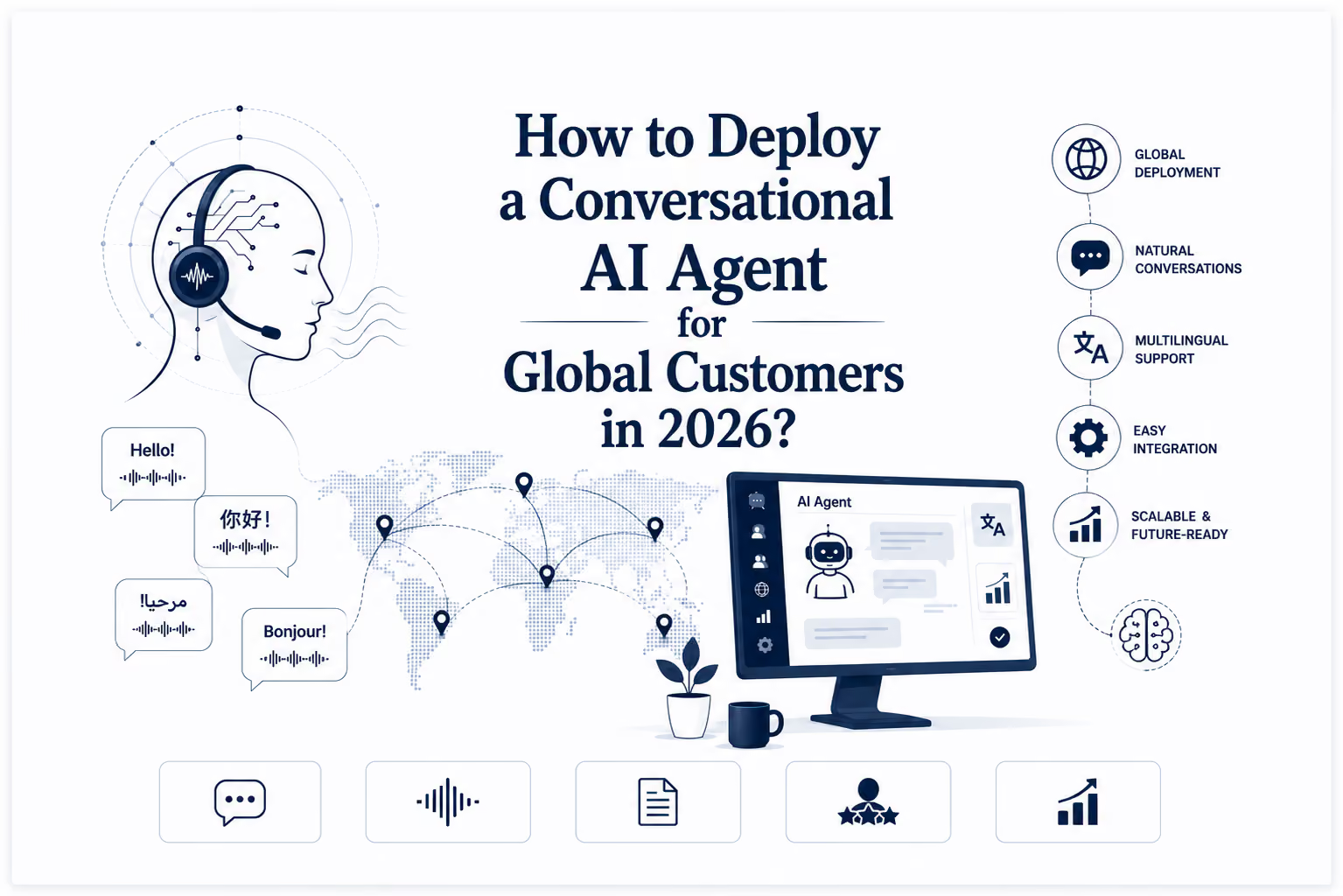
How to Deploy a Conversational AI Agent for Global Customers in 2026?
A step-by-step framework for deploying multilingual conversational AI across voice, chat, and email, with governance, testing, and localization practices.
IN this article

Evolve with Sigma Mind AI
Build, launch & scale AI agents
Multilingual conversational AI deployment succeeds or fails on process, not on model quality or language coverage. A platform that speaks twelve languages well in a demo can still fail in production if the rollout skips governance, native-speaker testing, or a phased launch, in that order, before the second language ever reaches a customer.
This shows up most in teams that already have one language running well and assume adding a second is a configuration change. It usually isn't. The gap tends to appear as inconsistency across channels, voice sounding fine while chat sounds stiff in the same language, rather than one language failing outright.
What changes when a conversational AI agent serves customers in multiple countries?
Three things change: the phone number the caller dials, the language they speak, and the rules governing what happens to their data once the call ends. A conversational AI platform built and tested in one country tends to assume all three stay fixed, which is exactly what breaks first when the same agent gets pointed at a global customer base.
How do you handle language, not just translation?
You handle language by treating each one as its own localization project, not a translation pass on the same script. Translation gets a conversational AI agent to correct words technically. It doesn't sound natural, and callers notice the difference immediately. Real localization means:
- Native-sounding text-to-speech for each language, not a single voice run through a translation layer.
- Region-specific phrasing and tone, since a direct translation often reads as stiff or overly formal.
- Local number formats, currencies, and date conventions handled correctly by default.
CSA Research's global survey of over 8,700 consumers found that 76% of online shoppers prefer buying in their native language, and 40% said they'd never buy from a site in a language they don't speak. A voice agent is a higher-stakes version of that same preference: a caller who has to work to understand a stilted, translated response is a caller who hangs up.
There's also a difference between an agent that speaks multiple languages and one that speaks each language well. A single model handling ten languages can sound noticeably worse in the eighth and ninth than in the first two, especially on regional dialects outside its main training data. Testing with native speakers on real, unscripted calls is the only reliable way to catch that gap before customers do.
What does global telephony actually require?
Global telephony requires bringing your own carrier through SIP trunking for any country outside your platform's native number list, since most platforms only sell direct phone numbers in a handful of countries, usually the US and a few others.
That has a few practical implications:
- You'll need a SIP provider with real coverage in each target country.
- Call quality and latency depend on where your provider's infrastructure actually sits, not just where your AI platform is hosted.
- Local dialing conventions and toll-free formats vary and need to be configured per country, not assumed to work the same everywhere.
Get this wrong, and the AI itself can be flawless while callers still experience dropped audio or delayed pickup, simply because the telephony layer underneath wasn't built for that region. This is also where cost planning goes sideways: a SIP provider with weak coverage in a target country often routes calls through a longer path to get there, adding latency and per-minute cost that never shows up until the first real invoice.
What should you look for in the top AI voice agent platforms for global deployment?
Look for three things: BYOC support via SIP, model-agnostic speech providers so you can pick STT and TTS engines with strong coverage in your target languages, and clear documentation on which countries the platform supports natively versus which require your own carrier.
A Voice AI platform that's vague about this in its sales conversation is usually vague about it in production too. Weigh that against how the platform performs on core conversation quality first, since a strong global setup wrapped around a weak conversational engine still fails on the call itself. The comparison of the top conversational AI agent platforms breaks down exactly this kind of detail platform by platform, including telephony and language coverage.
How does compliance change by region?
Compliance changes primarily around data residency: a platform that's SOC 2 compliant in the US isn't automatically compliant with every regional requirement. GDPR governs how European customer data can be stored and processed, with specific rules on consent and how long recordings can be retained. Other markets have their own local equivalents, and they don't always align with each other.
Before rolling out to a new region, confirm where call recordings and transcripts are actually stored, not just whether the platform has a compliance badge on its homepage. A platform that stores everything in a single US data center can be a real blocker for a customer base in a region with data localization requirements, and it's a much harder problem to fix after launch than to plan for beforehand.
How does inbound call handling differ market to market?
Inbound expectations shift by region even within a single language: acceptable hold times, preferred greeting styles, and how quickly a caller expects to reach a human if they ask for one. A tech stack that handles this well for US inbound support won't automatically handle it the same way for a market with different calling norms, and assuming it will is a common reason a well-reviewed platform underperforms once it's deployed somewhere new. The breakdown of the voice AI stack for inbound calls covers what that stack actually looks like and where industries are adopting it fastest.
Getting started with deploying a conversational AI agent globally
Start with one additional market, not a simultaneous global rollout. Confirm telephony coverage and call quality first, since that's the layer most likely to quietly fail. Test the language and localization with native speakers, not just a translation check.
Budget for the full picture before committing to a region, not just the platform's per-minute rate. BYOC telephony adds a carrier bill on top of the platform fee, and running multiple language providers instead of one adds its own line item.
The full cost breakdown of an AI call center is worth reviewing here too, since BYOC telephony and multiple language providers change the cost math compared to a single-market deployment. SigmaMind AI is built with BYOC telephony and model-agnostic speech providers from the start, so expanding to a new market is a configuration change rather than a platform migration.
Bottom line: deploying a conversational AI agent globally comes down to three things done right before launch: telephony coverage through your own carrier, localization tested with native speakers, and compliance confirmed by region, not assumed from a US-based setup.
Ready to deploy a conversational AI agent for your global customers with SigmaMind? Talk to the team or start building for free to test it on your own international call flows.
Evolve with Sigma Mind AI
Build, launch & scale AI agents
Related Blogs

Ready to transform your call center?

More Conversations.
Less Manual Work.

Building from San Francisco, CA