
Product Update: Launching In-Depth Voice & Chat Analytics
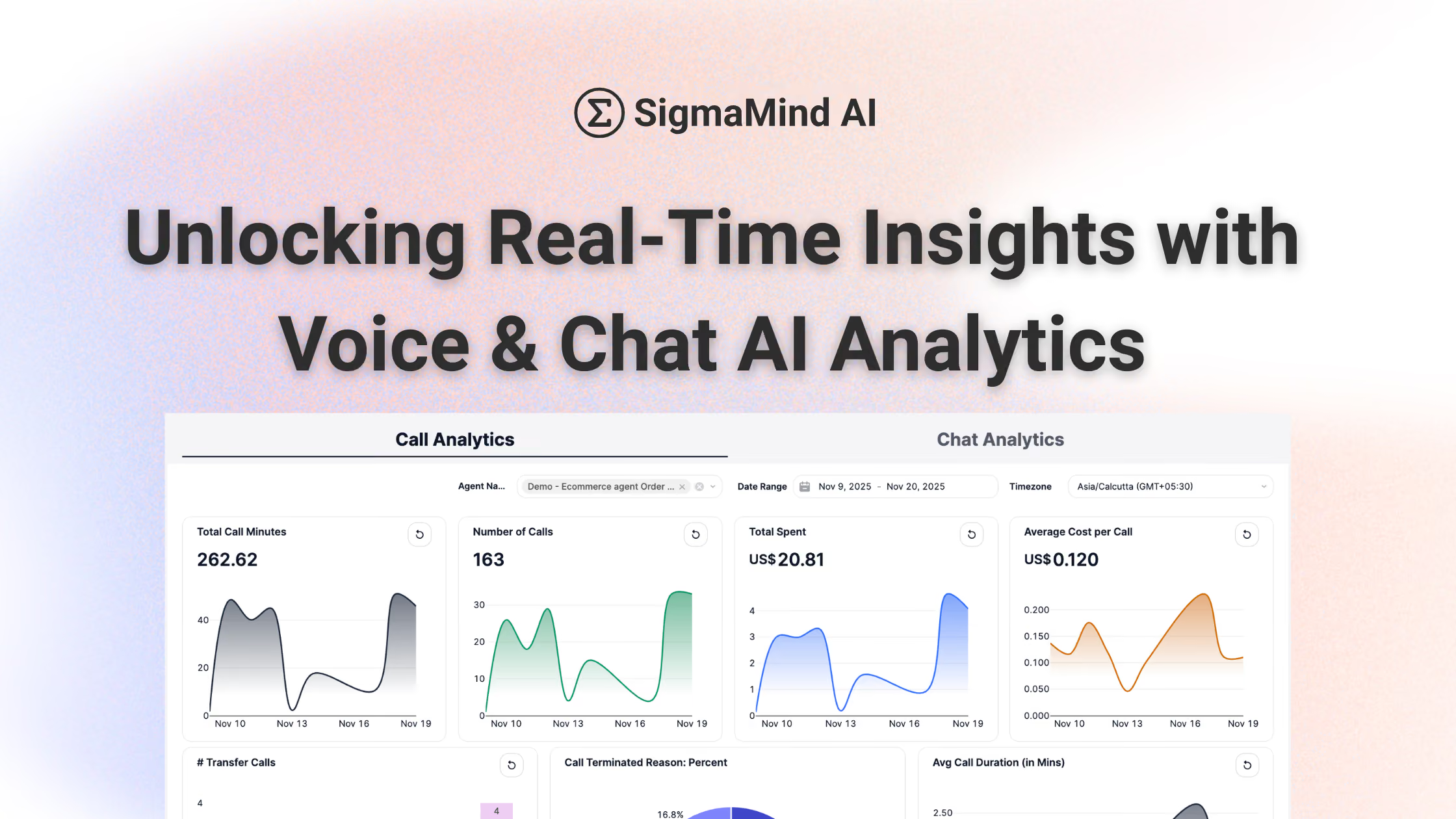
Visibility is no longer optional for scaling Voice & Chat AI. This blog explores the essential analytics from true call and chat volume, cost, and transfer tracking to agent benchmarking and real-time optimization. Learn how SigmaMind AI empowers teams to move beyond surface-level dashboards, get to root causes, and confidently drive continuous improvement across both voice and digital channels.
IN this article

Evolve with Sigma Mind AI
Build, launch & scale AI agents
When your voice or chat AI agent goes live, there's usually a moment of satisfaction. The agent handles conversations. Users engage. Everything seems to work.
But its success is often defined not just by smooth conversations, but by operational clarity - understanding exactly what’s happening across calls, what it costs, and why some conversations end the way they do.
After all, when it comes to conversational AI, visibility is a necessity for continuous improvement and dependable, cost-effective scale.
Why Do Teams Lack Visibility Into Voice AI in Production?
Voice interactions span multiple complex layers - telephony infrastructure, speech-to-text (STT), large language models (LLM), text-to-speech (TTS), and integration tools. Without visibility into which layer consumes the budget, optimization remains impossible.
This lack not only prevents teams from proactively catching runaway costs, but also delays troubleshooting and may result in missed revenue or frustrated customers when issues go undetected until it’s too late.
They miss out on early signals - hidden costs, changes in customer behavior, or operational inefficiencies, until those small issues become big, expensive problems.
Chat interactions, while not reliant on telephony, bring challenges such as ensuring accurate tracking of total messages and chats per ticket, monitoring tool calls used during chat sessions, and measuring operational costs like total cost and average cost per chat/ticket.
This is one of the biggest challenges in enterprise AI deployment and AI contact center automation.
What Questions Do Teams Have After Deploying Voice AI Agents?
Once production voice AI agents go live, visibility becomes critical. After working with teams running conversational AI in production, we know what questions they have:
For Voice AI:
- "Why did costs spike this week? Which layer is responsible?"
- "Why do 30% of calls end early? What termination causes are most frequent?"
- "Are agents making unnecessarily frequent tool calls, impacting both cost and latency?"
- "How many calls were transferred to humans? What are the patterns across agents and dates?"
- "Did that prompt change actually improve performance or just increase costs?"
For Chat AI:
- "Where do chat sessions drop off?"
- "How often are chats escalated to human agents?"
- "Which intents or conversation tags dominate volumes?"
- "What's the true message count per ticket? Are we undercounting engagement?"
- "How much are tool calls during chat sessions costing us?"
What Metrics Matter for Voice AI Call Analytics?
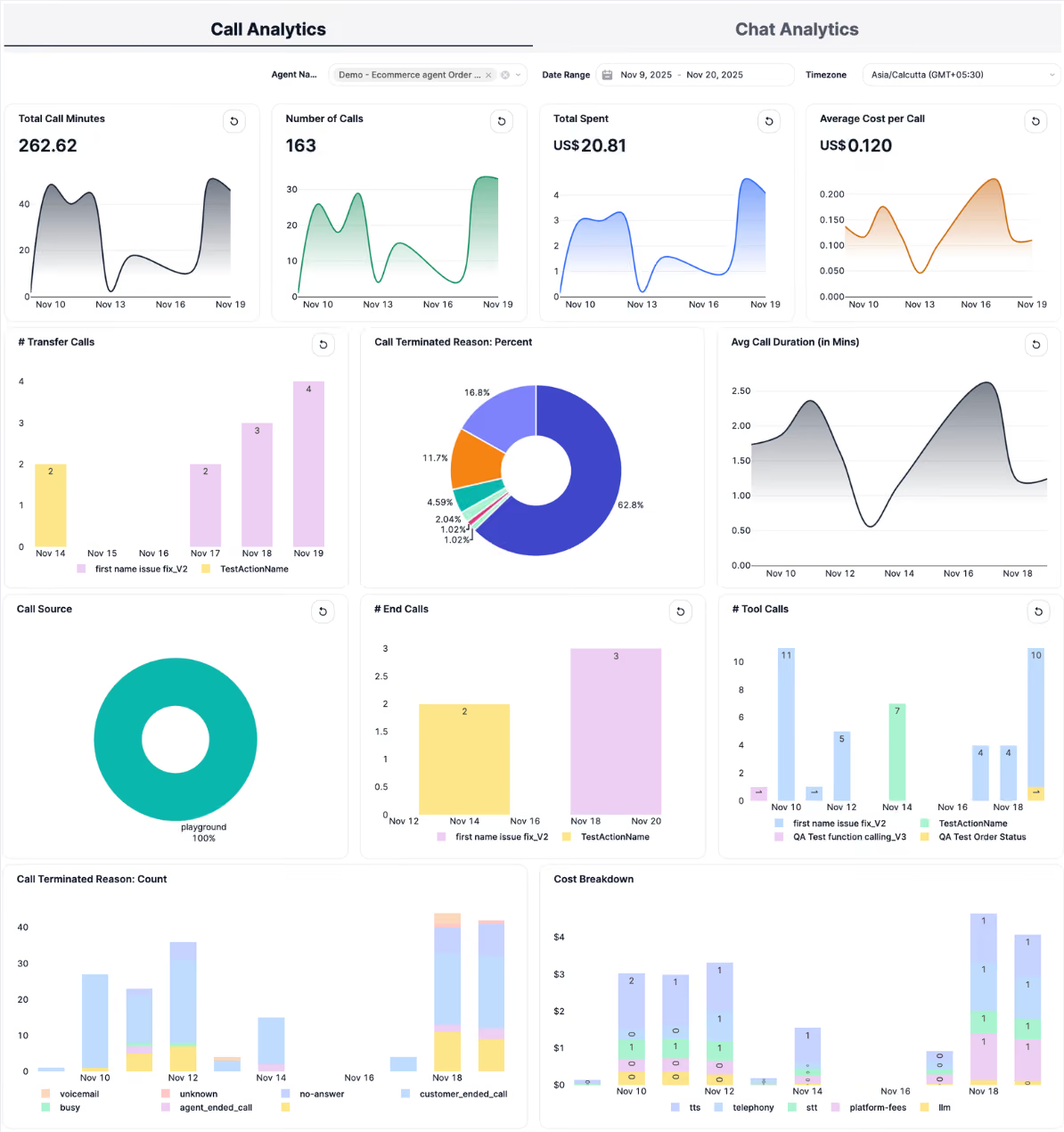
The complexity of voice AI calls - telephony, speech AI, LLMs, TTS engines - creates multi-layered data and costs. SigmaMind AI’s Call Analytics is designed to surface answers you need, across key operational pillars:
Call Metrics Overview
- Total Call Minutes: Instantly see cumulative conversation time for any agent and time period.
- Number of Calls: Monitor interaction volumes to compare campaign and agent impact.
- Total Spend (US$): Pinpoint exactly what’s spent across calls, with breakdowns by date or deployment.
- Average Cost per Call: Spot efficiency trends and react to any spikes in cost-per-interaction.
- Number of Transferred Calls: Drill into transfers by agent, date, and specific call type, essential for optimizing handoffs and escalation patterns.
- Call Terminated Reason (Percentage): Visualize the proportion of calls ending via voicemail, no-answer, agent/customer end, busy, or unknown sources.
- Average Call Duration (in Minutes): Understand engagement and resolution speeds for each agent, campaign, or workflow.
- Call Source: Identify where calls originated to track channel performance.
- Number of End Calls: Quickly assess closure events, by agent or action type.
- Number of Tool Calls: See how often agents are triggering back-end tools and integrations.
- Call Terminated Reason (Count): Daily granular breakdown helps teams prioritize operational fixes and flow improvements.
- Cost Breakdown: Analyze role of TTS, telephony, STT, platform fees, and LLMs in driving overall spend, day-by-day.
All these metrics update dynamically as you filter by agent, time frame, or timezone - offering immediate clarity for team leads, developers, and operations managers. These metrics help teams reduce call center costs with AI.
How Can Teams Analyze Voice AI Performance in Real Time?
Operational analytics need to fit real-world teams - not just dashboards. SigmaMind AI’s Call Analytics enables:
- Filtering by Agent: Compare individual agent performance, cost, and termination metrics.
- Custom Date Range Selection: Slice data week-by-week or month-by-month to spot pre/post-launch trends.
- Timezone Configuration: Make sure metrics align with your business hours and global deployments.
Every chart and number instantly recalculates as you apply these filters, minimizing guesswork and spreadsheet effort. Real-time reporting powers real-time conversational AI optimization.
What Metrics Matter for Conversational AI Chat Analytics?
For many modern ops and CX teams, chat remains where most volume and business-critical resolutions happen.
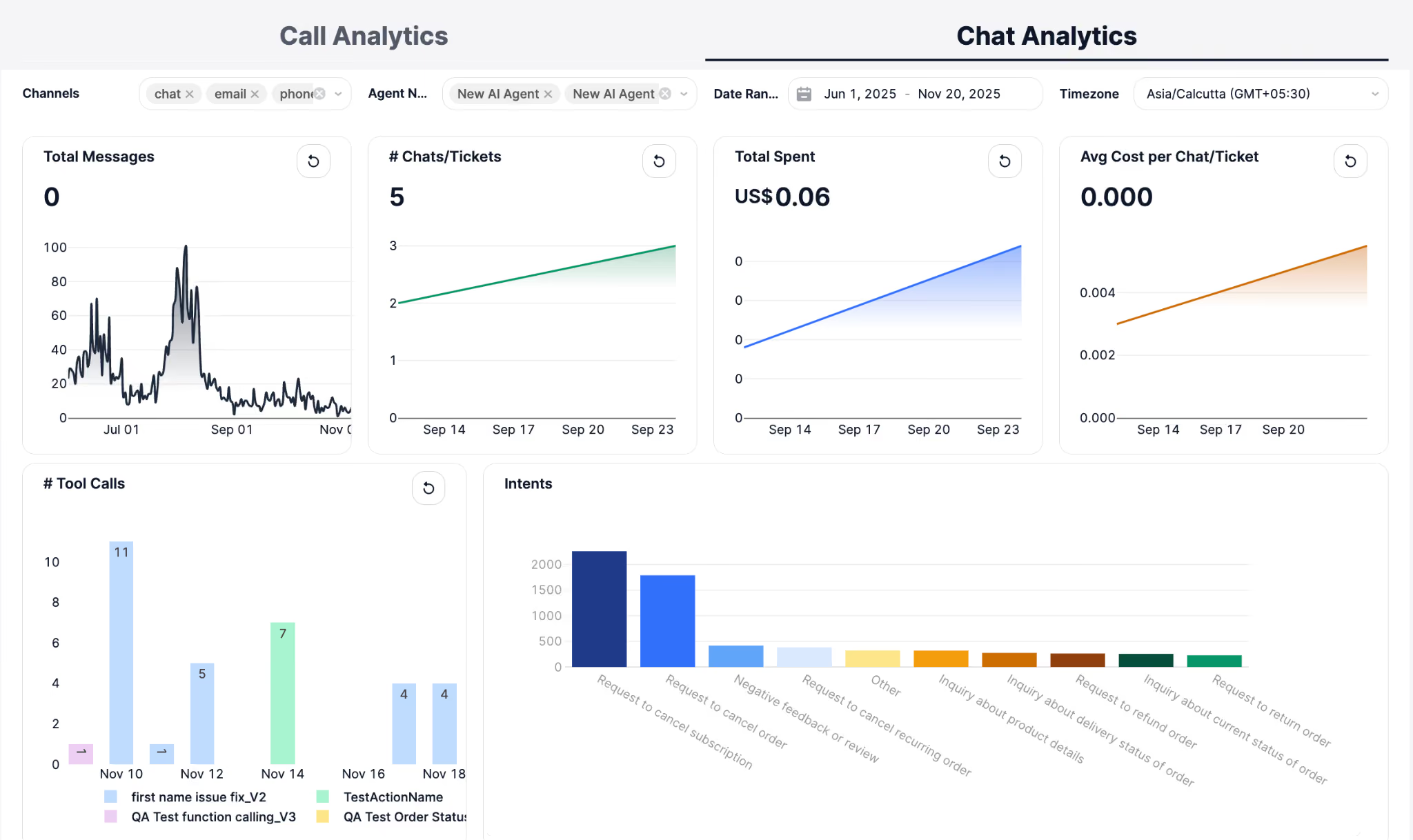
SigmaMind AI’s Chat Analytics empowers teams to comprehensively measure, compare, and refine every facet of digital engagement, agent effectiveness, and automation ROI.
Chat Metrics Overview
Key pain points SigmaMind AI Chat Analytics solves include:
- Quantifying total messages and chats per ticket to understand real user volume and workload.
- Tracking total spend and average cost per chat or ticket, empowering teams to monitor operational efficiency in digital channels.
- Monitoring tool calls made during chat sessions, highlighting integration usage and potential cost drivers or performance bottlenecks.
- Intent recognition metrics show which requests (like subscription cancellations or order changes) dominate, and highlight critical pain points such as negative feedback, refund requests, and delivery inquiries.
- Flexible filtering by date, agent, conversation template, or campaign, enabling targeted analysis and continuous improvement without manual data wrangling.
Essential for AI-driven customer experience teams.
These critical analytics directly impact automation ROI, customer experience, and agent productivity - complementing the deep voice AI observability.
Why Is Observability Critical for Voice AI Reliability?
Cost optimization matters, but analytics serve a larger purpose: understanding how your system actually behaves in production.
When 30% of calls terminate due to silence timeouts, you have a conversation flow issue.
When tool calls spike without corresponding increases in successful outcomes, something changed in your configuration.
When chat escalations increase suddenly, you can correlate that with specific agent versions or traffic patterns.
The teams that succeed with conversational AI are those building real-time reporting to track metrics daily, and creating feedback loops when performance deviates. Choosing the right platform requires evaluating analytics alongside a voice AI platform comparison.
How Do Analytics Help Optimize AI Customer Support?
Call and Chat Analytics are foundations for continuous improvement:
- Benchmark new releases against baselines
- Identify cost anomalies or conversation drop-offs early
- Diagnose and compare agents at scale without manual review
- Run A/B tests and measure performance and cost impacts
- Make informed optimization decisions with clear evidence
We're building SigmaMind AI to be developer-friendly and transparent. Call and Chat Analytics are part of that commitment - giving you complete visibility into what your agents are doing, what they're costing, and how they're performing. They help teams scale customer support with AI and reduce costs.
Get Started
Call and Chat Analytics is built directly into your SigmaMind AI dashboard. As soon as your agents are live, metrics start populating - no extra setup required.
Questions or feedback? Join our Discord community.
For deeper technical details, conversational AI platform docs.
Evolve with Sigma Mind AI
Build, launch & scale AI agents
Related Blogs
Ready to transform your call center?

More Conversations.
Less Manual Work.

Building from San Francisco, CA