
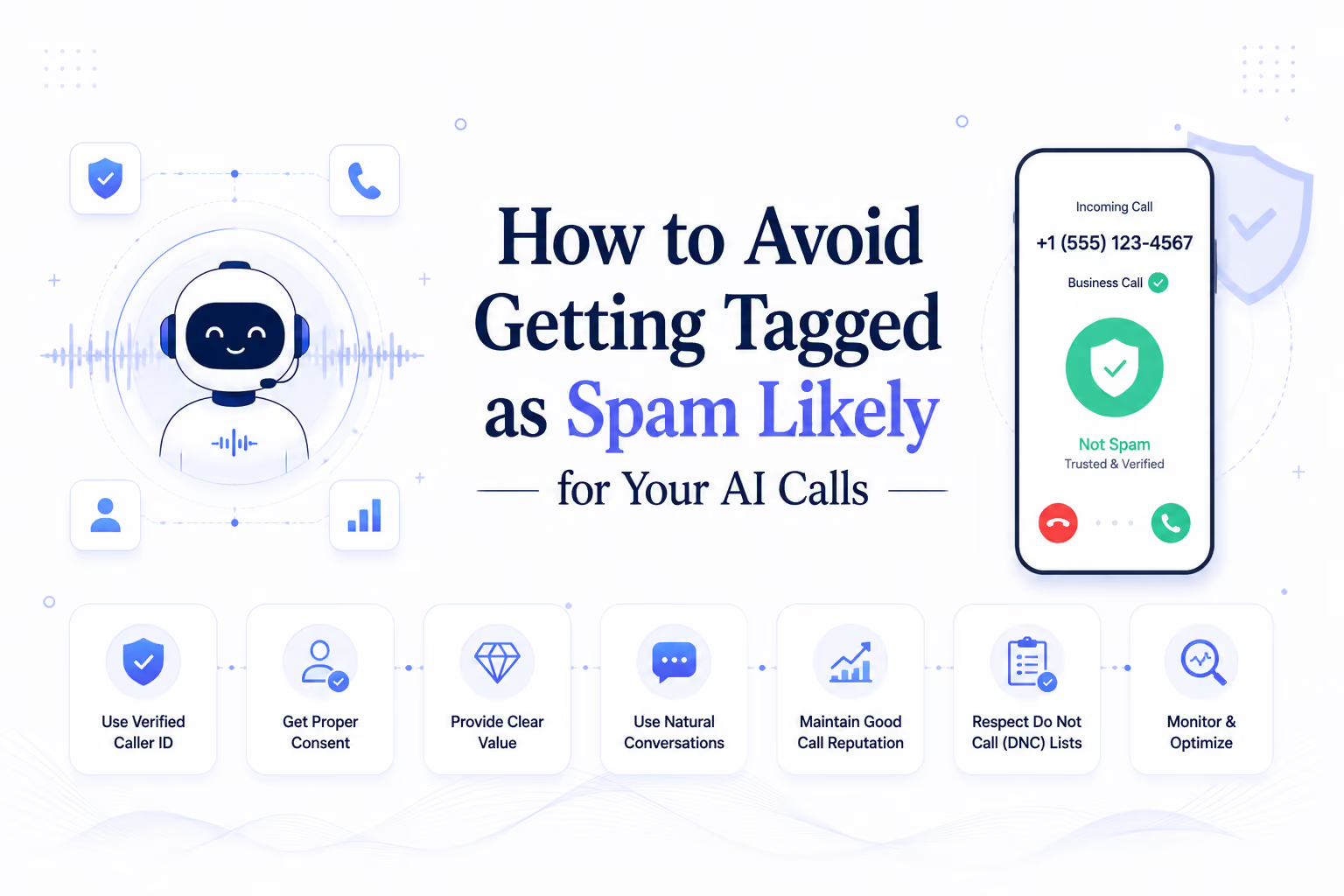
How to Avoid Getting Tagged as Spam Likely for Your AI Calls
How to avoid getting tagged as Spam Likely on AI voice agent calls, covering STIR/SHAKEN attestation, number reputation, and dialing pace.
IN this article

Evolve with Sigma Mind AI
Build, launch & scale AI agents
Quick summary
Calls get tagged Spam Likely based on carrier-side signals, not the content of the conversation: missing or low-level STIR/SHAKEN attestation, unregistered numbers, rapid or high-volume dialing patterns, shared or frequently rotated caller ID, and crowdsourced spam reports from recipients. AI voice agent deployments are more exposed to this than typical human-staffed outbound teams because AI can sustain a consistent, high dialing pace that looks machine-like to carrier algorithms, and predictive-dialer-style connection delays before an agent starts speaking are one of the most recognized spam signatures carriers watch for. Fixing it means treating caller ID reputation as infrastructure to maintain, not a one-time setup step.
You avoid getting tagged as Spam Likely on AI calls by securing STIR/SHAKEN A-level attestation, registering your numbers with carrier reputation databases, using dedicated numbers instead of a shared or rotating pool, and pacing outbound volume so it looks like normal calling behavior rather than a mass dialer. Miss any one of these and even a fully TCPA-compliant, well-run campaign can end up flagged.
A Spam Likely tag doesn't care how good your voice AI agent sounds on the call. Carriers flag calls before the person ever picks up, based on number reputation and calling patterns, not conversation quality.
See How SigmaMind AI Protects Caller ID Reputation
Ask how SigmaMind AI handles STIR/SHAKEN attestation and number reputation before you scale outbound volume.
What actually causes a call to get tagged Spam Likely?
Carrier algorithms score calling behavior, not caller intent, and a handful of signals account for most of what triggers the tag:
- Missing or low-level attestation: STIR/SHAKEN assigns every outbound call an attestation level of A, B, or C. Anything below A signals the carrier isn't fully confident the caller is authorized to use that number.
- Unregistered numbers: Numbers not registered with carrier reputation databases start with no established trust, which carriers treat as a risk signal by default.
- Rapid or high-volume dialing: A sudden spike in call volume from one number, or a steady pattern of very short calls, looks like automated spam behavior even when it isn't.
- Shared or rotated caller ID: Numbers cycled frequently, or shared across multiple campaigns, inherit whatever reputation damage other traffic on that number caused.
- Recipient reports: Crowdsourced spam reports from people who received the call and flagged it accumulate against the number over time.
How does STIR/SHAKEN attestation affect AI voice agent caller ID specifically?
It's the single biggest lever, since attestation level is a direct, carrier-verified signal rather than an inferred behavioral pattern. STIR/SHAKEN is the FCC-mandated framework requiring voice service providers to authenticate caller ID and assign each call an attestation level confirming the originating provider's confidence that the caller is authorized to use that number. A-level attestation means the carrier has verified both the caller's identity and their right to use the specific outbound number, and it's the level every legitimate outbound campaign should be targeting.
For an AI voice agent specifically, attestation is set at the telephony provider level, not inside the AI platform, which means it has to be confirmed with whichever SIP trunking or telephony provider is originating the calls, not assumed to be handled automatically just because the AI platform itself is reputable.
Why do AI voice agents get flagged faster than human-staffed outbound teams?
Because AI-driven outbound dialing tends to produce exactly the pattern carrier algorithms are built to catch: high, sustained call volume with very consistent timing. A human team's calling pace naturally varies, breaks for lunch, and slows near the end of a shift. An AI voice agent deployment running at full capacity can sustain a much more uniform pace, which reads as automated behavior to a carrier's detection model even when every call is fully legitimate and consented.
The connection delay before an agent starts speaking matters too. A brief silence after the call connects, common with predictive dialers waiting to bridge a live agent, is one of the most recognized spam signatures carriers watch for specifically. A voice AI agent that answers and speaks immediately avoids that particular red flag; one built on older predictive-dialer logic underneath the AI layer doesn't.
What should you actually do to reduce the Spam Likely tag?
Treat it as an ongoing operational practice, not a setup task you complete once:
- Register every outbound number with the major carrier reputation databases before using it at volume.
- Confirm A-level STIR/SHAKEN attestation with your telephony provider directly, in writing, not by assumption.
- Use dedicated numbers per campaign rather than a shared pool where unrelated traffic can damage your reputation.
- Pace dialing volume to ramp gradually on new numbers instead of launching at full volume immediately.
- Monitor number health daily so a flag gets caught and remediated the same day, not discovered a week later through dropping answer rates.
How does TCPA consent tie into caller ID reputation for AI calls?
They're separate systems that reinforce each other. TCPA governs whether you're legally allowed to make the call and to whom; caller ID reputation governs whether the call actually reaches the recipient's ear looking legitimate. A fully consented, compliant call still gets flagged if the number behind it has bad reputation signals, and a well-reputed number doesn't protect you from a TCPA violation if consent wasn't properly obtained. Verticals with heavy outbound compliance requirements feel this most acutely, since a flagged number compounds an already tight regulatory environment. The voice AI approach for insurance lead generation covers the consent side of this in more depth for a vertical where both issues show up constantly.
What role does your telephony integration play in staying off the spam list?
A significant one, since attestation, number provisioning, and call pacing are all configured at the telephony and dialer layer underneath the AI agent, not inside the conversational AI itself. Teams sometimes assume a reputable AI vendor automatically means clean caller ID reputation, but those are two different systems maintained by different parts of the stack. A voice AI platform layered cleanly onto your existing telephony setup inherits whatever reputation practices that setup already has in place, good or bad. The architecture behind adding AI to VICIdial is worth reviewing here, since the media bridge connecting AI to your dialer is exactly where attestation and number configuration live, and getting that layer right matters as much as the AI's conversation quality.
Getting started with protecting your caller ID reputation
Audit your current attestation level and number registration status before scaling any AI voice agent deployment, not after volume increases and answer rates start dropping. Ramp new numbers gradually, monitor reputation daily, and treat a flag as something to remediate immediately rather than waiting to see if it resolves on its own. A platform and telephony setup that gets this right from the start avoids the slow answer-rate decline that's often the first sign a campaign has quietly been flagged for weeks.
Bottom line: Spam Likely tags are a carrier-side infrastructure problem, not a conversation quality problem. Get STIR/SHAKEN attestation, number registration, and dialing pace right at the telephony layer, and the AI agent on top of it never has to fight an uphill battle just to get answered.
Ready to see how SigmaMind AI protects your outbound number reputation? Talk to the team or start building for free to test it on your own numbers.
Evolve with Sigma Mind AI
Build, launch & scale AI agents
Related Blogs
Ready to transform your call center?

More Conversations.
Less Manual Work.

Building from San Francisco, CA