
The 5 best No Code Agent Builders 2026
Discover the best no code agent builder platforms for 2026. Compare top 5 tools, features, pricing, and use cases, plus why SigmaMind AI leads. Start building your own Agent today!
IN this article

Evolve with Sigma Mind AI
Build, launch & scale AI agents
The way businesses interact with customers is changing. Slow, frustrating support queues and repetitive manual tasks are no longer acceptable. Companies are turning to AI agents that can understand, reason, and act in real time.
But building these sophisticated agents used to require specialized engineering teams and long development cycles. Today, the rise of the no code agent builder changes everything. These tools empower operations, support, and marketing teams to create powerful conversational AI for voice, chat, and email without writing a single line of code, transforming customer experience and unlocking massive operational efficiency.
What is a No Code Agent Builder?
A no code agent builder is a visual development platform for creating and deploying advanced conversational AI agents. Unlike simple tools of the past, these platforms are much more than glorified Q&A bots.
- Traditional Chatbots: These are often rule based and can only answer predefined questions. They follow a rigid script and cannot handle complex, multi step conversations or perform actions in other systems.
- IVR Systems: Interactive Voice Response systems are the dinosaurs of customer service. They force callers through frustrating phone trees (“Press 1 for sales…”) and lack the natural language understanding to solve real problems.
- Developer Frameworks: While powerful, these are code intensive toolkits. They require significant engineering resources, making them slow to deploy and difficult for non technical teams to manage or update.
The best no code agent builder combines the power of a developer framework with the accessibility of a visual tool. It allows you to design complex conversational logic, integrate with powerful Large Language Models (LLMs) like GPT 4o, connect to your business applications, and deploy across multiple channels, all from a drag and drop canvas.
Can you really build a powerful voice AI agent without any code?
Yes. Modern platforms provide a visual drag and drop canvas where you can design conversation flows, connect to powerful AI models, and integrate with business tools.
This empowers non technical teams to build and manage agents that can handle tasks like appointment scheduling or order processing, which previously required extensive engineering effort. --> Learn how to build voice scripts without coding
Core Capabilities to look for in a No Code Agent Platform
When evaluating a no code agent platform, certain features are non negotiable for building production grade agents that deliver real business value.
Visual Flow Design
The heart of any no code agent builder is its visual canvas. You should be able to map out complex, multi step conversations with branching logic, variables, and conditions just by connecting nodes. This makes it easy for anyone to understand and modify the agent’s behavior.
Model Agnosticism
Your platform shouldn’t lock you into a single AI provider. The ability to mix and match best of breed models for Speech to Text (STT), Text to Speech (TTS), and LLMs is crucial. This allows you to fine tune your agent for specific use cases, balancing latency, cost, and quality. For instance, you might use Deepgram for STT and ElevenLabs for TTS to achieve natural, low latency voice conversations.
No Code Agent Builders with built In Testing and Debugging
Deploying an untested agent is a recipe for disaster. A robust platform must include an in‑builder playground to test conversations across voice, chat, and email in real time. Look for features like node level logs, which help you pinpoint exactly where a conversation went wrong and fix it before it impacts a single customer.
What integrations are essential for the best no code agent builder?
An agent that can’t take action is just a conversationalist. The best no code agent builder provides a library of pre‑built integrations for CRMs, helpdesks, and e‑commerce platforms like Shopify, Zendesk, or Pipedrive. It should also allow for custom integrations via function calling and APIs, turning conversations into completed tasks like processing a refund or scheduling an appointment.
Agent Builder with Omnichannel Support
Customers interact with you on multiple channels. A single, unified “brain” for your agent that can be deployed across voice, web chat, SMS, and email ensures a consistent customer experience. This approach, central to platforms like the SigmaMind Voice AI platform, dramatically reduces maintenance overhead compared to managing separate bots for each channel.
High Value Use Cases where No Code Agents shine
The applications for no code AI agents are nearly limitless, but they provide exceptional ROI in areas plagued by manual, repetitive work.
- 24/7 Customer Support: Automate common queries like order tracking, returns, and appointment scheduling. One e commerce brand used a no code agent to automate over 4,000 refunds per month, achieving a 43% cost saving and reducing turnaround time to under 60 seconds.
- AI Agent with Intelligent Lead Qualification: Deploy a voice agent to engage inbound leads, ask pre‑qualification questions, and schedule demos directly on your sales team’s calendar, ensuring humans only talk to high‑intent prospects.
- Proactive Outbound Campaigns: Use AI voice agents for appointment reminders, payment follow ups, or abandoned cart recovery. You can upload a CSV, set a schedule, and let the agent handle hundreds of personalized calls concurrently.
- Streamlined Operations: Companies like Gardencup have used no code agents to cut refund processing delays by 80% and increase CSAT by 20%. This is possible by integrating the agent directly with supply chain and logistics systems to make smart, real time decisions. --> Read the entire Voice AI Case Study
How to evaluate No Code Agent Builders (Methodology)
Finding the best no code agent builder requires looking beyond the marketing claims. Our evaluation focuses on criteria critical for production success.
- Ease of Use: How intuitive is the visual builder? Can a non developer realistically create a functional agent?
- Performance and Latency: For an AI voice agent, latency is everything. Conversations must feel natural. We look for platforms architected for sub second voice to voice latency, a key benchmark for high quality user experience.
- Integration and Extensibility: How easy is it to connect to essential business tools (CRMs, helpdesks, databases)? Does it support custom tool calling via APIs?
- Scalability and Reliability: Can the platform handle hundreds or thousands of concurrent conversations without degrading performance? Does it offer enterprise grade security like SOC 2 compliance?
- Cost and Transparency: Is the pricing model clear and predictable? A great platform will break down costs by layer (platform, LLM, STT, TTS, telephony) so you can optimize for your budget. The best no code agent builder gives you control.
- Observability and Analytics: What tools are provided to monitor performance? Access to call transcripts, logs, and analytics on metrics like cost per call, escalation rates, and tool usage is vital for continuous improvement.
How much does a No Code Agent Builder cost?
Pricing in the AI agent space is typically modular. Instead of a single flat fee, you pay for what you use across different layers of the technology stack. A common model is a pay as you go structure.
For a voice AI, your total cost per minute is a sum of:
- Platform Fee: A small charge for using the builder, orchestration, and infrastructure.
- STT Cost: The cost to transcribe the user’s speech to text.
- LLM Cost: The cost for the AI model to process the text and generate a response.
- TTS Cost: The cost to convert the AI’s text response back into natural sounding speech.
- Telephony Cost: The cost for the phone number and carrier connection.
While this seems complex, this transparency is a huge advantage. It lets you tune your costs by swapping models. For example, using a faster, cheaper LLM for simple queries and a more powerful one for complex tasks. Platforms that offer a live calculator make budgeting much easier.
AI Agent Implementation Playbook: From Pilot to Production
Deploying an AI agent successfully is an iterative process. Avoid a big bang launch. Instead, follow a structured playbook.
- Start Small: Identify a high volume, low complexity use case. A great first project is an agent that answers “Where is my order?”.
- Build and Test: Use a no code agent builder to create the initial conversational flow. Voice AI Platforms like SigmaMind AI have seen over 1,500 live agents built on their platform. Use the built in playground to rigorously test every possible path and edge case.
- Deploy to a Segment: Launch your agent to a small percentage of your users or on a specific, non critical channel.
- Analyze and Iterate: Use the platform’s analytics to monitor performance. Review transcripts, track escalation rates, and gather user feedback.
- Expand and Scale: Once the initial agent is performing well, gradually expand its capabilities and roll it out to a wider audience. The best no code agent builder makes this iteration cycle fast and simple.
The Top 5 best No Code Agent Builder Tools 2026
Selecting the right platform is essential for building sophisticated AI agents without writing a single line of code. These industry-leading tools have been grouped together because they offer powerful visual interfaces and robust integration capabilities that cater to both beginners and enterprise teams. The following AI agent builder comparison highlights the top options currently available for those looking to streamline their automation workflows with speed and precision.
1. SigmaMind AI
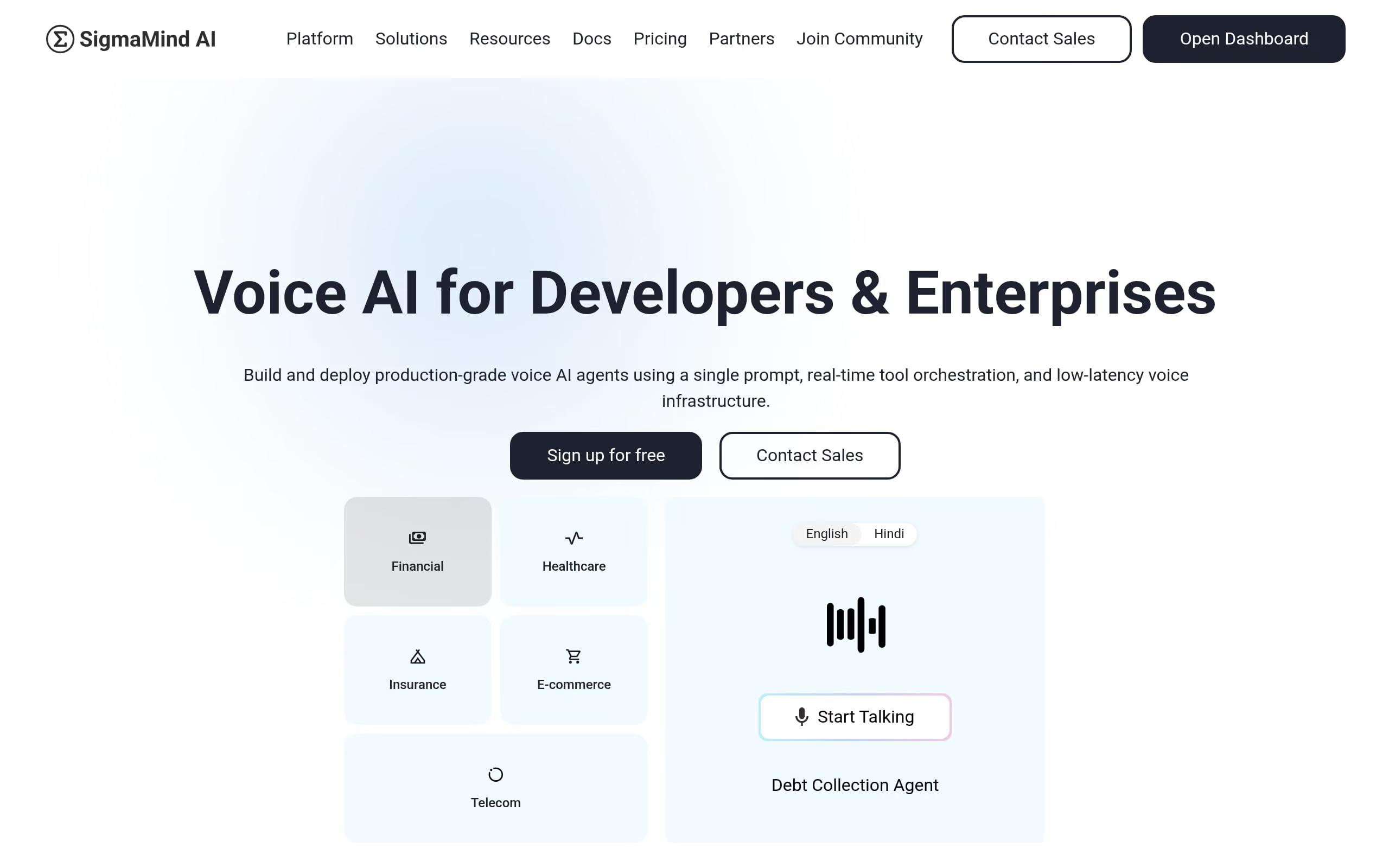
SigmaMind AI's Agent Builder is an enterprise orchestration platform that lets teams design once and deploy AI agents across voice, chat, and email, with no coding required. A visual designer turns complex logic into reusable, omnichannel flows, while built‑in telephony or BYOC over SIP and robust APIs slot cleanly into existing stacks.
Builder snapshot
- Drag‑and‑drop visual canvas with branching, variables, and multi‑step flows.
- Native CRM connectors plus real‑time function/API calling for read/write ops.
- Telephony options: built‑in voice or BYOC via SIP trunking.
- Low‑latency, interruptible voice for natural turn‑taking.
- Testing playground, real‑time logs, and granular performance analytics.
- SOC 2 compliance, PII redaction, and regional data residency controls.
Fit quick‑take
- Strengths:
- True omnichannel reach with fast, realistic voice prosody.
- Plug‑and‑play integrations speed up enterprise rollout.
- Trade‑offs:
- Deeper logic/variable work introduces a learning curve.
- Some niche enterprise configs still need hands‑on support.
Pricing & buyer fit
Hybrid model: platform subscription plus usage (per minute or interaction). Costs scale with call/interaction volume and concurrency. Best for mid‑to‑large enterprises in sectors like logistics, insurance, and healthcare seeking reliable, omnichannel automation without heavy engineering lift.
2. Voiceflow
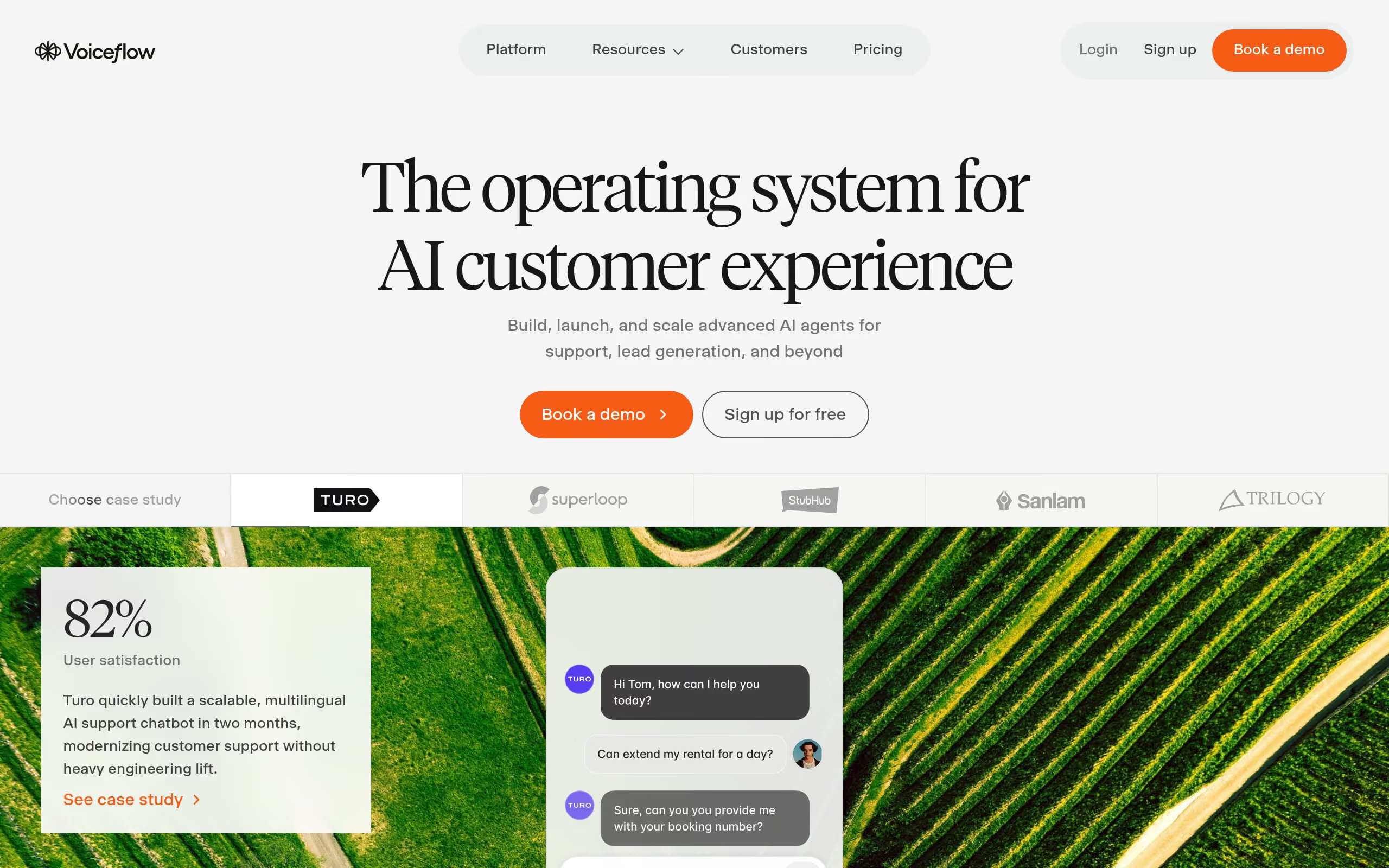
Voiceflow is a collaborative, visual platform for designing and deploying sophisticated conversational agents. Its low‑code canvas supports logic‑dense flows, while a headless Dialog Manager API extends to web, mobile, and voice. BYOC telephony via providers like Twilio or Vapi keeps deployments flexible.
Builder snapshot
- Drag‑and‑drop canvas with state, variables, and reusable components.
- API and JavaScript steps for precise tool/function calling.
- BYOC telephony via Twilio, AudioCodes, and Vapi.
- Streaming responses and intent nesting for snappy turn‑taking.
- High‑fidelity playground, transcripts, and success‑rate tracking.
- SOC 2, RBAC, and PII masking for enterprise governance.
Fit quick‑take
- Strengths:
- Real‑time collaboration across product, design, and engineering.
- Flexible LLM orchestration to swap models (e.g., GPT‑4o, Claude) instantly.
- Trade‑offs:
- Managing complex variables can challenge non‑technical builders.
- AI credit/token costs can rise quickly at high volume.
Pricing & buyer fit
Free tier, Pro at $60/editor/month, and custom Enterprise. Spend scales with editor seats and AI token usage. A strong pick for mid‑market enterprises and agencies producing multi‑channel support, sales, or internal productivity agents.
3. Kore.ai
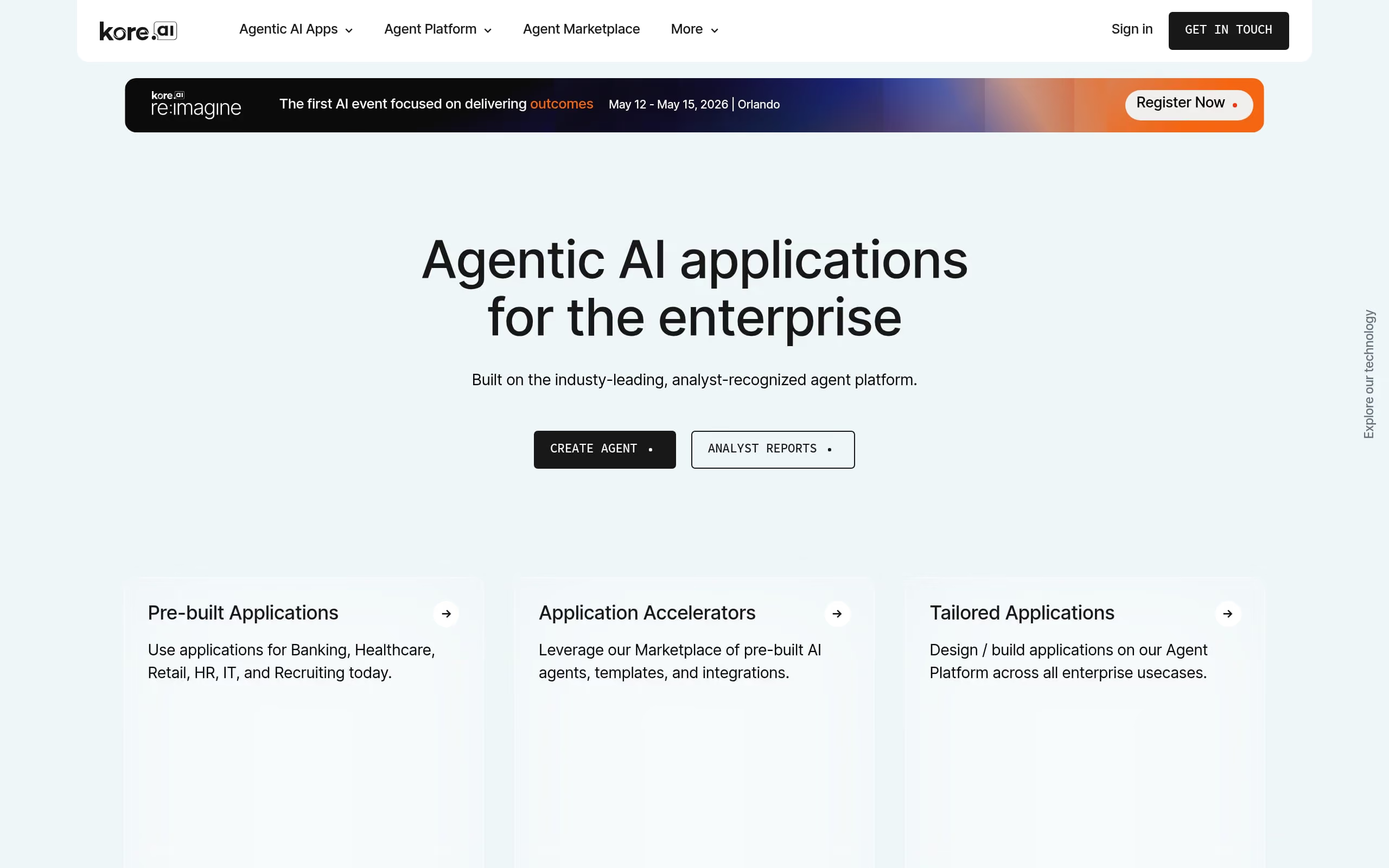
Kore.ai’s enterprise platform blends Generative AI with traditional NLU to power complex assistants across 40+ channels. The visual Experience Manager supports sophisticated orchestration, while SmartAssist offers built‑in telephony and BYOC via SIP/VXML for seamless contact‑center integration.
Builder snapshot
- Drag‑and‑drop orchestration with robust state management.
- GARI framework for LLM orchestration, tool calling, and RAG.
- 100+ GUI‑driven connectors for CRM, ERP, ITSM.
- Native SmartAssist voice with SIP/WebRTC and warm handoffs.
- Simulation playground, intent‑match scoring, and health analytics.
- SOC 2/HIPAA, automated PII masking, and strong data controls.
Fit quick‑take
- Strengths:
- Global scale and multilingual depth with hybrid NLP accuracy.
- Rich connector catalog speeds enterprise system integration.
- Trade‑offs:
- Feature density brings a sizable learning curve.
- Pricing can be opaque with modular add‑ons.
Pricing & buyer fit
Starts around $500/month pay‑as‑you‑go; scales to custom enterprise subscriptions by session volume and optional modules. Best for Fortune 2000 teams in regulated industries replacing legacy IVR and orchestrating complex backend workflows.
4. Cognigy
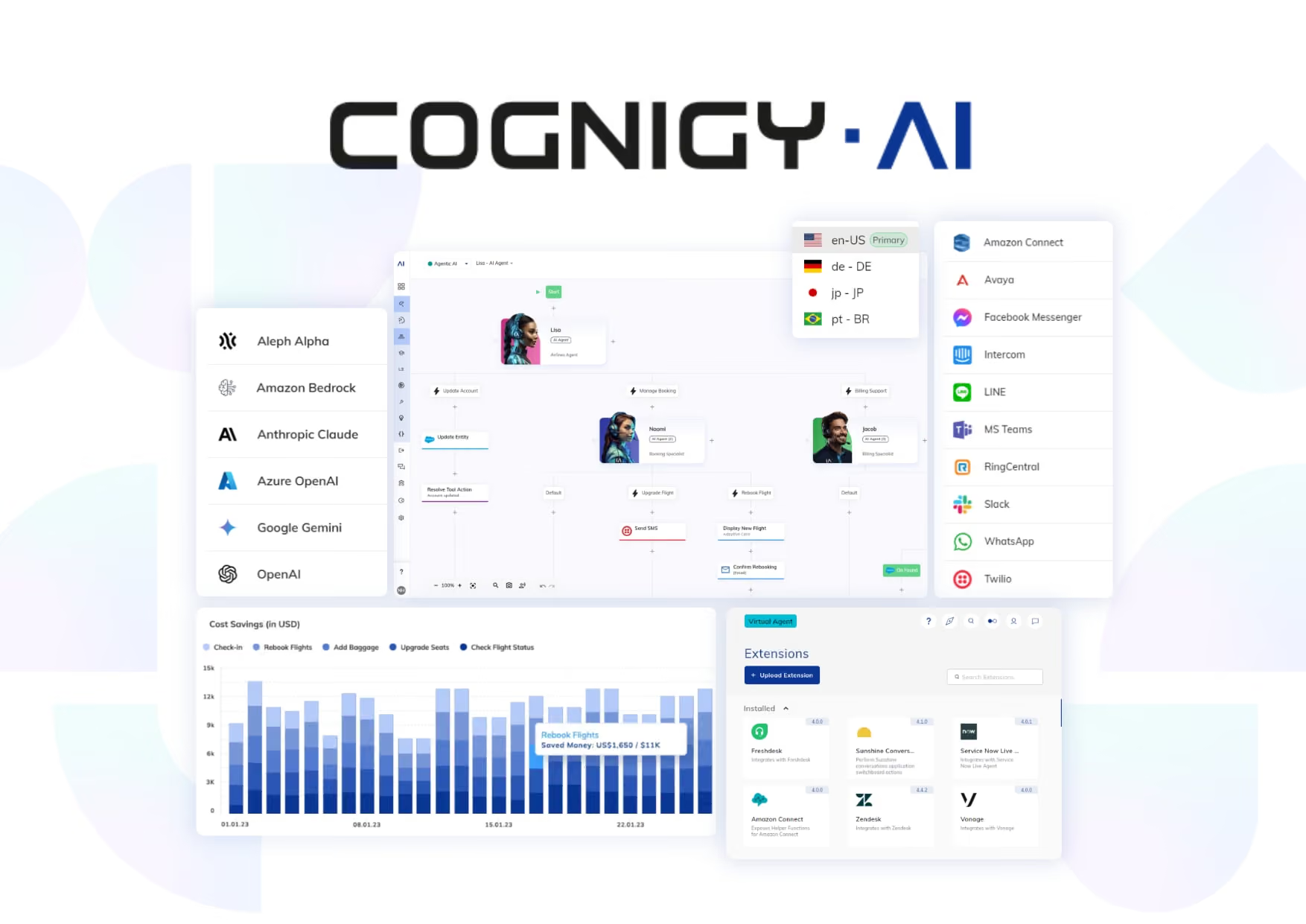
Cognigy is a mature Conversational AI platform built for high‑stakes customer service automation. Its low‑code Flow Node system powers voice and chat agents, with deployment options spanning SaaS, private cloud, or on‑prem, and a native Voice Gateway to anchor telephony.
Builder snapshot
- Drag‑and‑drop Flow Editor for complex logic and LLM prompting.
- Native nodes for SAP, Salesforce, and real‑time data exchange.
- Voice Gateway with SIP/BYOC and deep CCaaS integrations.
- Low‑latency processing and advanced barge‑in for natural dialogs.
- Real‑time debugger and Insights dashboard for intent performance.
- SOC 2, GDPR, and granular PII masking.
Fit quick‑take
- Strengths:
- Enterprise‑grade scalability and voice‑first design.
- Hybrid NLU + Generative AI for both precision and fluency.
- Trade‑offs:
- Steep learning curve due to feature richness.
- No transparent public pricing; enterprise engagement needed.
Pricing & buyer fit
Enterprise subscription tied to automated interaction volume and modules; costs rise with usage and feature scope. A strong match for banking, retail, and global support teams needing secure, multi‑language automation and deep legacy integrations.
5. Dialogflow CX
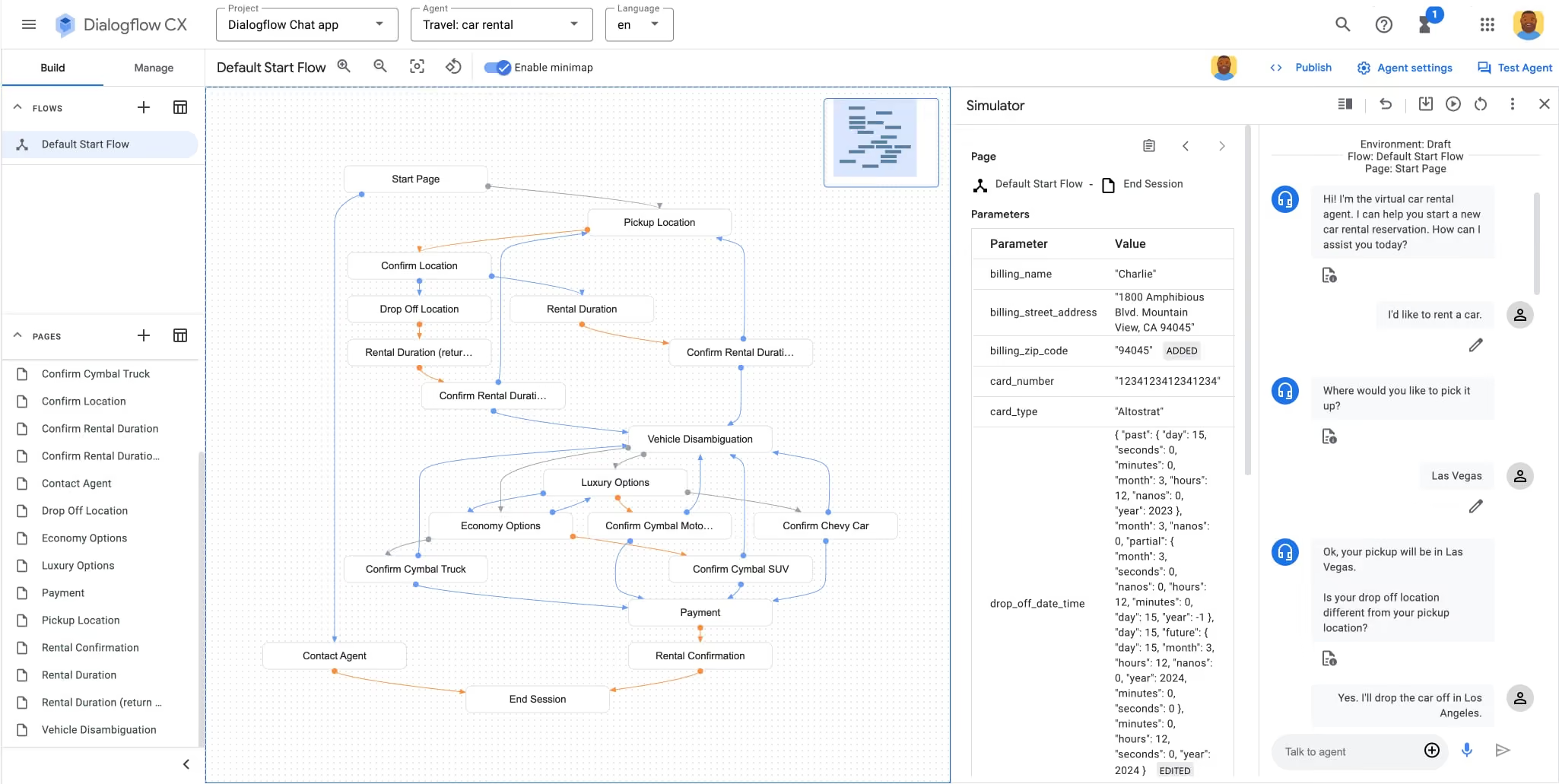
Dialogflow CX is Google Cloud’s state‑machine‑driven platform for complex, non‑linear agents. No‑code builders map intricate journeys with visual Pages and Transitions, then blend structured flows with generative Vertex AI playbooks. Native telephony and BYOC via SIP round out enterprise deployments.
Builder snapshot
- Graph‑based visual builder using Pages, Events, and Transitions.
- Generative Playbooks for goals, tool‑calling, and API workflows.
- Native Phone Gateway plus SIP trunking for call centers.
- Fine‑grained barge‑in, speech adaptation, and low‑latency turns.
- Real‑time playground debugging and Conversation Insights.
- HIPAA, SOC 2, GDPR, and strong data sovereignty controls.
Fit quick‑take
- Strengths:
- Massive scalability and reliable concurrency at enterprise scale.
- Deep alignment with GCP and Vertex AI services.
- Trade‑offs:
- Steeper learning curve than simple drag‑and‑drop tools.
- Complex, usage‑based pricing requires close monitoring.
Pricing & buyer fit
Consumption‑based: roughly $0.007 per chat request and $0.06 per voice minute, with additional costs for generative features. Scales with volume and concurrency. Ideal for large, regulated enterprises standardizing on GCP and building secure, sophisticated workflows.
Future Trends in No Code Agent Platforms
The world of no code AI is changing all the time.
We are moving from reactive agents that answer questions to proactive assistants that anticipate needs.
Here are a few trends to watch:
- Agent Autonomy: Agents will gain the ability to learn from conversations and self improve their logic and responses over time, reducing the need for manual tuning.
- Proactive Engagement: Instead of waiting for a customer to call, agents will initiate contact based on data triggers, for example, contacting a customer about a shipping delay before they even notice.
- Deeper Personalization: Agents will have persistent memory and access to customer history across all channels, enabling truly personalized and context aware conversations.
- Multi Agent Collaboration: Complex tasks will be handled by a team of specialized agents that collaborate, with a master agent orchestrating the workflow and escalating to humans only when necessary.
Conclusion: Pick for Fit, Prove with a Pilot, Iterate for Outcomes
Choosing the best no code agent builder is not about finding a single tool that is perfect for everyone. It’s about finding the platform that best fits your specific use case, technical resources, and scalability requirements. The real power of these tools lies in their ability to enable rapid experimentation and iteration.
The key is to start now. Pick a well defined problem, build a pilot agent, and measure the results. By proving value on a small scale, you can build the momentum and expertise needed to transform your customer operations. Ready to see what’s possible? Start building your first agent with a platform designed for rapid deployment and enterprise scale. You can explore the possibilities and build your first agent today at SigmaMind AI. For more information, book a free demo.
Evolve with Sigma Mind AI
Build, launch & scale AI agents
Related Blogs

Ready to transform your call center?

More Conversations.
Less Manual Work.

Building from San Francisco, CA